Why Understanding Your Horse's Mouth Anatomy is Essential for Better Riding and Bit Fitting
Why Understanding Your Horse’s Mouth Anatomy Is Essential for Better Riding and Bit Fitting
When riders encounter resistance, inconsistent contact, or difficulty with connection, the focus often turns to equipment. Bits are changed, nosebands adjusted, and training strategies revisited. What is frequently overlooked, however, is the physical structure of the horse wearing the tack.
Your horse’s mouth is a complex, highly sensitive system designed for chewing forage, not for carrying a bit. Every rein aid you apply is filtered through the unique anatomy inside that mouth. Understanding how your horse is built is essential for choosing appropriate equipment, interpreting behavior correctly, and creating clear, ethical communication under saddle.
Finding the right bit is both a science and an art. The science comes first: understanding the horse’s anatomy, dental health, and how different mouthpieces distribute pressure. Without this foundation, bit selection becomes guesswork. The art lies in feel, observation, and thoughtful creativity. It means listening to the horse’s responses, refining choices, and being willing to adapt as the horse’s needs change. True skill in bit fitting comes from blending anatomical knowledge with an educated feel for what helps each individual horse find comfort, clarity, and confidence.
The Key Structures of the Equine Mouth
Several anatomical features directly influence how a horse experiences a bit:
The Bars are the toothless sections of the lower jaw between the incisors and molars. Covered by a thin layer of tissue over bone, they are extremely sensitive to pressure. Some horses have broad, forgiving bars, while others have narrow or prominent bars that intensify sensation.
The Tongue is thick, muscular, and fills much of the oral cavity. It is richly innervated and plays an essential role in swallowing and breathing. Tongue size and tone vary significantly between horses and strongly affect how much space remains once a bit is introduced.
The Palate (Roof of the Mouth) determines how much vertical clearance a bit has. Horses with a low palate have limited space, making certain mouthpieces potentially intrusive, particularly bulky or jointed designs.
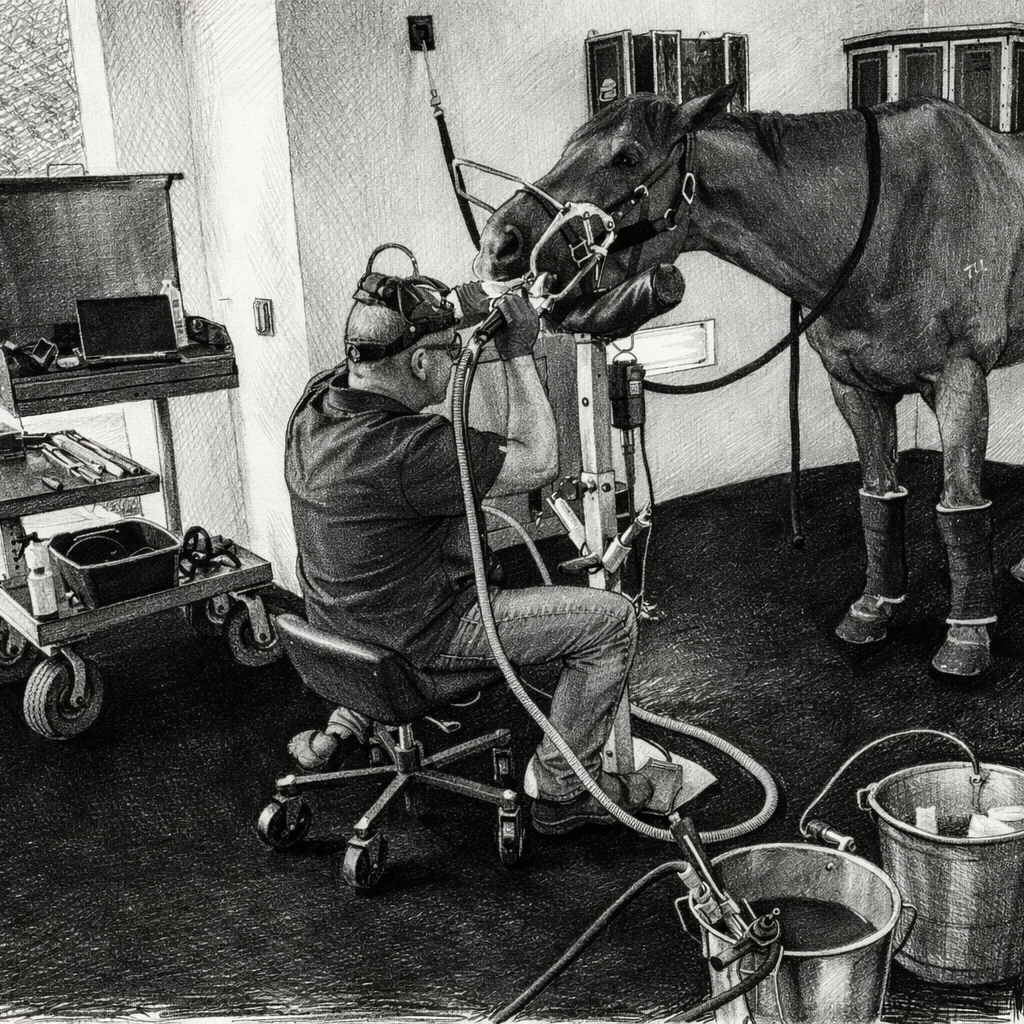
Teeth grow and wear continuously throughout a horse’s life. Sharp points, hooks, or uneven wear can make any bit uncomfortable, regardless of how well it fits. Regular dental care is non-negotiable.
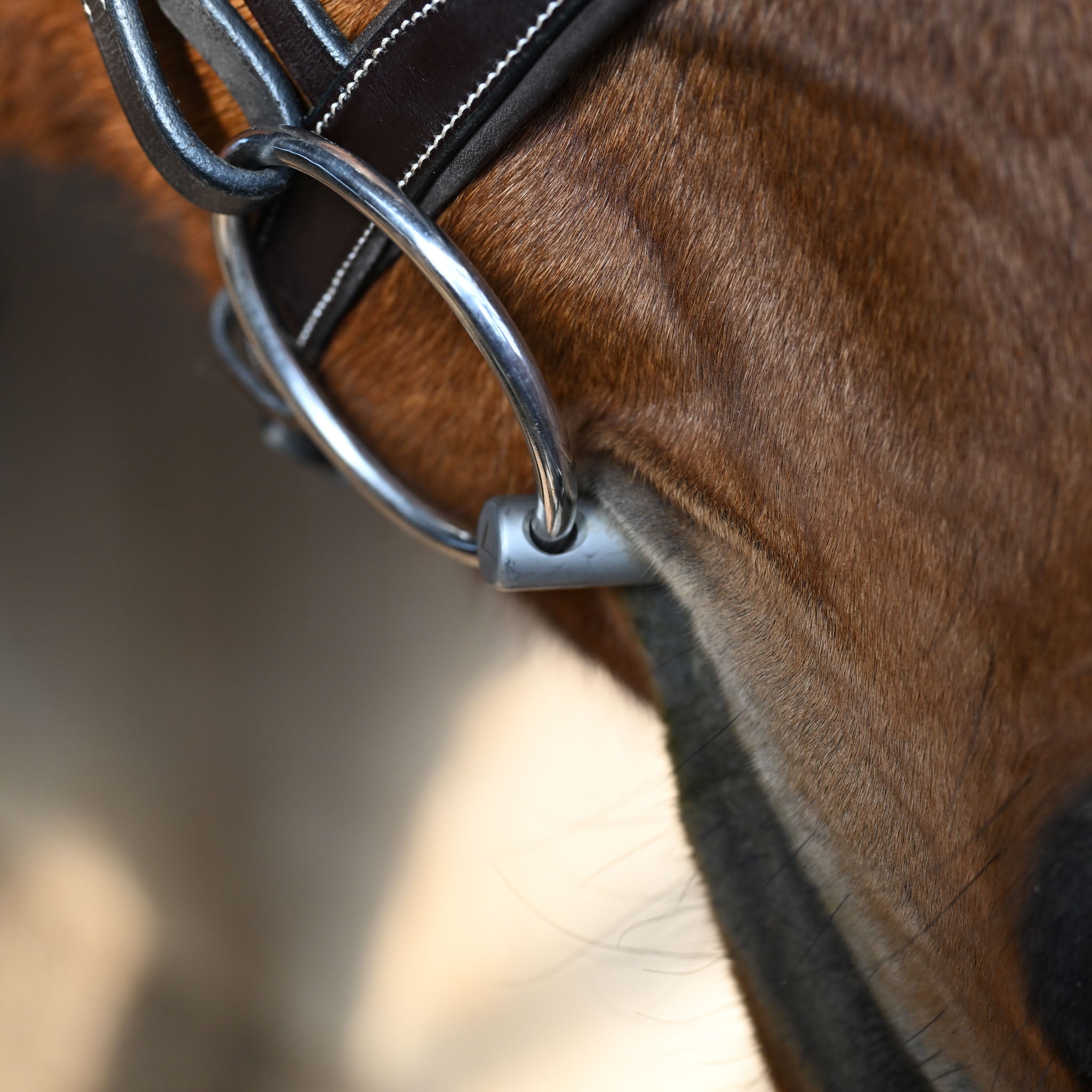
The Lips and Corners of the Mouth are delicate and can be pinched or bruised by ill-fitting bits or overly tight nosebands.
These structures do not work independently. They form a confined, dynamic system where changes in pressure to one area inevitably affect the others. This is why anatomy, not trends or assumptions, must guide bit selection.
Rather than acting in a single, open space, a bit interacts with specific structures inside the mouth. The tongue, palate, and bars determine where pressure is felt and how intensely it is perceived. Understanding these interactions helps explain why the same bit can feel comfortable to one horse and overwhelming to another.
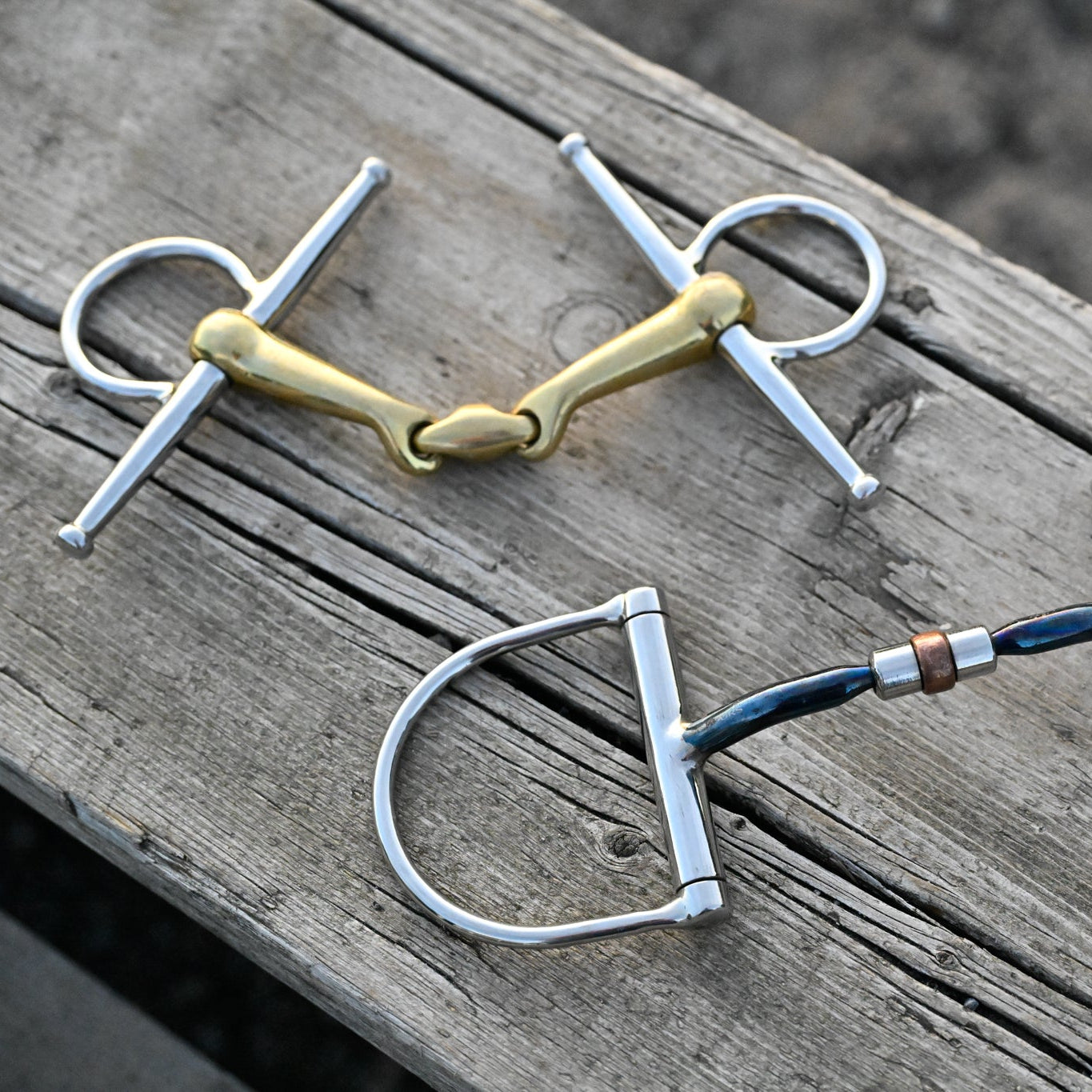
Horses with thicker or fleshier tongues often have far less room in the mouth than expected. Constant tongue compression can lead to resistance, mouth opening, tongue evasions, or tension through the jaw and poll. For these horses, mouthpieces that follow the natural shape of the mouth and distribute pressure more evenly are often better tolerated. Bits such as the ComfortArch and the SmoothRide offer tongue clearance, while the design of the CalmBlue allows for evenly distributed soft pressure on the tongue.
Palate height also plays a major role in comfort. Horses with low palates have limited vertical space, meaning jointed or bulky bits can press upward into sensitive tissue when rein pressure is applied. This often results in head tossing, inconsistent contact, or sudden resistance. Bits such as the CalmRide can help horses with sensitive palates due to their slimmer profile and anatomical shape that accommodates horses with limited interdental space.
The bars are among the most sensitive contact points affected by a bit. Horses with narrow or prominent bars may react strongly to concentrated pressure from thin or rigid mouthpieces, leading to bracing or avoidance. BarRelief and SmoothRide are options for horses with sensitive bars. A Baucher cheekpiece can also help lift the mouthpiece slightly away from the bars, aiding in relief. For horses with very sensitive bars, additional options include flexible rubber bits or wrapping the bit with cushioned latex bit tape.
Crucially, reducing pressure in one area often increases it in another. Ethical bit fitting is not about eliminating pressure, but about distributing it in a way the horse can understand and tolerate over time.
Many behaviors commonly labeled as training problems, such as gaping, head tossing, tongue evasions, and reluctance to go forward, are often physical responses to discomfort. Without anatomical awareness, these signals are easily misinterpreted as disobedience rather than feedback.
Regular dental care must always come first, as no bit can compensate for sharp teeth or painful oral conditions. Bit choices should follow a recent dental evaluation and be reassessed as the horse’s mouth changes over time.
You do not need specialized tools to begin understanding your horse’s mouth, but you do need patience and care. Gently observing how full the mouth appears at rest, noting how the tongue settles, and carefully feeling bar sensitivity can provide valuable context. Any strong reactions, pain, or anxiety should always be referred to a veterinarian or equine dentist.

These observations are not about labeling a horse as “sensitive” or “difficult,” but about understanding how that individual experiences pressure.
Understanding your horse’s mouth anatomy is not just for professionals. It is for every rider who values comfort, clarity, and ethical horsemanship. No two horses have identical mouths, and a bit that works well for one may be uncomfortable for another.
When anatomy guides equipment choices, communication becomes quieter, trust deepens, and performance improves naturally. At Agador’s, we believe that thoughtful, informed decisions create softer contact and stronger partnerships. A horse that is comfortable in their mouth is more confident, more willing, and better able to meet the rider with clarity, and that is where true horsemanship begins.