Bitless & Hackamores
Sort by
3 products
for sensitive horses that prefer no bit in the mouth
How To Wear It
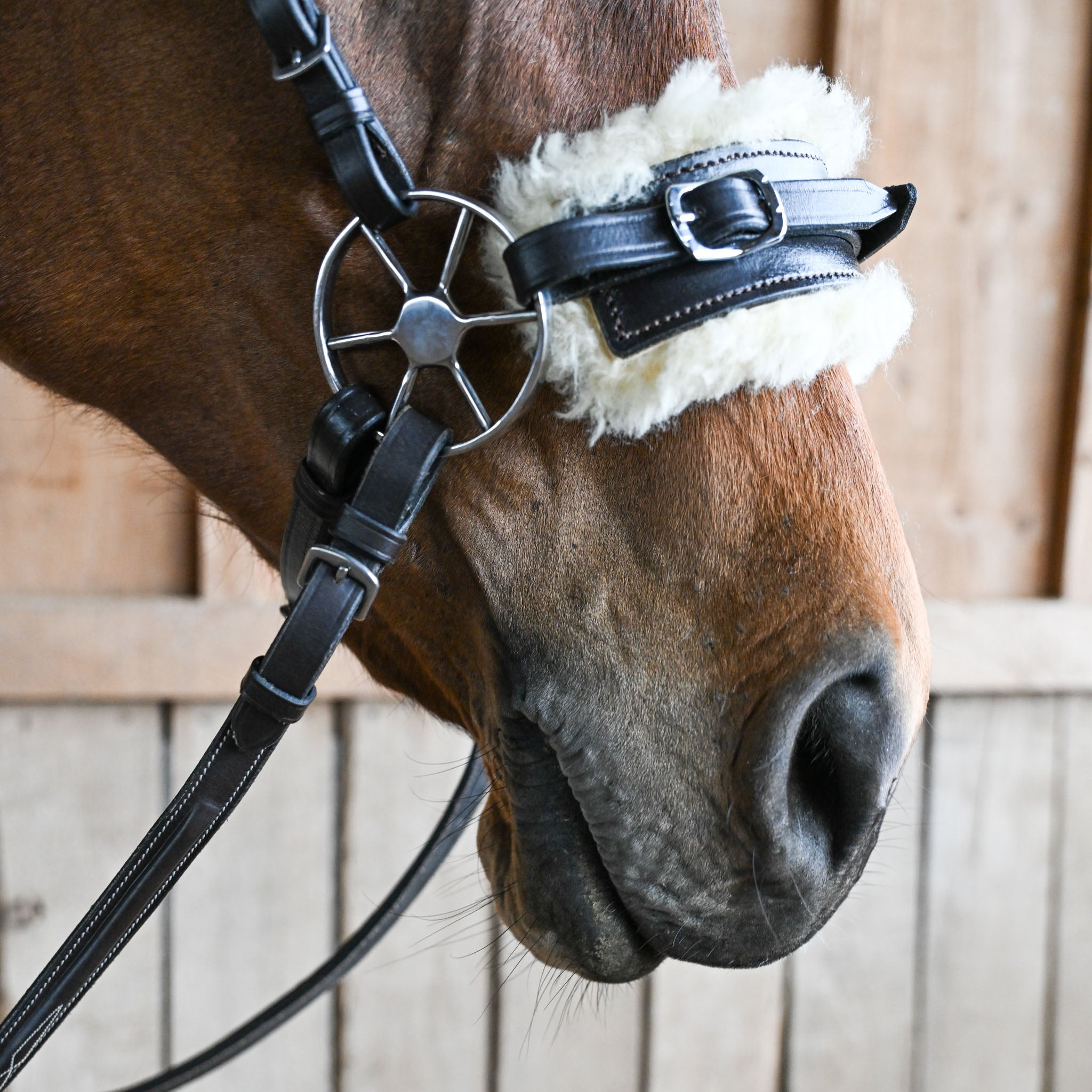
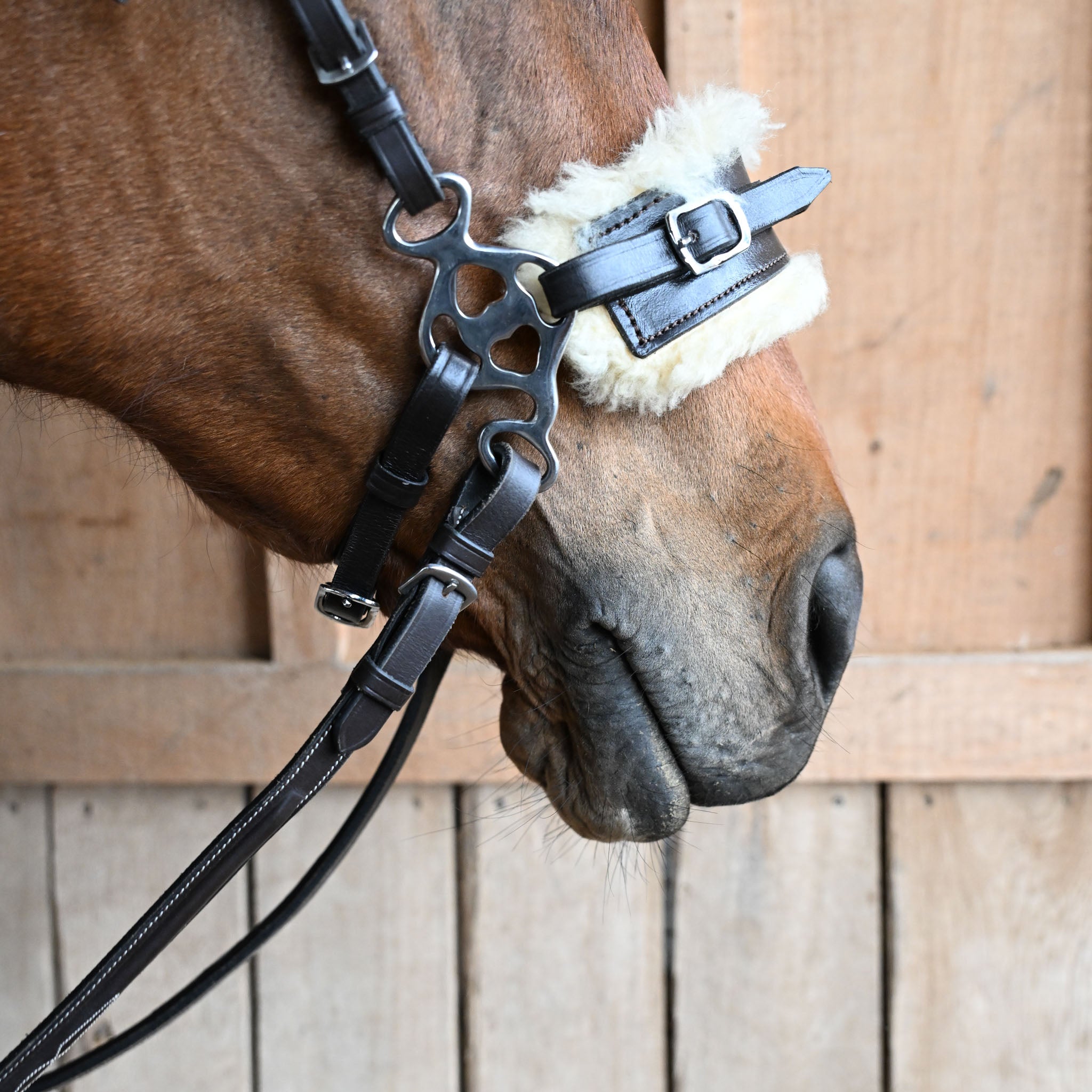
Correct fitting of a hackamore is essential for comfort, communication, and the horse's wellbeing. An incorrectly fitted hackamore can cause pain, confusion, and in extreme cases, injury to the nasal bone, which is fragile and should never be subject to concentrated pressure.

Noseband Position
Position the noseband approximately two fingers below the cheekbone. This gives the noseband room to function over the nasal bone without sitting too close to the fragile tip. The noseband should be snug enough to transmit pressure without being so tight it restricts breathing. Horses cannot breathe through their mouths.
Checking Noseband Fit and Pressure
When the reins are engaged, check that pressure is delivered to the flat of the nasal bone rather than the fragile lower tip. Run a finger around the noseband to confirm it is sitting flat without twisting or bunching. The shanks should return smoothly to the neutral position when rein pressure is released. If they remain tilted, recheck noseband position and tension.
Rein Attachment and Balance
Reins attach to the lower rings of the hackamore shanks. Ensure both reins are even in length and that the shank connection lies smoothly without twisting. Check that the shanks return to the neutral position when rein pressure is released. Consistently uneven return suggests the noseband needs rebalancing.
Need help?
Frequently Asked Questions About Bitless & Hackamores
Is a hackamore always milder than a bit?
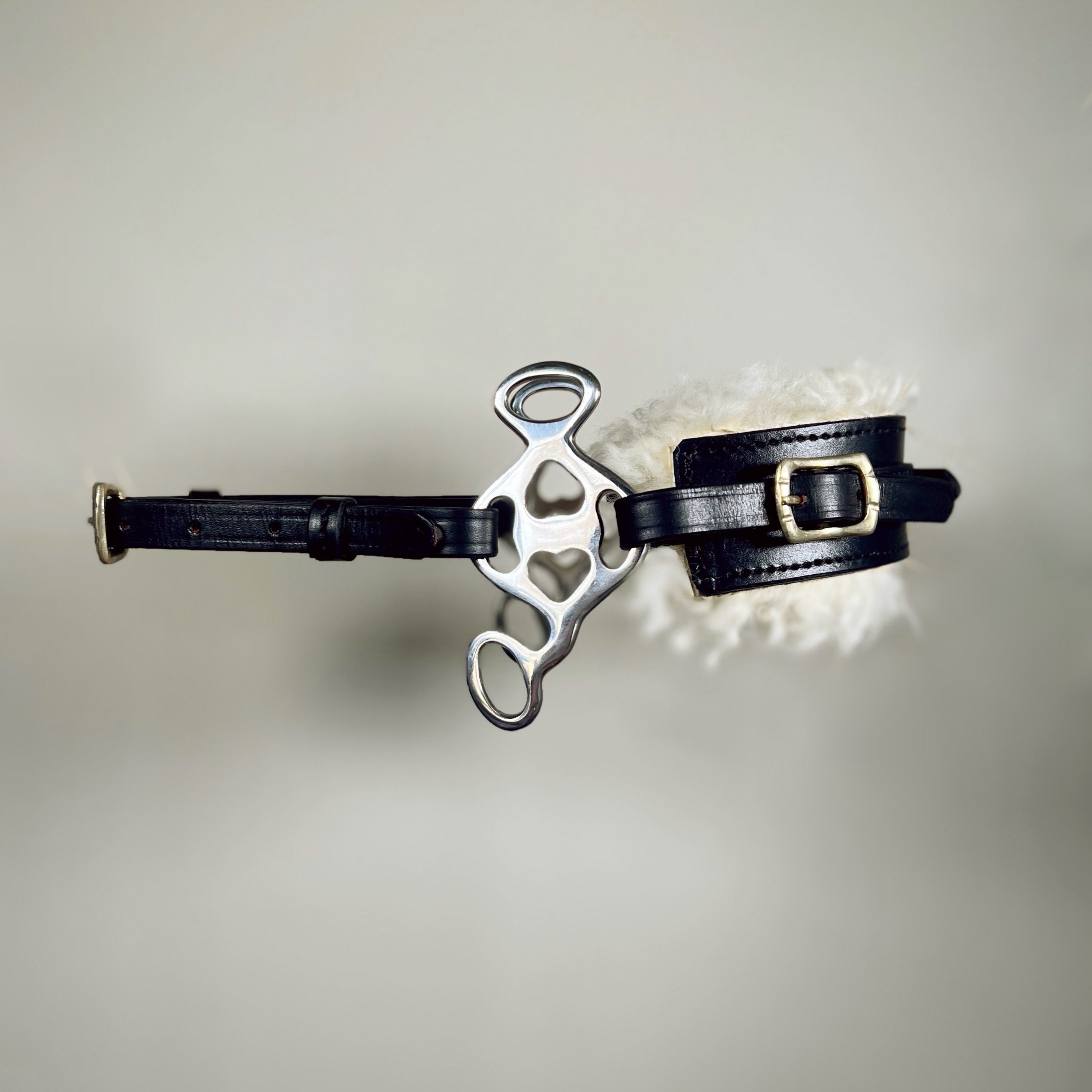
Not necessarily. A Baby Hackamore with very short shanks is extremely mild. A Mechanical Hackamore with long shanks can exert significantly more pressure than most snaffles. Every inch of shank length approximately doubles the leverage force. Never assume 'bitless' means gentle; the mechanical design and shank length determine intensity, not the absence of a mouthpiece.
Can I use a hackamore in competition?
This varies greatly by discipline and governing body. Hackamores are permitted in some Western disciplines, endurance, and certain jumping classes. They are not permitted in FEI or most affiliated dressage. Always check the specific rules for your discipline and level before competing in any bitless option.
How do I fit a hackamore correctly?
The noseband should sit approximately two fingers below the cheekbone on the side of the face. It should be snug enough to function without restricting breathing. Horses are obligate nasal breathers, so noseband tightness is a serious welfare consideration. The fit should always allow free nasal passage even when pressure is applied.
Can I start a young horse in a hackamore?
Yes. Many trainers start young horses in bitless options before introducing a bit. The Baby Hackamore is particularly popular for early groundwork and initial ridden work, as it teaches response to pressure without introducing mouth contact. Riding bitless can also be used as a diagnostic tool at any stage — if problems disappear without a bit, the root cause is likely oral.
What is the difference between the Baby Hackamore and the Wheel Hackamore?
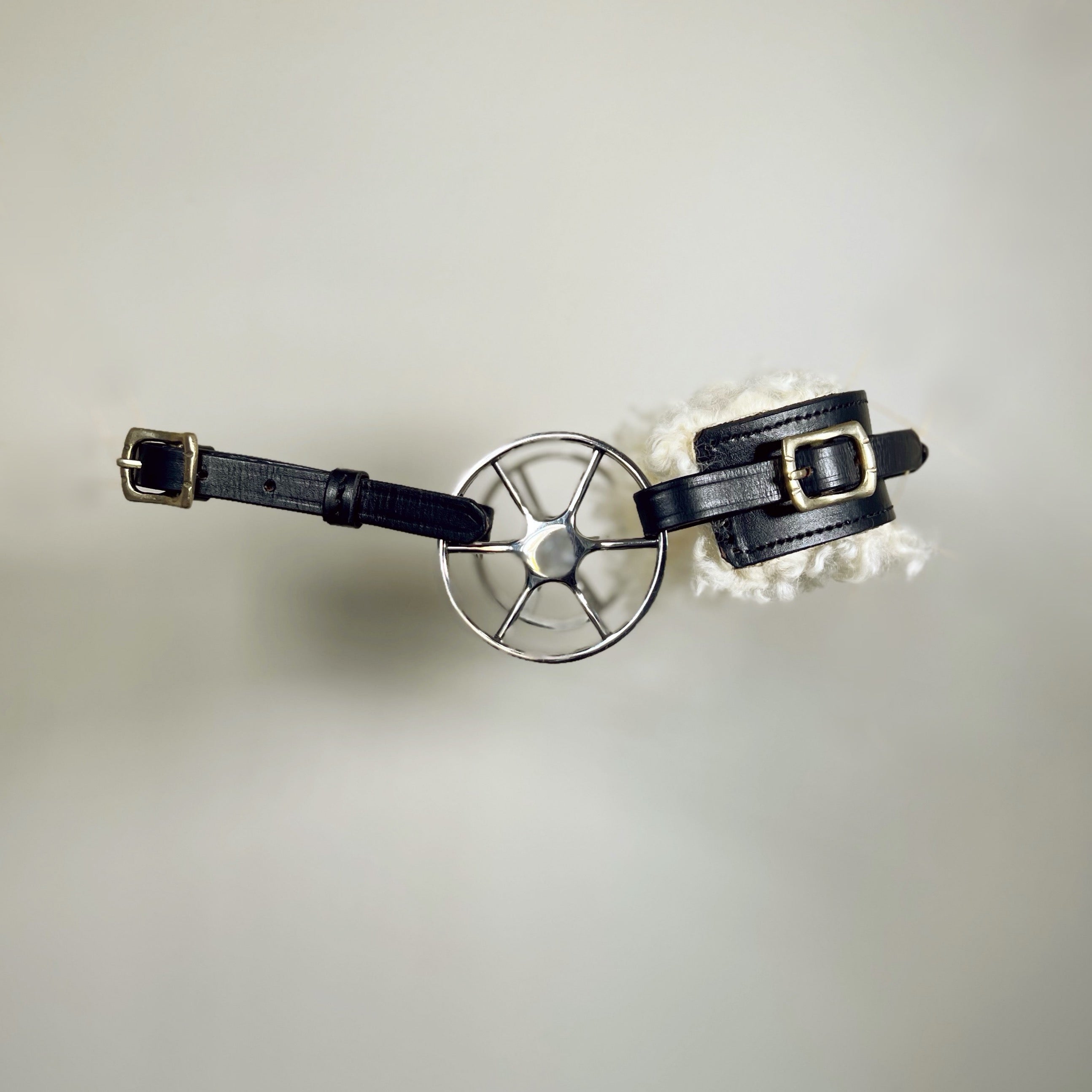
The Baby Hackamore has the shortest shanks and provides the mildest leverage, ideal for sensitive horses or as a gentle introduction to hackamore work. The Wheel Hackamore uses a rotating wheel to distribute pressure more gradually across nose, chin, and poll simultaneously, offering a more balanced pressure profile and a smoother feel for both horse and rider.
Who should consider using Bitless & Hackamores?
Bitless and hackamore options are ideal for horses that cannot or should not carry a traditional bit, or for riders who prefer communication without mouth contact. They range from very gentle introductory options to strong control tools.
Horses in Rehabilitation
Horses recovering from dental procedures, oral injuries, mouth wounds, or bar injuries benefit greatly from a period of bitless work. Removing all mouth contact allows healing while maintaining ridden exercise. The Baby Hackamore in particular is gentle enough to use immediately post-procedure for horses needing to continue their work programme.
Bit-Averse Horses
Some horses show a strong aversion to carrying a bit, whether from past trauma, oral sensitivity, or individual preference. These horses will often accept a hackamore more readily than any bit design, making it possible to rebuild trust and ridden work before reintroducing a bit, or permanently transitioning to bitless riding.
Riders Preferring Bitless
Many riders choose to ride bitless as an ethical or philosophical choice, appreciating the ability to communicate without applying any pressure inside the horse's mouth. Our collection currently includes the Baby Hackamore for gentle introductory work and the Wheel Hackamore for a more balanced option.
Worldwide Delivery
Free for orders $100+ to USA & Canada. Here's how long it will take.
Ride it. Decide later.
We accept even lightly used bits within 30 days - ship it back for refund, exchange, or store credit.
Need Help Finding the Right Bit?
We’ll guide you - no pressure, no bots, just honest advice.
Riders Trust Us - From Their First Show to the Olympics
Read about real horses, real riders and real contact issues our bits have helped solve.