Liverpool Bits
Sort by
2 products
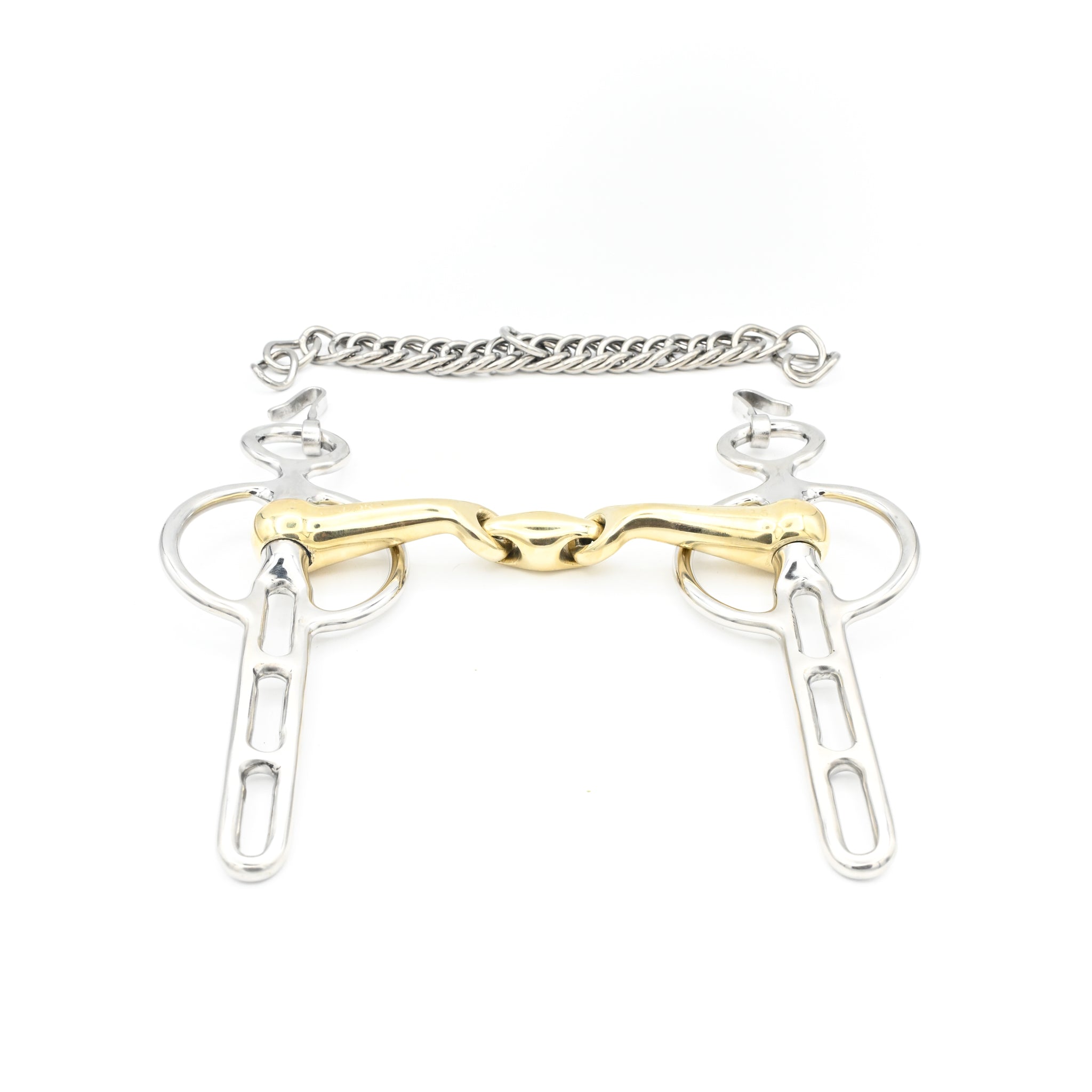
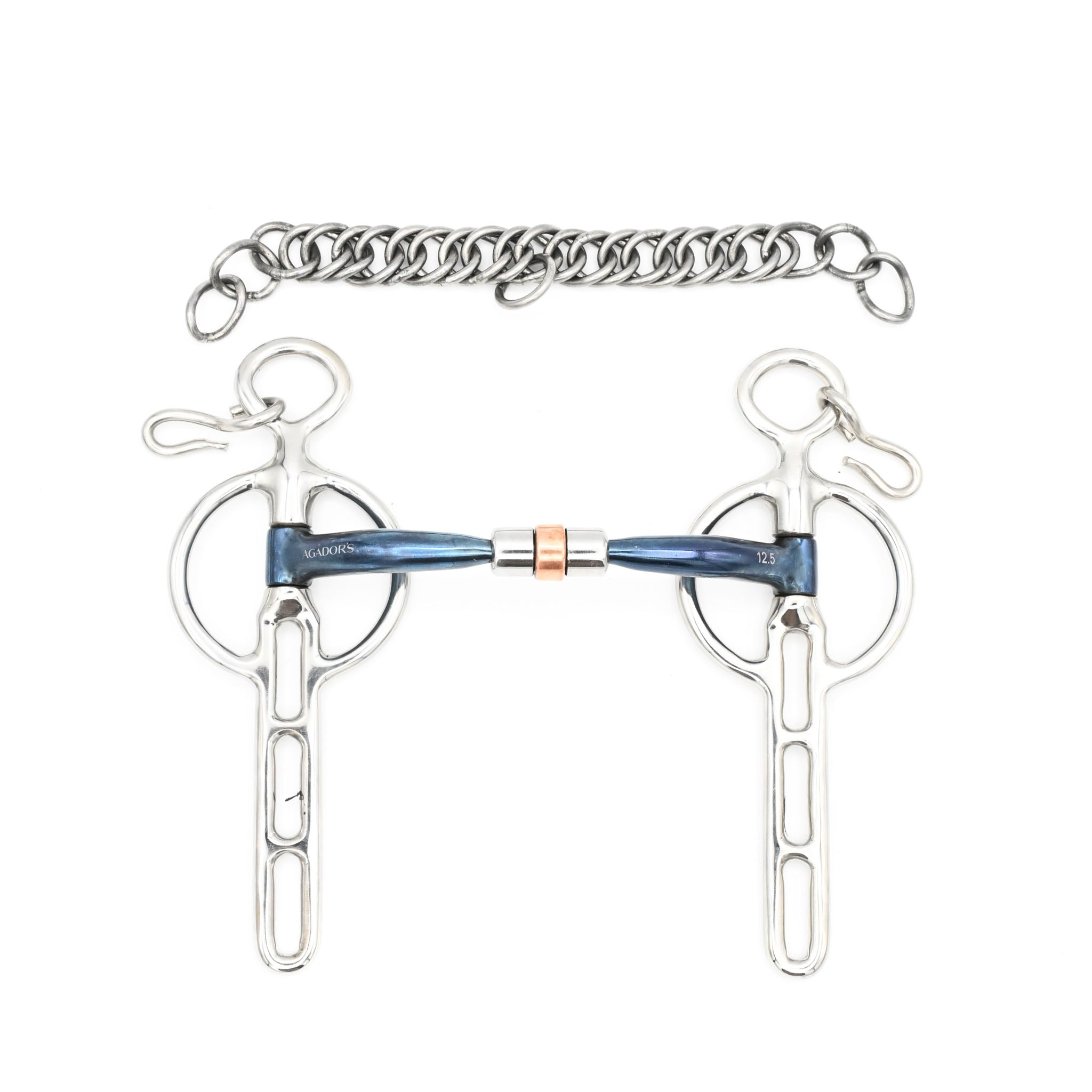
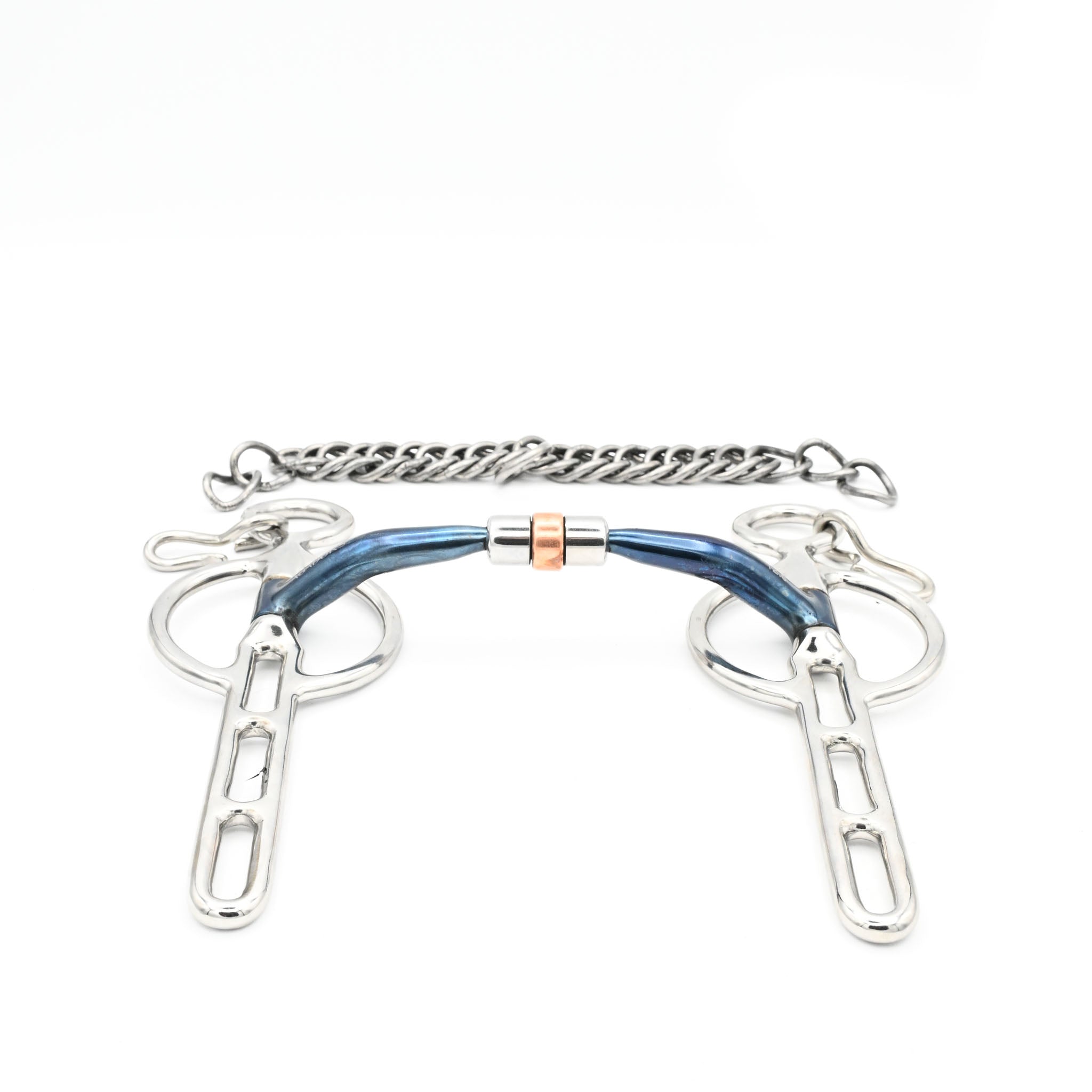
tongue relief with sweet iron and copper roller
for driving at any level
How To Wear It
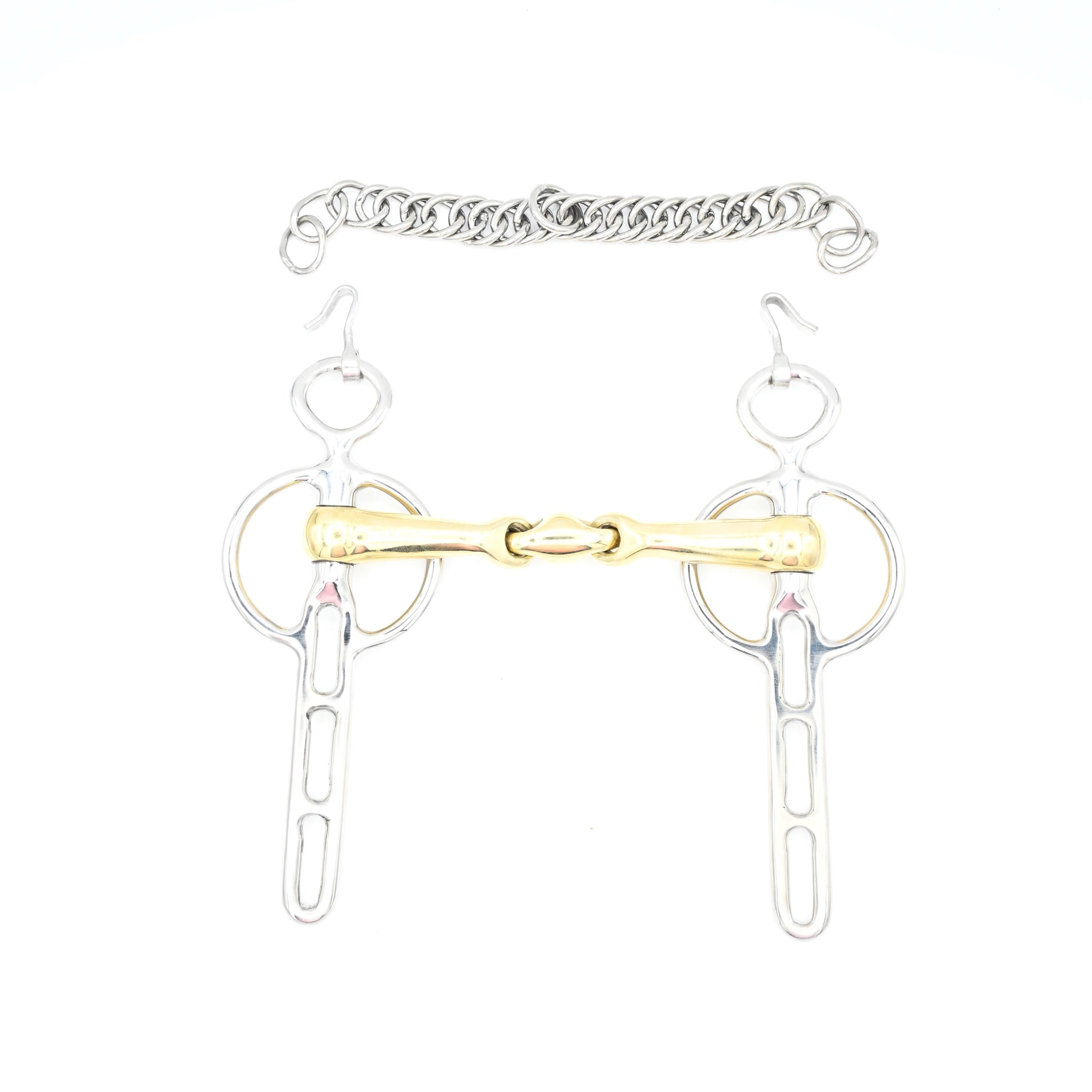
Correct fitting of the Liverpool bit is essential for effective driving communication and horse comfort. As a leverage bit, both the bit position and curb chain fitting must be precise.
Mouthpiece Position
The bit height should be set for the horse's comfort. Some horses prefer the mouthpiece to sit slightly higher, others slightly lower. Ideally the height is guided by the palate groove placement, ensuring the mouthpiece does not press against the palate.
The shanks should hang roughly perpendicular to the ground in the neutral position. Ensure there is no pinching at the lips and the mouthpiece lies flat and even. For a fixed-cheek design like the Liverpool, allow a gap of 3-5mm between the cheekpiece and the horse's face on both sides. If too much mouthpiece protrudes on one side, the bit will shift and any movement of links or joins will become uncomfortable for the horse.
Curb Chain Placement
Attach the curb chain to both sides of the bit and lay it flat in the chin groove. Adjust so it engages when the shanks rotate to approximately 45 degrees, not before. Check this by gently pulling one rein to observe at what point the chain comes into contact with the jaw. A correctly fitted chain should not create any pressure when the horse is relaxed.
Rein Slot Selection
Always begin with the rein in the cheek (top) slot for young or sensitive horses, or when working with a horse in Liverpool for the first time. Progress to middle or lower slots gradually as the horse's training develops and as the driver's assessment of the horse's needs evolves. Never begin in the lowest slot.
Need help?
Frequently Asked Questions About Liverpool Bits
What does each rein slot on a Liverpool bit do?
The top (cheek) slot gives direct, snaffle-like action with minimal leverage, pressure is primarily on the lips. The middle slot begins to engage the curb chain and increases leverage, adding chin and poll pressure. The bottom slot provides the most leverage, strongest curb chain engagement, and the greatest combined pressure across lips, chin, and poll. Always begin with the lightest slot and only move down as training progresses.
Is a curb chain required with a Liverpool bit?
Yes. The Liverpool bit is designed to work in conjunction with a curb chain. Without a curb chain, the leverage mechanism cannot function correctly and the bit's balance and action will be compromised. The curb chain should be fitted flat in the chin groove and adjusted to engage when the shanks reach approximately 45 degrees.
Can Liverpool bits be used for ridden work?
Liverpools are specifically designed for driving and are not typically used for ridden work. The geometry of the shanks, rein angle, and bit mechanics are optimised for the position of a driver's hands in a driving vehicle, which differs fundamentally from a rider's hand position.
How should the curb chain be fitted on a Liverpool?
Twist the curb chain flat so it lies smoothly in the chin groove without digging in. With the rein in the cheek (direct) slot, the chain should be loose. It should only engage when the shanks have rotated to approximately 45 degrees. The curb chain prevents rotation beyond this point, which is the fundamental mechanical limit for correct leverage action.
What mouthpiece works best with the Liverpool cheekpiece?
A mullen (straight bar) mouthpiece is the traditional and most common choice for driving, providing even tongue pressure and a predictable, consistent feel. Jointed mouthpieces are also used with the Liverpool, offering a different pressure profile. The joint introduces more tongue action and a wrapping sensation around the bars. The best choice depends on the individual horse's mouth conformation and sensitivity.
Who should consider using Liverpool Bits?
The Liverpool is the backbone of driving work and offers the versatility and adjustability required across the full range of driving disciplines, from training young horses to competing at the highest level.
Driving Horses in Training
Younger or less established driving horses benefit from the cheek (direct) position, which provides minimal leverage while the horse develops balance, obedience, and strength. Starting in the lightest slot allows the horse to become familiar with rein contact without the amplified pressure of the lower slots.
Experienced Competition Drivers
As horses progress in training, drivers can move to middle or lower rein slots to find the ideal balance of precision and control. The ability to fine-tune leverage within a single bit design is invaluable for competition, where different classes, obstacles, and movements may require adjustments.
Heavy Draft Horses
For larger, stronger breeds that require more control, the lower rein placements provide the additional leverage needed without requiring excessive hand strength from the driver. The distribution of pressure across the chin groove, lips, and poll makes the stronger placements effective without concentrating force on a single sensitive area.
Worldwide Delivery
Free for orders $100+ to USA & Canada. Here's how long it will take.
Ride it. Decide later.
We accept even lightly used bits within 30 days - ship it back for refund, exchange, or store credit.
Need Help Finding the Right Bit?
We’ll guide you - no pressure, no bots, just honest advice.
Riders Trust Us - From Their First Show to the Olympics
Read about real horses, real riders and real contact issues our bits have helped solve.