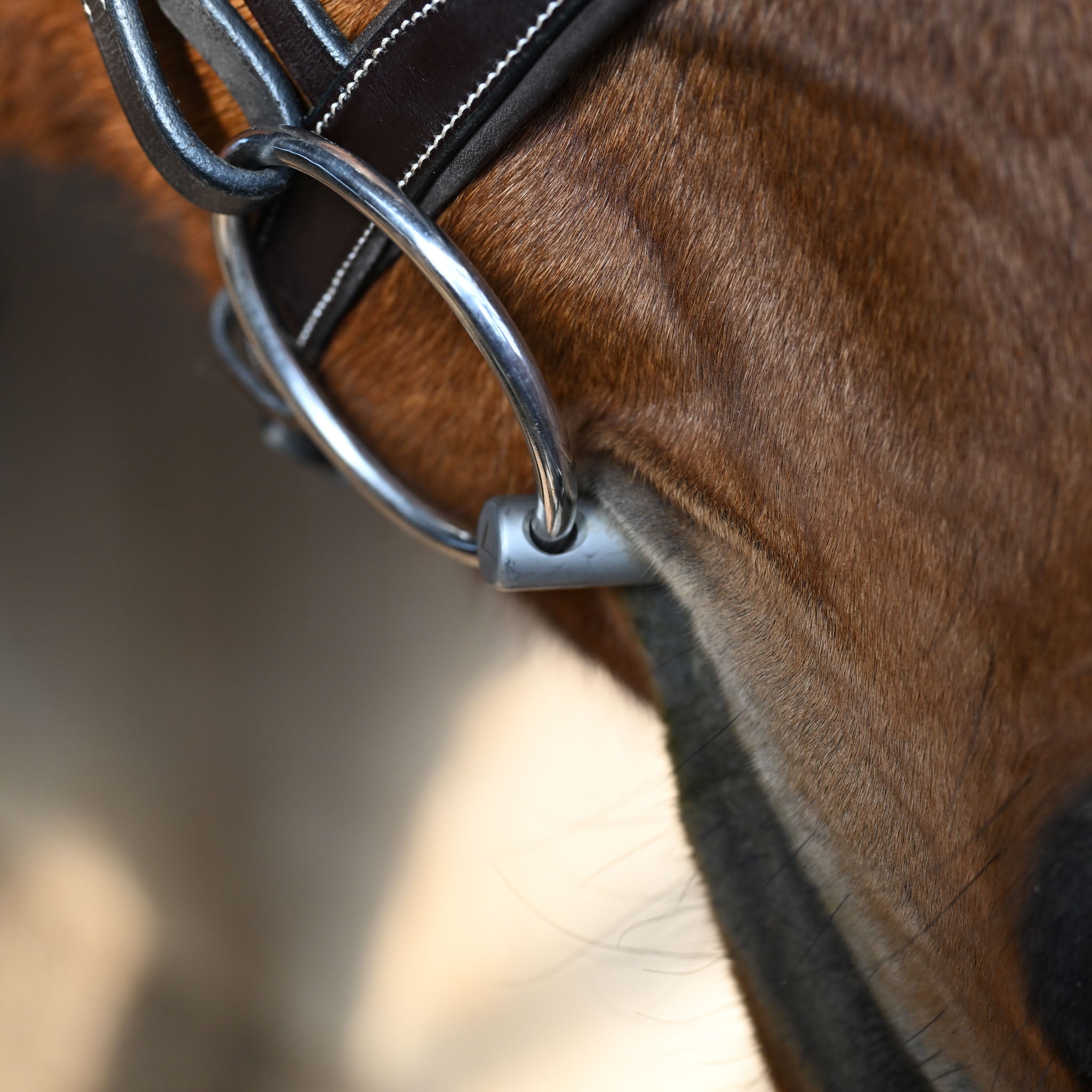
Article: Why Equine Dentistry Matters for Comfort, Performance, and Bit Fit: An Interview with Equine Dental Practitioner Mike Lawrence
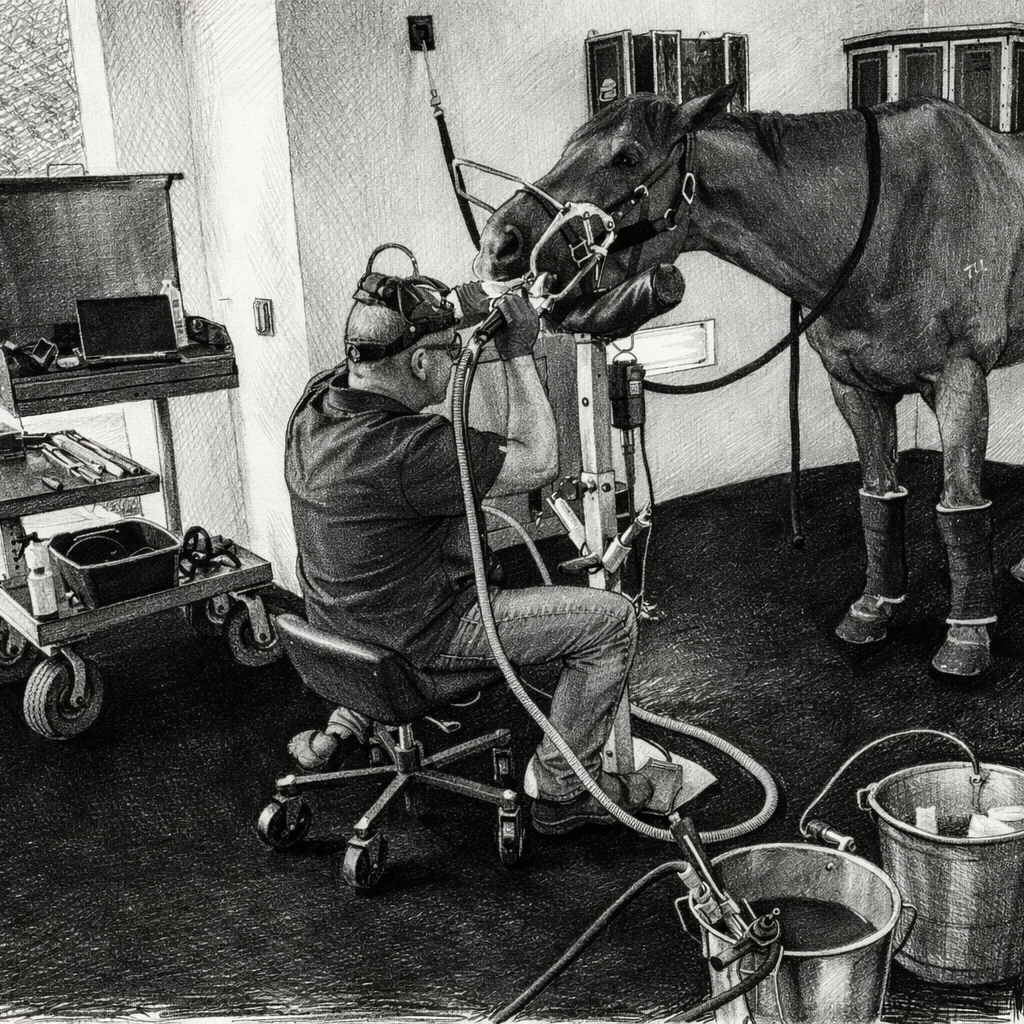
Why Equine Dentistry Matters for Comfort, Performance, and Bit Fit: An Interview with Equine Dental Practitioner Mike Lawrence
Mike Lawrence’s path into equine dentistry was shaped long before he ever picked up a dental float. Growing up riding and showing horses in Nova Scotia, and later spending summers competing and working at his sister and brother-in-law’s large training farm in Maryland, Mike was influenced by programs and veterinarians who all felt strongly that fundamentals mattered. Proper hoof care and routine dental maintenance were treated as non-negotiables, part of the foundation on which every sound, trainable horse was built. Holding horses for the farm’s equine dental practitioner, watching him work on nearly 90 horses, and then riding those horses both before and after dental care sparked Mike’s curiosity about how oral health affected comfort, performance, and the whole horse. That curiosity led him to pursue formal training at an equine dentistry school in Nebraska and ultimately to a career dedicated to improving equine welfare through dentistry.
Now more than 30 years into practice, Mike is a Certified Equine Dental Practitioner with the International Association of Equine Dentistry (IAED) and a Past President of the organization. Since beginning his career in 1992, he has practiced throughout Canada and the United States, primarily in Wellington, Florida and near his home in Campbellville, Ontario, and works closely with a number of veterinary practices.
I was fortunate to have the opportunity to ask Mike a wide range of questions, and he generously shared how advances in education, instrumentation, and research have transformed equine dentistry, allowing practitioners to improve comfort and function without compromising long-term dental health. He also offered thoughtful insight into how dental balance influences biomechanics, training, and performance, and why a clear understanding of oral anatomy is essential when evaluating bit fit. His answers are practical, accessible, and deeply informed, and I encourage you to take the time to read through the interview in full.

What sparked your interest in dentistry and what is it that keeps you motivated in the field 30 years later?
“I used to spend the summers competing and helping at my sister and brother in law’s large farm in Maryland in the US. My brother in law felt very strongly that proper hoof care and dental maintenance were critical fundamentals to proper horse care. He equated training a horse without covering these bases to building a house on top of a poor foundation, and I believe there is a lot of truth in that mindset. One of the tasks I was given there was to hold horses for their equine dental practitioner. They had approximately 90 horses at their farm so I got to spend a lot of time watching him work and trying to understand how the work was helping make the horses more comfortable. I made a point of riding before and after dental maintenance to feel if there was a difference. I became very interested in understanding how dentistry could affect the whole horse so I decided to pursue more knowledge and education in the field.”
How has the field changed since you began practicing?
“The industry and what we can do to help the horses has changed immensely since I started in 1992. We understand so much more in terms of what can help the horse without compromising the long term health of their teeth. The instrumentation has changed dramatically too which allows for very precise and less risky and invasive work in the horse’s mouths.”
What is your general philosophy when it comes to equine dental care?
“The International Association of Equine Dentistry standard of care requires that you leave the horse with more functional occlusion without narrowing the chewing surface, which I think is a very important premise. I think we should always strive to make the horse’s oral cavity healthier long term and more comfortable after dental intervention. It is also important to detect deviations from normal in the dentition and share that information with the horse’s owner and the primary veterinarian for the horse.”
What are the most common dental problems you see in horses and how do these issues vary by age, breed, or discipline?
“I have found that the issues we see can vary between breeds and head types. I work on a lot of competitive level dressage and hunter/jumper horses. They tend to have pretty heads with a steep curvature of spee, which is the natural upward ark of the lower cheek teeth. This curvature makes these horses pre-disposed to ramps in the back of the mouth and minor overjets which are slight overbites.
Ramps on the back molar may cause the mandible to be in an uncomfortable position when held in flexion for long periods of time in disciplines like dressage.
Quarter horses and heavy horses, which don’t generally have the same curvature of spee, don’t tend to develop ramps in the same manner. These horses also tend to be ridden with less contact and less consistent head flexion. Their mouths generally present very differently in terms of dental abnormalities.”
Are there signs owners often overlook that could indicate dental pain?
“I think when a rider observes things such as asymmetry when riding, head tossing, inability or willingness to accept contact, TMJ or poll discomfort diagnosed by their veterinarian, or abnormal muscle development of the masseter or temporalis muscles, they should seek to rule out dentistry issues as a potential contributor.”
How often should a horse receive dental evaluations?
“Ideally every 6 months is a good interval. If a horse gets dental maintenance annually you can generally keep a mouth in good shape but they can naturally be quite sharp at 6 months. The second half of the year the horse could be uncomfortable and irritate the tissue in their mouths due to abrasions from enamel overgrowth. If you need to make significant corrections to molar malocclusions then six months is definitely preferable as the corrections can be done incrementally and more conservatively.
When I see horses that I have been doing routinely for 20-25 years and they have full and functional dentition it is a reminder that long term dental health is more likely if regular routine dentistry is performed throughout the horse’s lifetime.”
What factors cause some horses to require more frequent care?
“Often horses that have excessive tissue in their mouths that can be pulled into the enamel points on the molars should be done more frequently, particularly if they are ridden in a gag or with a leverage bit that pulls the lips towards the molars in a stronger fashion.”
How does dental balance impact a horse’s biomechanics and performance?
“I think dental care is just one part of a complex system. Poor dentition and asymmetry in the mouth can contribute to the horse traveling inconsistently and perhaps putting strain on other parts of their bodies.
I work with a number of veterinarians that have the whole horse to consider and I marvel at the complex variables they must consider when evaluating soundness, but I strongly believe, as do most top veterinarians, that dental issues can represent primary issues for the horses they work on.”
Have you seen dental issues manifest as something else such as saddle-fit, lameness issues or training problems?
“I think the best situation for the horse is when all the care givers for the horse actively work together and do their part to make the horse more comfortable. That being said, there are a number of abnormalities that the horse may have in it’s mouth that may present as different issues. I think routine dental care is a good place to start in trying to rule out some training issues that horses may have. That isn’t to say that every issue is caused by dental discomfort, but many top veterinarians seek an oral exam as part of their process of elimination and I agree with that mindset.”
When evaluating a horse’s mouth, what anatomical structures matter most for bit comfort?
“I think many people tend to devalue the importance of mouth conformation when choosing a bit. A bit that a rider likes in principle may be a poor fit for certain horses and they may behave differently due to discomfort from a poor fit.”
How do variations in bar thickness, tongue volume, and palate height influence bitting choices?
“These are all critical conformational issues to consider when choosing a bit. Some horses have very little room in their mouth for a bit, so for those horses the ‘fat bit is softer’ philosophy doesn’t apply. Also, some horses that have sharp lower bars are resistant to strong contact and pressure on the bars, those horses can benefit from different shaped mouthpieces that avoid pressure on the region when on the contact. Some horses don’t like tongue pressure, so there are a number of designs that reduce pressure on the tongue and reduce that anxiety for certain horses.”
What are the key indicators that a horse’s bit is creating dental or soft tissue trauma?
“An oral exam by your veterinarian or equine dental practitioner should identify any ulcers or irritation in the mouth on the lips, cheeks, tongue, palate or lower bars.”
What bit characteristics (jointed vs. solid, port height, leverage) tend to work best for certain mouth conformations?
“There are so many variables to consider but in general horses with a low palate prefer mouthpieces that are straight or aren’t single jointed. Single jointed bits are still appropriate for most horses but in mouths where the joint puts pressure on the palate it can be very uncomfortable for the horse when ridden in contact.”
What’s the most misunderstood aspect of bitting among horse owners?
“I think every horse’s mouth should be considered as unique. I think at higher levels of training and competition it is unlikely that you would have one type of bit that fits every horse in the stable. I think understanding the traits in a horse’s mouth which makes certain bit shapes uncomfortable can be very helpful in avoiding training issues before they occur.”
What innovations or research in equine dentistry excite you most right now?
“I co chair a committee with the International Association of Equine Dentistry that helps assemble dental research. We hope to do more studies to develop data that makes the correlation between dental care and performance better understood.
I have had horses that have had major malocclusions that I thought would improve dramatically post dental and they changed minimally, and I have had horses that needed what I felt were minor corrections and the veterinarian and rider were marveling at the improvement. Those situations need to have data to better understand them. The issue is that credible studies take a lot of resources and money and the appetite to invest in a proper study hasn’t been there, even though I think it would be very progressive for horse welfare and equine dental care.”
What do you wish that every owner understood about dental care?
“I think that every horse owner should understand that a horse developing sharp enamel points is inevitable due to their hypsodontic tooth structure, (we have brachiodontic teeth which function differently). Preventative maintenance on an annual or biannual basis is widely accepted to be beneficial for the short and long term health of the horse. You shouldn’t wait for a horse to have trouble eating or behavioral issues before maintaining their dentition.”
Every horse’s mouth is unique, and the way a bit interacts with it is shaped long before the bridle is ever applied. Mike Lawrence’s perspective reinforces the importance of routine dentistry, anatomical awareness, and individualized care when evaluating bit fit. Thoughtful bitting starts with understanding the horse, and that understanding begins inside the mouth.