
Bit Guide
Types of Horse Bits
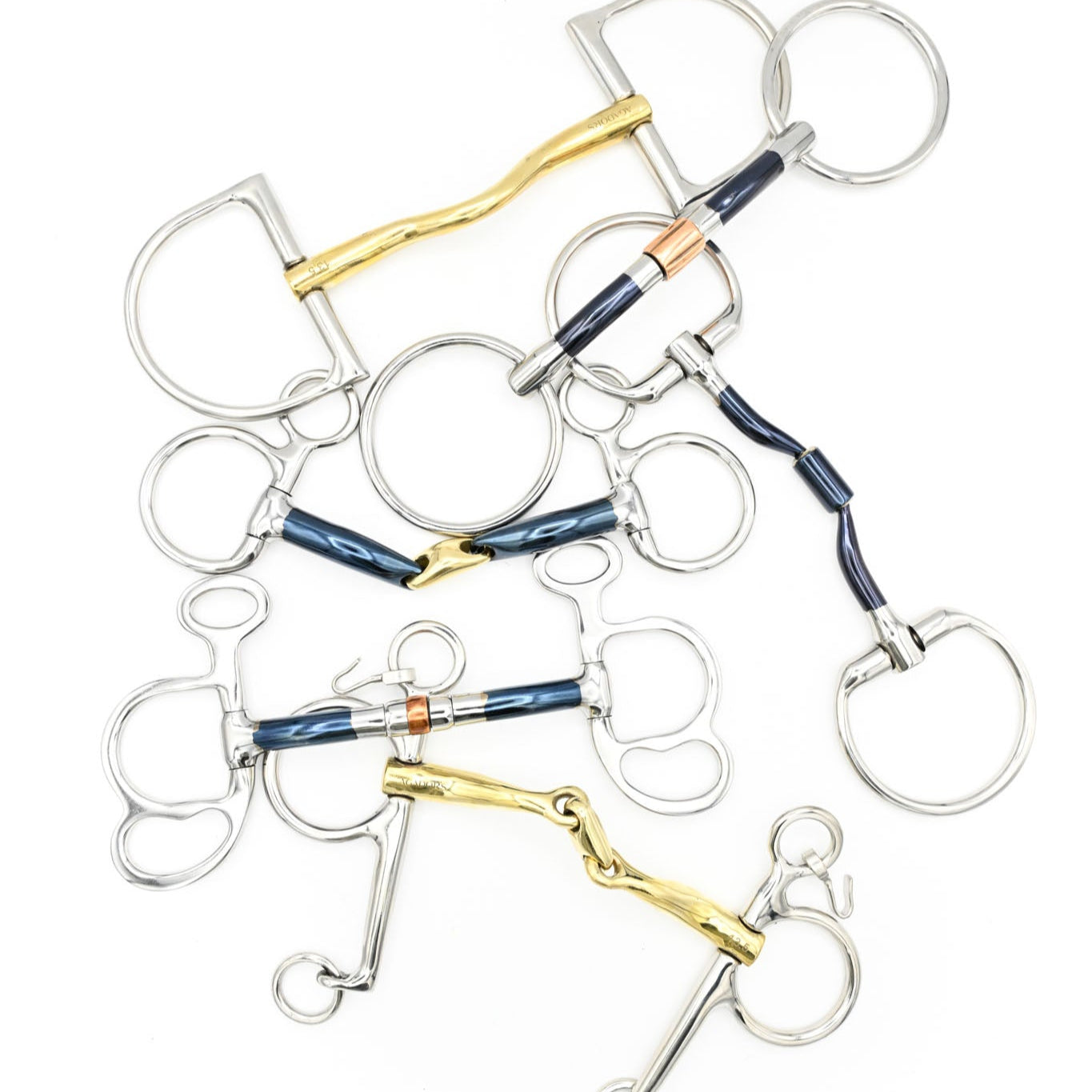
Every bit is a combination of two things: a cheekpiece that decides where force goes, and a mouthpiece that decides how it feels. Learn both, and you can evaluate any bit on any rack.
How Bits Work
A bit transmits and distributes the rider's hand pressure to specific areas of the horse's head. That pressure has to go somewhere. There are no bits that transmit no pressure, but there are trade-offs in where it is concentrated.
Good bits communicate cleanly. They transmit nuance with less force, letting the rider whisper before they speak. The goal is always to find the bit style your horse is most comfortable with, so communication stays clear and quiet.
There are only three mechanical principles at work:
Direct action (snaffles): The rein and cheekpiece attach to the same ring. Force is approximately 1:1. Pressure goes to the corners of the mouth and tongue.
Lever action (curbs, pelhams, Weymouths): The rein attaches below the mouthpiece. As rein gets pulled, the shank rotates and transmits pressure to the mouth, poll, and chin groove via curb chain. Longer shanks create more leverage.
Pulley action (gags, elevators): The rein rope or ring slides through the cheekpiece. This creates an upward pull on the corners of the mouth and a downward pull on the poll simultaneously.
Everything else is a variation on these three mechanisms.
Part 1
Cheekpieces: Where Force Goes
The cheekpiece determines which pressure points are activated when the rider takes contact. Think of it as the delivery system.
The first group are direct action cheekpieces. They have no mechanical advantage. Force in equals force out, applied to the corners of the mouth and tongue surface. They are the simplest and most common group.
Direct action with 1:1 force transmission
Direct Action Cheekpieces (No Leverage)

Loose Ring
The ring rotates freely through the mouthpiece, encouraging the horse to mouth the bit and stay soft in the jaw. The most common snaffle cheekpiece.
Best for: Horses that respond well to a mobile bit. Good default for most horses.
Shop Loose Ring
Eggbutt
Fixed oval junction prevents pinching and gives a very stable, still feel in the mouth.
Best for: Horses sensitive to ring movement. Lip sensitivity. Young horses who need a quiet, predictable feel.
Shop Eggbutt
D-Ring / Hunter D
The straight edge sits against the face, providing mild lateral guidance without full cheek extensions.
Best for: Hunters. Horses needing a touch more steering than an eggbutt.
Shop D-Ring
Full Cheek
Vertical extensions above and below the ring provide strong bilateral lateral guidance. Used with keepers to hold the bit in position.
Best for: Green horses learning to steer. Horses that drift or fall through the shoulder.
Shop Full CheekFulmer
Functionally identical to a full cheek, but with cheek extensions attached to a loose ring. Provides lateral guidance with the more mobile feel of a loose ring.
Best for: Same applications as full cheek, for horses that find the fixed cheek too dull.
Shop Full Cheek
Half Cheek
A single cheek extension, usually below the ring only. Provides one-direction lateral stability.
Best for: Horses needing some lateral support in one direction. Often used in driving.

Baucher
The cheekpiece attaches to a separate ring above the mouthpiece. This actually reduces poll pressure compared to a standard snaffle and reduces bit weight on the bars.
Best for: Fussy horses. Bar-sensitive horses. Nervous horses that benefit from a quiet, stable feel.
Shop Baucher
Wilson
Double-ring design: under rein tension, the outer ring squeezes inward slightly, creating lateral pressure on the sides of the mouth and face.
Best for: Horses needing stronger steering cues without cheek extensions.
Shop WilsonNot sure which of these fits your horse?
Reading about cheekpieces is one thing. Matching one to your horse is another. Our quiz asks a few questions about your horse's mouth, habits and discipline, then narrows all of this down to three bits that are in stock in your size.
Gag, Bevel, and Elevator Cheekpieces
These bits use a sliding mechanism that creates simultaneous upward pressure on the corners of the mouth and downward pressure on the poll. The pulley effect means the horse gets relief from corner pressure as it brings its head toward the vertical.
Pulley action with simultaneous corner and poll pressure
Gag and Elevator Cheekpieces

Polo Gag
A rope runs through the bit ring, with the rein attached below and the cheekpiece above. Strong upward corner action combined with moderate-to-strong poll pressure.
Best for: Speed work, cross-country, show jumping. Experienced riders with independent hands.
Shop Gag Bits
Bevel / Elevator / Three-Ring / Universal
Multiple rings stacked vertically. The lower the reins attach relative to the mouthpiece, the higher the gag action. Adjustable without changing bits.
Best for: Show jumping. Rein on main ring = snaffle. Lower rings = increasing gag effect. Best used with two reins and a curb strap.
Shop Elevator BitsLeverage Cheekpieces
These bits have shanks below the mouthpiece. When the rider takes the rein, the shank rotates backward, creating leverage. A curb chain or strap in the chin groove limits rotation. The result: pressure on the mouth, poll, and chin groove simultaneously.
Bits that amplify the rein aid through shanks and curb chains
Leverage Cheekpieces

Kimberwick
D-ring with slots for rein attachment plus a curb chain. Upper slot = milder action. Lower slot = more leverage.
Best for: Riders who want adjustable mild leverage without two reins.
Shop Curb Bits
Kimblehook
Similar to a Kimberwick but with multiple hook positions for the rein. Each position changes the amount of leverage.
Best for: Finer adjustment via hook selection. Same applications as Kimberwick.
Shop Kimblehook
Argentine
A versatile hybrid bit. Depending on rein placement it acts as a direct, snaffle-like bit (on the top ring) or engages shank leverage like a curb (on the lower ring). Must be used with a curb chain or strap.
Best for: Transitioning from snaffle to neck-reining curb. Western disciplines and trails.
Shop Western Bits
Baby Pelham
Shorter-shanked Pelham. Snaffle rein on the main ring gives direct action; the curb rein on the shank activates the lever.
Best for: Horses needing more than a snaffle but not ready for a full Pelham.
Shop Pelhams
Weymouth
The curb element of a double bridle, used alongside a bradoon. Available in 50mm (mild) or 70mm (standard) shank lengths.
Best for: Advanced dressage. Collection work. See also: Double Bridle Guide.
Shop Weymouth
Liverpool
A driving bit with a straight cheek and two to three rein positions. Plain ring (snaffle-like), middle slot (mild curb), bottom slot (maximum curb).
Best for: Driving. Adjustable leverage for different situations within the same outing.
Shop LiverpoolPart 2
Mouthpieces: How Force Feels
The cheekpiece decides where force goes. The mouthpiece decides how that force is distributed across the tongue, bars, lips and palate. Two bits with the same cheekpiece but different mouthpieces will feel completely different to the horse.
Joint Types
The joint design is the single biggest factor in how a mouthpiece distributes pressure.
How each joint design distributes pressure across the mouth
Mouthpiece Joint Types

Mullen (No Port)
A solid, straight or curved bar. Applies steady, even pressure across the full width of the tongue and bars. Maximum tongue contact. The most stable mouthpiece.
Agadors: Baby Blue (14-15mm), ComfortArch (14mm), SteadyFlex (rubber)
Shop Mullen Mouth
Mullen (Ported)
A raised section in the centre creates tongue relief. The wider and taller the port, the more tongue space. Pressure shifts to the bars.
Agadors: BlueCrest (narrow), BlueWave (widest, 95mm), ComfortFlow (12mm), FlexArch, FlexFlow (rubber)
Shop Mullen Mouth
Barrel Link
A cylindrical connector between two independent cannons. The barrel allows each side to move independently without tongue pinching. The barrel sits on the tongue.
Agadors: CalmBlue (10mm), CalmPort (10mm, ported), CalmGreen (rubber), CalmRide (stainless)
Shop Barrel Link
Double Jointed (Lozenge)
Two joints with a flat plate or lozenge in the centre. The three segments conform to the tongue's shape, distributing pressure more evenly than a single joint.
Agadors: ComfortWave (16mm), ComfortGlide (12mm), BarRelief (14mm), BlueRide Angled, SoftRide (rubber)
Shop Double Joint
Single Jointed
One central joint. Under rein tension the two halves fold inward, concentrating pressure on the tongue sides. Despite its reputation, modern research shows palate interference is less dramatic than believed.
Agadors: ComfortLink (14mm, German silver)
Shop Single Joint
Waterford (Multi-Link)
Multiple smaller links that move independently. Prevents the horse from taking a fixed hold on the bit. Each link shifts under pressure, making it difficult to lean or lock the jaw.
Agadors: BlueShape (12mm), ComfortShape (12mm), SmoothShape (12-15mm)
Shop WaterfordMaterials
The metal (or rubber) affects taste, temperature, weight, and how the horse accepts the bit.
Taste, temperature, weight, and acceptance
Bit Materials
Sweet Iron
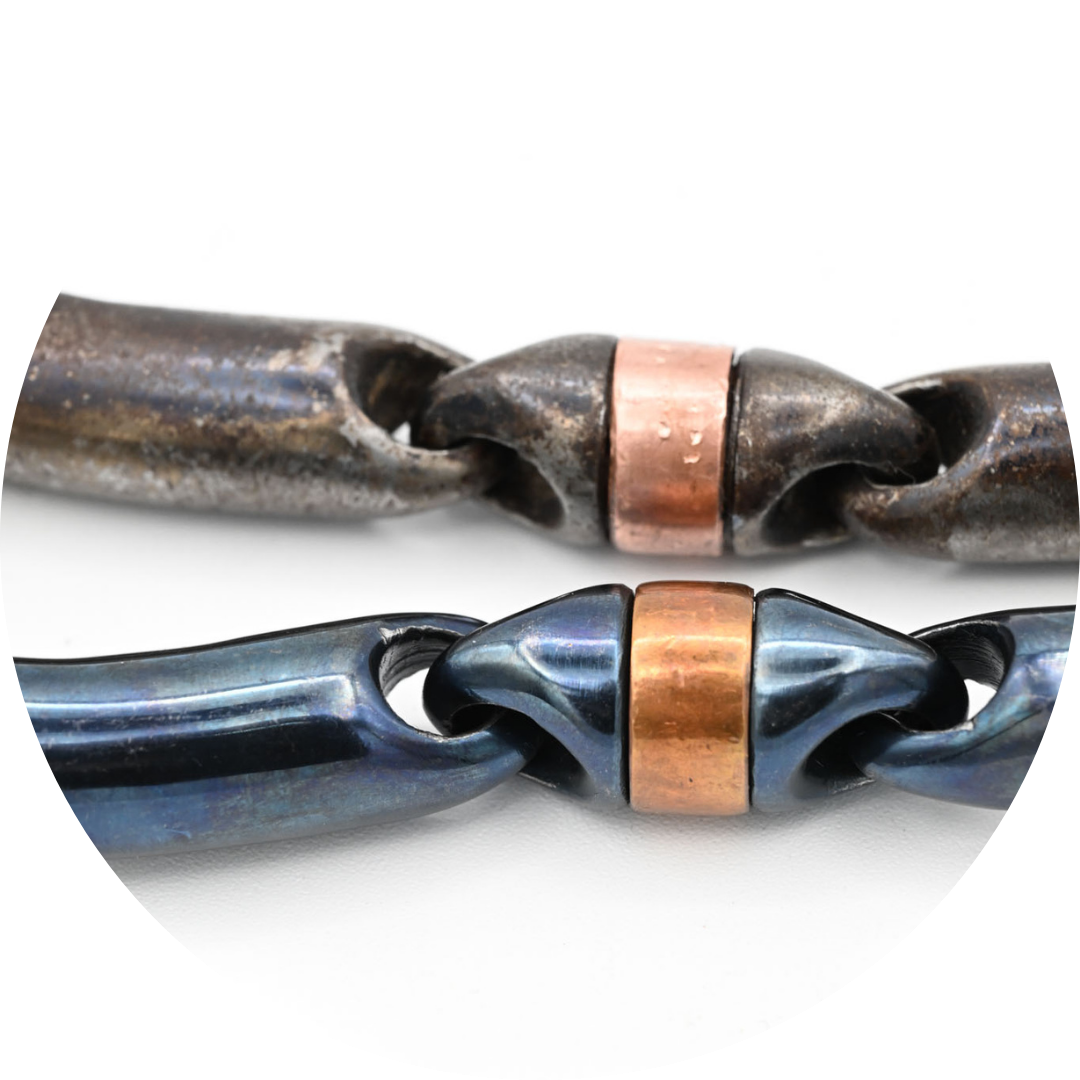
Oxidises in the mouth, releasing a sweet, warm taste that encourages salivation and bit acceptance. New bits have a blue finish that naturally wears to a brown patina. Wipe dry after every ride.
Agadors: CalmBlue, CalmPort, Baby Blue, BlueCrest, BlueWave, BlueRide Angled, BlueShape
German Silver
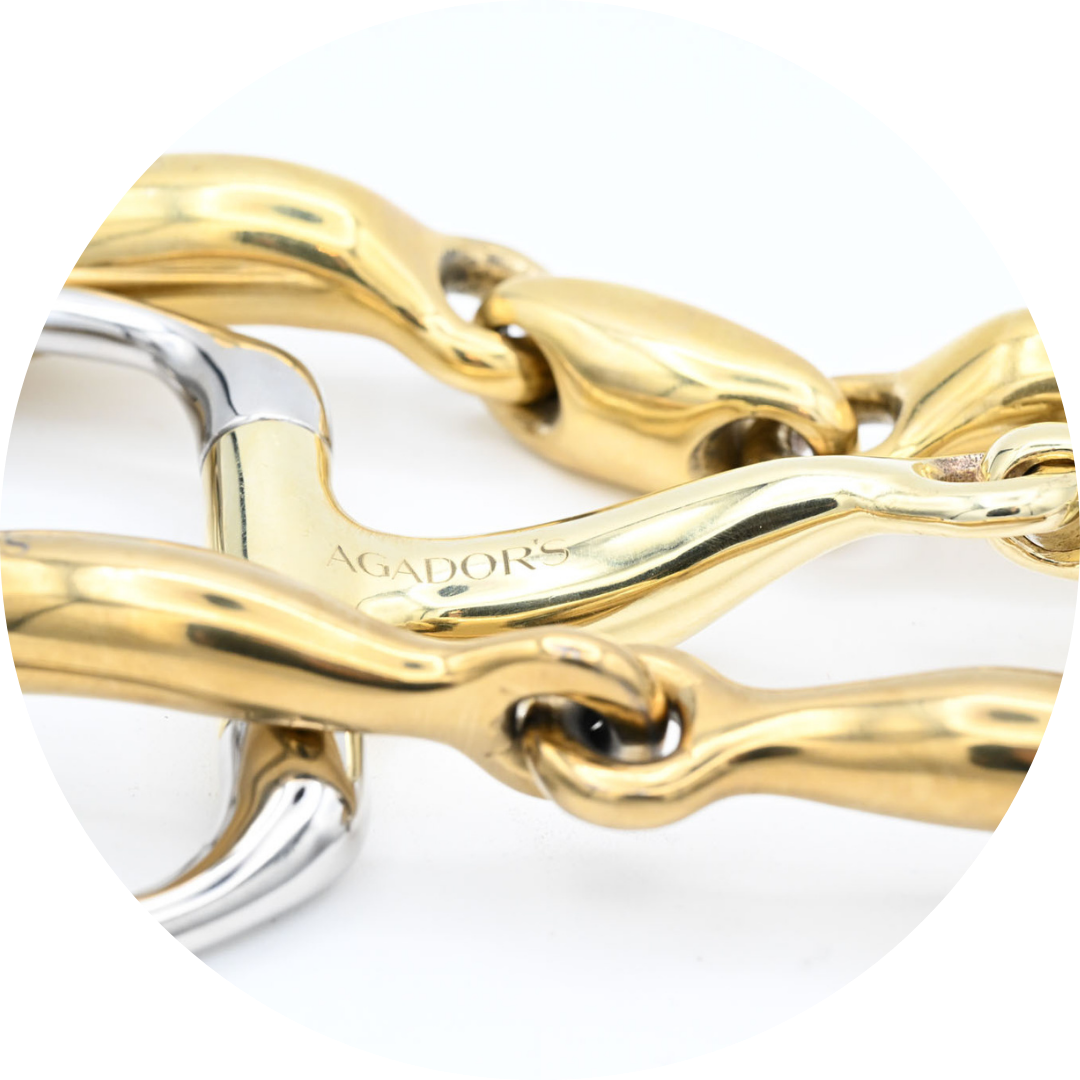
A copper-nickel-zinc alloy. Develops a mild, warm taste. Low maintenance. Warmer to the touch than stainless steel.
Agadors: ComfortWave, ComfortFlow, ComfortGlide, ComfortArch, ComfortLink, ComfortShape, BarRelief
Stainless Steel
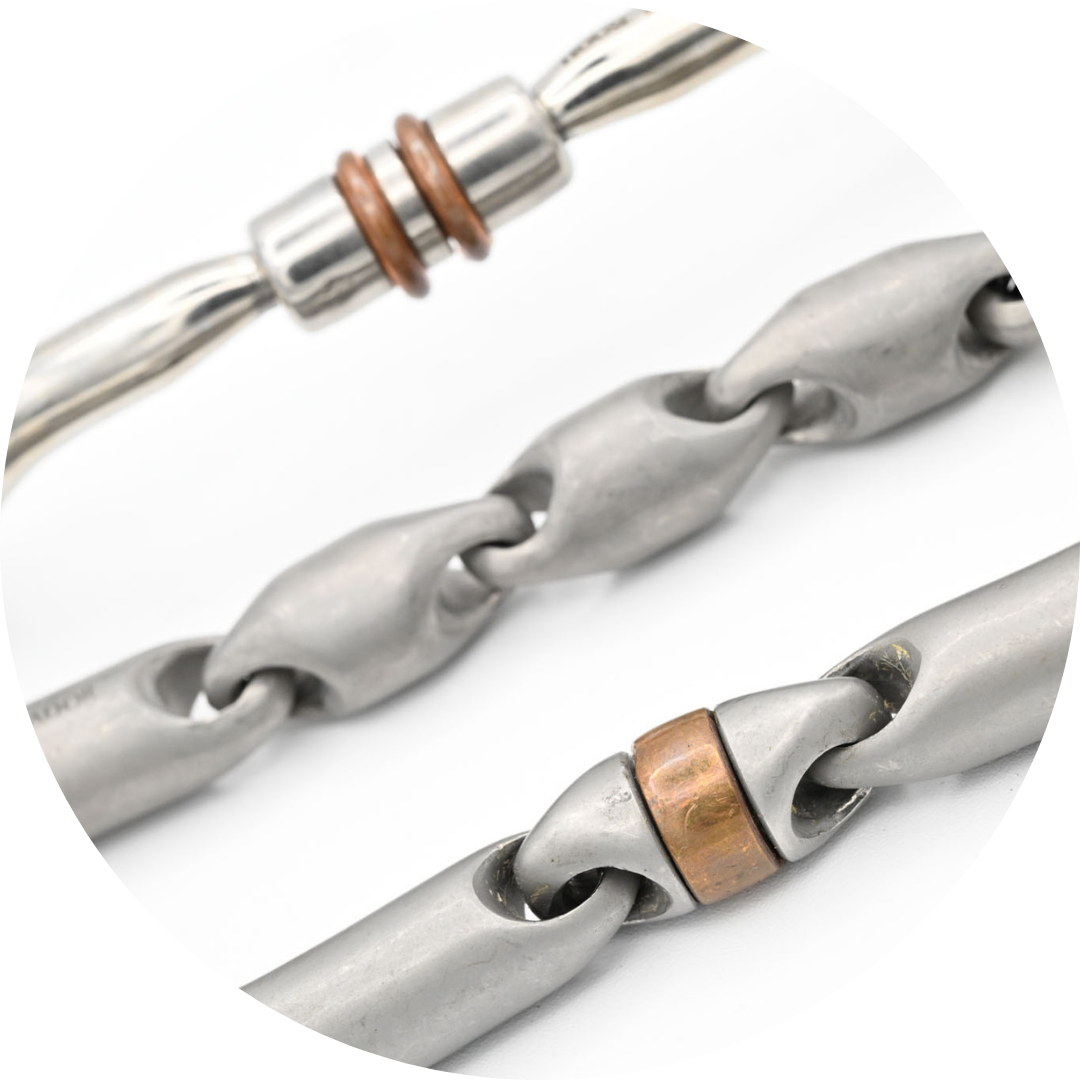
Durable, no oxidation, no taste. The most neutral option. Some horses prefer the simplicity; others are more accepting of a flavoured metal.
Agadors: SmoothRide, SmoothShape, CalmRide (with copper rollers)
Shop Stainless Steel
Rubber / Semi-Flexible
Softer contact than metal. Can suit horses anxious about metal in the mouth. However, thicker rubber mouthpieces take up more space and can apply more tongue pressure than a thin metal bit. Softer is not always gentler.
Agadors: SteadyFlex, FlexArch, FlexFlow, SoftRide, CalmGreen
Shop Rubber BitsPart 3
How to Choose
Start with the cheekpiece
Ask: What does my horse need in terms of signal delivery?
Goes well in a simple setup? Consider a loose ring or eggbutt (direct action). Needs help steering? Try a full cheek or Fulmer (lateral guidance). Fussy or bar-sensitive? A Baucher reduces bit weight on bars. Needs more control than a snaffle? A Kimblehook or Argentine offers mild leverage. Needs poll and chin engagement? A Pelham with two reins is adjustable. Working toward collection? A Weymouth + bradoon (double bridle). Needs a quick heads-up at speed? An elevator or polo gag (pulley action).
Then choose the mouthpiece
Ask: Where is my horse sensitive, and how much space is in the mouth?
Sensitive tongue? Ported mullen (BlueWave, ComfortFlow, FlexArch) or barrel link (CalmBlue, CalmRide, CalmPort) for tongue relief. Sensitive bars? BarRelief or Baucher cheekpiece. Thick tongue or low palate? Slim mouthpiece at 12mm or less (ComfortGlide, CalmBlue, CalmPort). Leans or gets heavy? Waterford (BlueShape, ComfortShape). Green horse? Simple double joint (SmoothRide, ComfortGlide, ComfortWave) with an eggbutt or loose ring. Prefers a flavoured bit? Sweet iron (CalmBlue, Baby Blue, BlueWave, BlueRide Angled) or copper elements (CalmRide).
Finally, consider material
Sweet iron if the horse benefits from taste stimulation and salivation. German silver for low maintenance with mild taste. Stainless steel for neutrality and durability. Rubber for horses anxious about metal (but pay attention to thickness).
Key Principles
1. Cheekpiece and mouthpiece are independent choices. A loose ring with a ported mullen and a loose ring with a Waterford are completely different bits. Evaluate both components.
2. The horse tells you the answer. Watch for steady connection, soft mouthing, relaxed jaw, reach for contact. Watch out for head tossing, tongue evasion, leaning, chomping or fussing. The bit is one variable in a system that includes saddle fit, dental health, rider biomechanics, and training.
3. Change one thing at a time. Swapping both cheekpiece and mouthpiece simultaneously makes it impossible to know what helped.
4. Verify competition legality. Rules vary between FEI, national federations, disciplines, and levels. Check every time you compete.
Put it into practice
You now know more about bit mechanics than most riders at the barn. If you want a shortlist for your own horse, the quiz takes about two minutes. And if you'd rather talk it through, write to us at hello@agadors.com. We read everything.
Further Reading
Explore more Agadors guides to deepen your understanding of bit selection and care.