
Bit Guide
Fitting a Double Bridle
Understanding the setup, selection, and fitting of the Weymouth and bradoon.
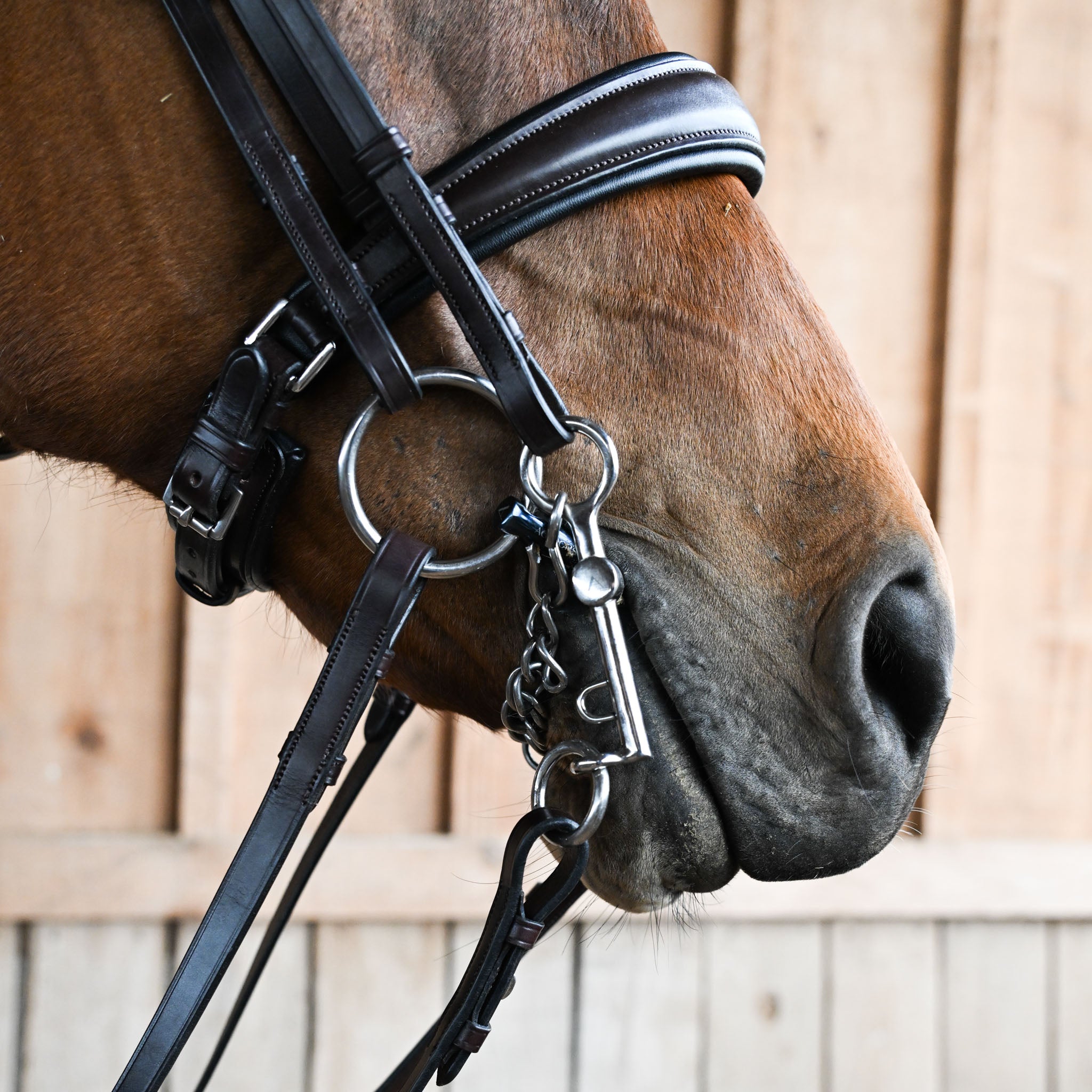
The double bridle places two bits in the horse's mouth at once: a bradoon or bridoon (snaffle) and a Weymouth (curb). Each serves a distinct function. The bradoon raises the head and maintains soft, constant contact. The Weymouth engages the poll and chin groove, encouraging the horse to soften into a rounder outline. Used together, they allow the rider to engage the hind leg and lighten the forehand with minute aids.
A double bridle that fits well is a precision tool. One that fits poorly creates confusion, discomfort, and resistance.
The Case for Two Bits
Why Use a Double Bridle?
Advanced Training
When a horse is working toward collection and learning to sit onto the hind leg, the Weymouth provides poll and chin groove engagement that a snaffle alone cannot. Its shank leverage, carried through the bridle cheekpieces, encourages the horse to flex at the poll, while the bradoon keeps the head in front of the vertical (ideally five to eight degrees in front). Together they allow the rider to ride the horse "up, out, and forwards" into the more advanced movements.
Advanced Speed Situations
The double was traditionally used on the hunting field and is gaining popularity in show jumping and cross-country. The curb rein provides effective slowing aids that can be instantly rewarded by returning the contact to the bradoon once the horse responds.
Step One
Before Two Bits: Introducing the Pressures
A horse does not need two bits to experience curb chain and poll pressure for the first time. A universal with a single mouthpiece, curb strap and two reins teaches those contact areas without introducing a second mouthpiece. A pelham with two reins does the same: the snaffle mouthpiece stays familiar while the chin groove and poll are engaged for the first time.
These setups also teach the rider to manage two reins before adding the complexity of two separate bits.
Step Two
Introducing the Double for the First Time
It's generally best to introduce a new bit set up in a positive environment. The horse should feel calm, secure and preferably doing something they enjoy like a hack. You want to stack the odds in your favour that the horse will associate the new bridle set up with fun rather than hard work.
Use it in conjunction with snaffle and pelham setups through training and keep the association positive. Varying the pressure points keeps the mouth fresh and the horse more receptive to the aids.
When you introduce the double for the first time introduce gradually. First fit the bits and confirm the horse is comfortable at rest. Proceed to walk in hand, lead and halt using the bradoon only. Do not use the curb rein.
If the horse is calm, try to mount up. Contact on the bradoon, very light feel on the curb. Then build over days, not one session. Start with walk, halt, turns, then gradually bring the Weymouth into more active use as the horse settles.
The Curb Bit
The Weymouth: Shanks and Leverage
The shank length directly affects leverage and poll pressure. Longer shanks amplify the rein signal.
50mm (5cm) Shank
Leverage: Mild
Poll-sensitive horses. Least leverage. A good starting point for a first double.
70mm (7cm) Shank
Leverage: Standard
Most popular. Suitable for the majority of horses. The reliable default for dressage work at Prix St. Georges and above.
90mm (9cm) Shank
Leverage: Strong
Less common in dressage. For stronger horses requiring more leverage. Nearly double the effect of a 5cm shank.
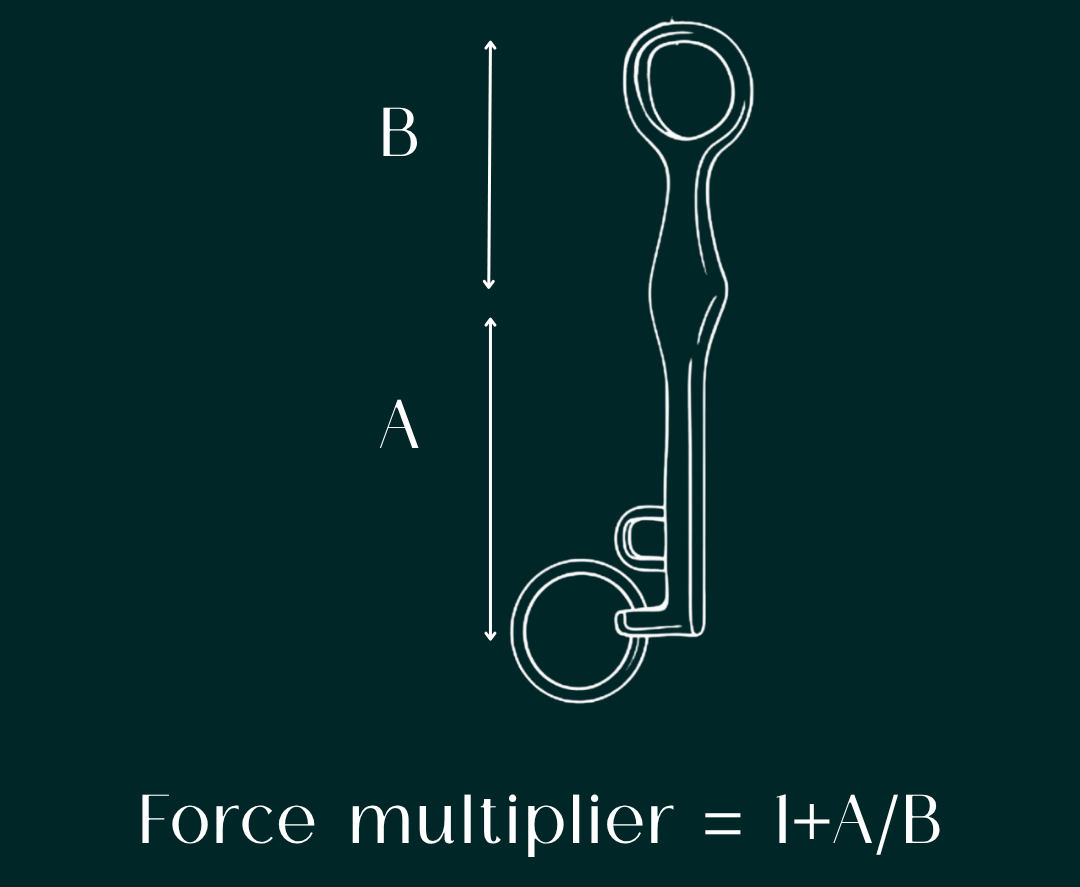
The relationship between shank length and force is mechanical: force in mouth = rein tension x (1 + A/B), where A is the distance from mouthpiece to rein attachment and B is the distance from mouthpiece to cheekpiece attachment. A 9cm shank therefore generates nearly double the effect of a 5cm shank.
The Snaffle Bit
The Bradoon: Ring Size and Cheek Style
The bradoon sits above the Weymouth mouthpiece in the horse's mouth and is ridden on the snaffle rein. While many regular sized cheekpieces are legal to use as a bradoon, most riders prefer a 55mm ring. It looks neater and is less likely to interfere with the noseband or the Weymouth cheekpieces. Both eggbutt and loose ring bradoons have smaller rings and thinner cheeks than a standard snaffle, so the bradoon and Weymouth can sit together without overcrowding.
Both sized with 55mm rings for a neat fit alongside the Weymouth
Eggbutt vs Loose Ring

Loose Ring Bradoon
The most common bradoon configuration. The ring slides through the mouthpiece, allowing independent movement. This can help horses stay relaxed with two bits in the mouth.
Sizing: typically a quarter of an inch larger than the paired Weymouth.
Shop Loose Ring Bradoons
Eggbutt Bradoon
Fixed connection between ring and mouthpiece. Preferred for horses sensitive to ring movement or with lip sensitivity, and for setups where stability is the priority.
Sizing: generally the same size as the paired Weymouth.
Shop Eggbutt BradoonsGetting It Right
Sizing
Getting the size right is important. The Weymouth is placed below the bradoon so correct size will largely depend on the conformation of the lips at the specific point where the Weymouth sits. For most horses, but not all, the lips tend to get fleshier towards the corners of the mouth.
Bits that are too large shift and interfere with each other inside the mouth. When in doubt, go smaller rather than larger.
Rule of thumb: a loose ring bradoon is typically a quarter of an inch larger than the Weymouth it is paired with. A fixed cheek bradoon (eggbutt) is generally the same size as the Weymouth. This is only a starting point - every horse is unique.
The 45-Degree Benchmark
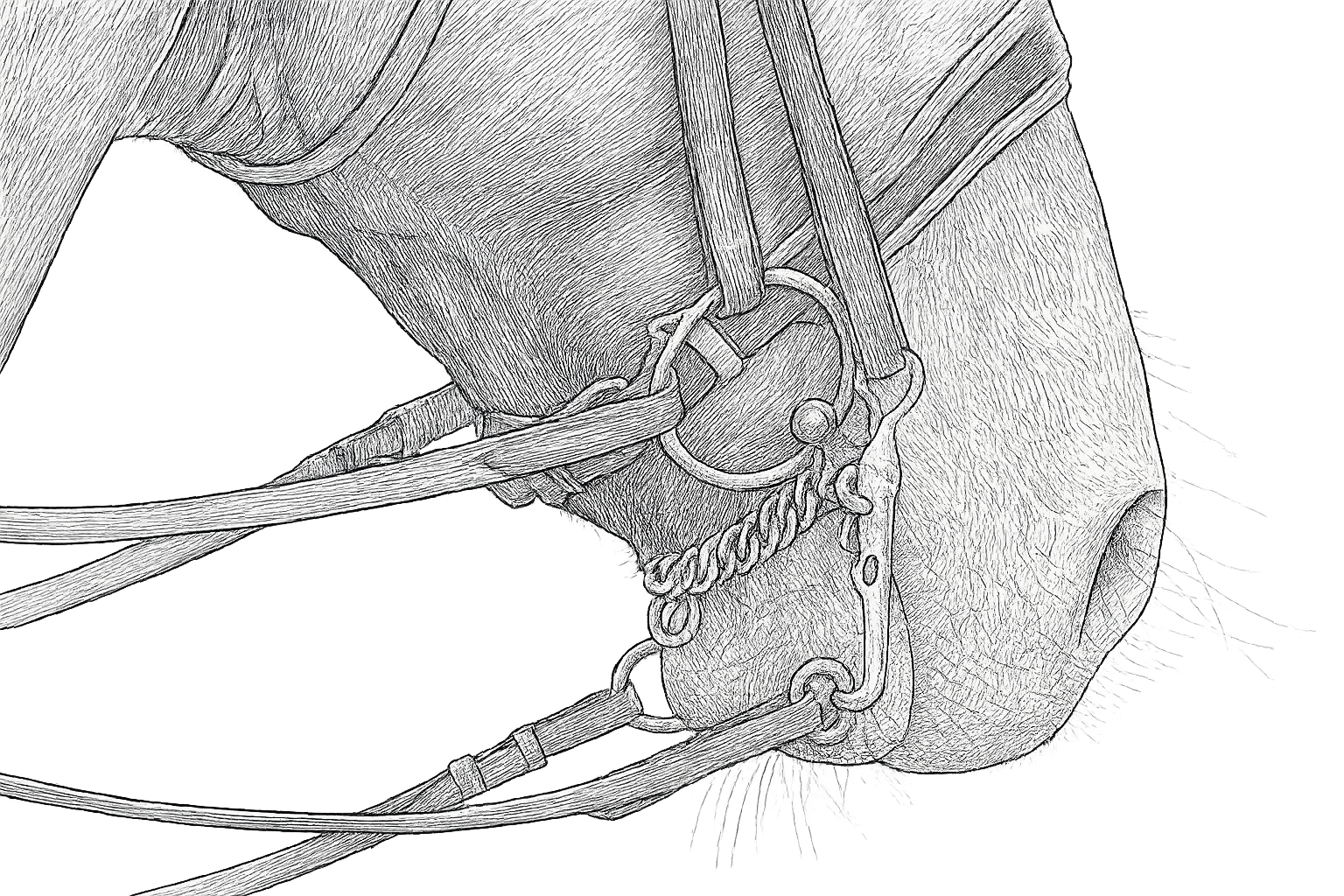
Fitting the Curb Chain
A correctly fitted curb chain prevents the Weymouth shanks from rotating back further than 45 degrees relative to the horse's lips. This is the benchmark.
The test: with the reins engaged, a finger should fit under the curb chain, but the shanks should not be able to travel further back. Too loose and the curb has no meaningful action. Too tight and it becomes harsh, and can cause rubs.
Something To Watch Out For
Trapping
Trapping happens when the two mouthpieces interfere with each other in the mouth. This is more common than most people realise so when introducing the double or modifying the setup it is best practice to always check.
Examine the bits in the mouth both with and without contact on the reins. With contact on both reins, it should be possible to slide a finger between the two bits. If the bits are pressing against each other, the signals become muddled: the snaffle interferes with the Weymouth when the rider intends to give a snaffle aid, and vice versa.
In horses with a shorter smile and canine teeth this can be quite difficult to achieve. Those are the horses which require sometimes quite creative solutions to go in a double. Going thinner on the bradoon, the Weymouth, switching up port sizes or all of the above can make a meaningful difference to correct fit and comfort.
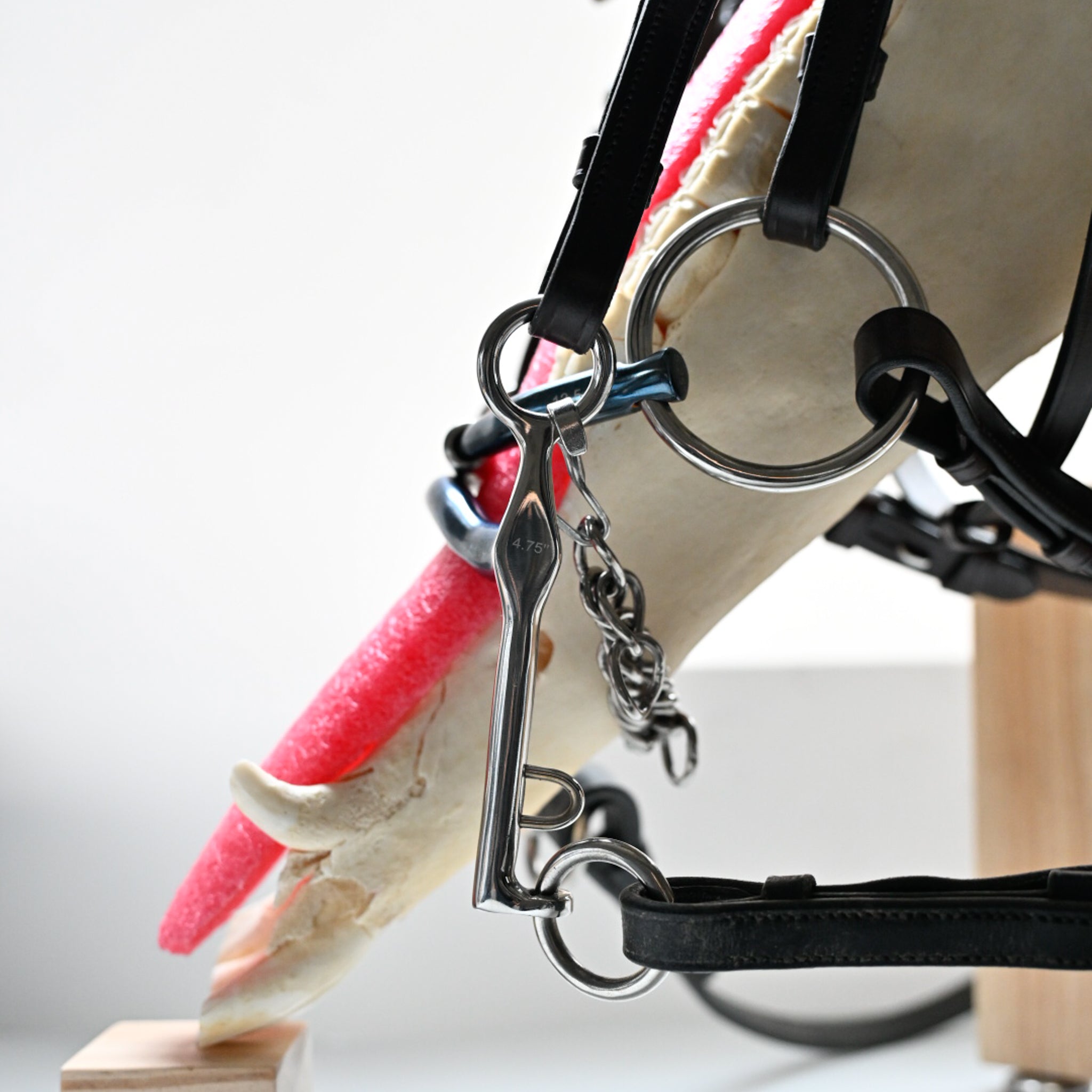
Generally the minimum expectation is for mouthpieces not to touch at rest and ideally have about a fingers worth between them.
This image illustrates a fit that would be a touch too small - We'd advise to bring the weymouth down half a hole and the bradoon up half a hole. If the mouth anatomy does not permit this due to pre-molars and canines being too close together, consider looking for a curb with a less pronounced port or a thinner mouthpiece for both bradoon and curb.
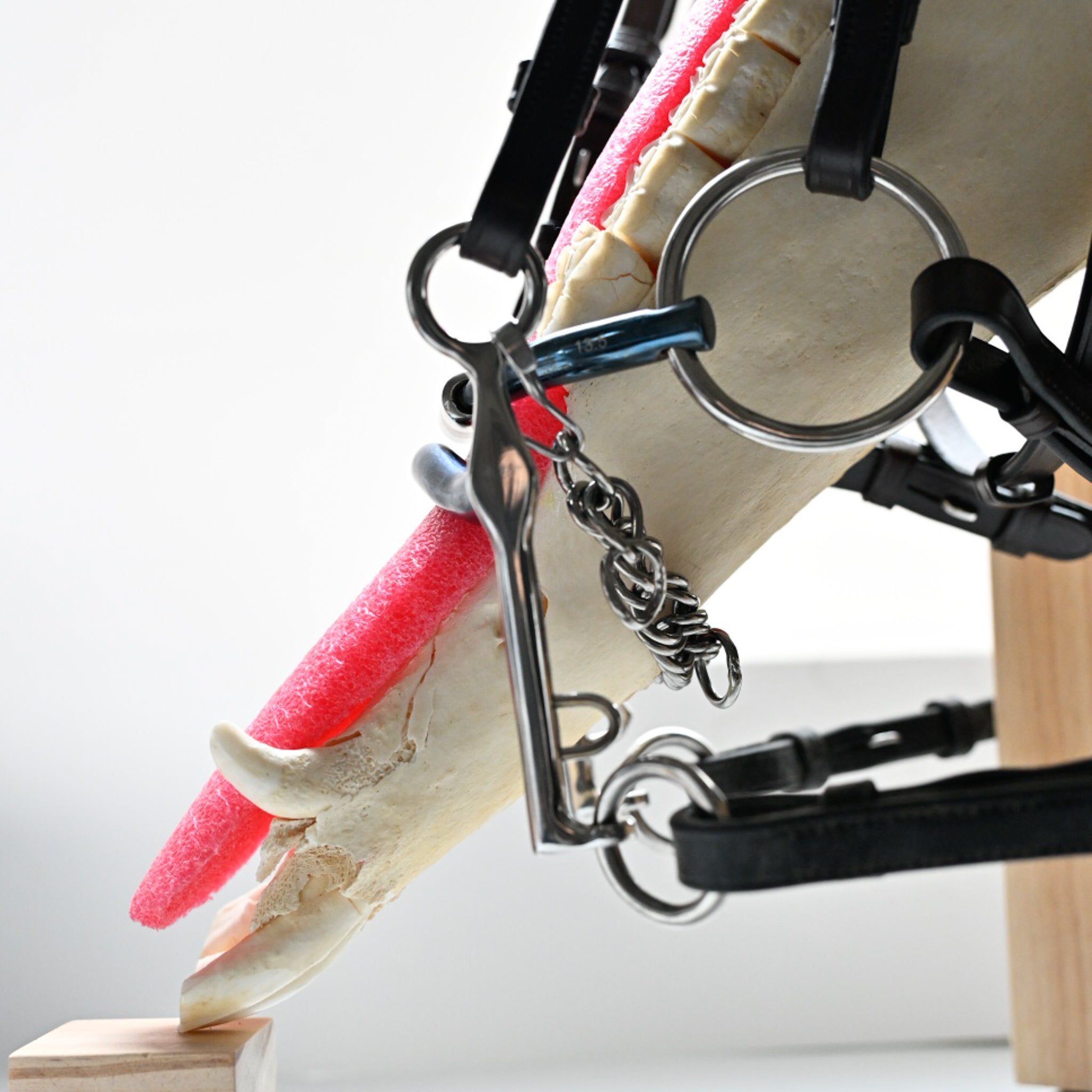
As reins are engaged the eggbutt and loose ring bradoon will rotate backwards to the pre-molars and throat. The Weymouth will rotate towards incisors (the front teeth). This will widen the gap between them. If they catch on each other this mechanism won't work and will confuse your horse or worse - cause pain.
This is also why most federations will prohibit use of baucher cheekpiece as a bradoon - it is the only snaffle that rotates in the same direction as the curb due to the cheekpiece attaching to the ring above mouthpiece.
The Agadors Range
Agador's Bradoon and Weymouth Options
Find a mouthpiece the horse genuinely goes well in as a snaffle first, then add a compatible Weymouth.
Choose the mouthpiece the horse works best in as a snaffle first
Bradoons
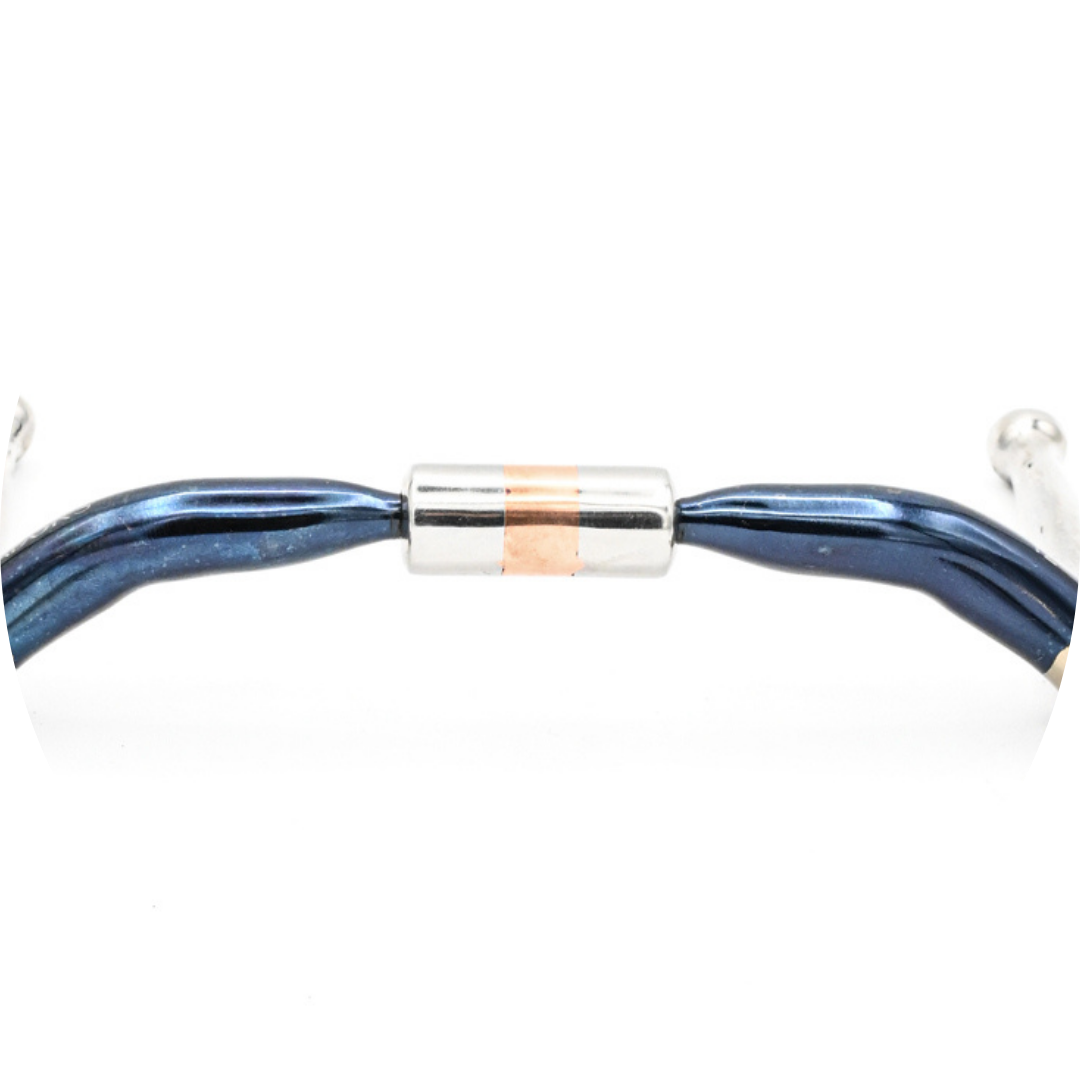
CalmBlue Dressage
Sweet Iron · 10-12mm · 55mm rings
Fixed copper strip on the barrel link (non-rotating, for competition legality). The narrow diameter is well suited to a double bridle where two bits share the space.
Shop CalmBlue Dressage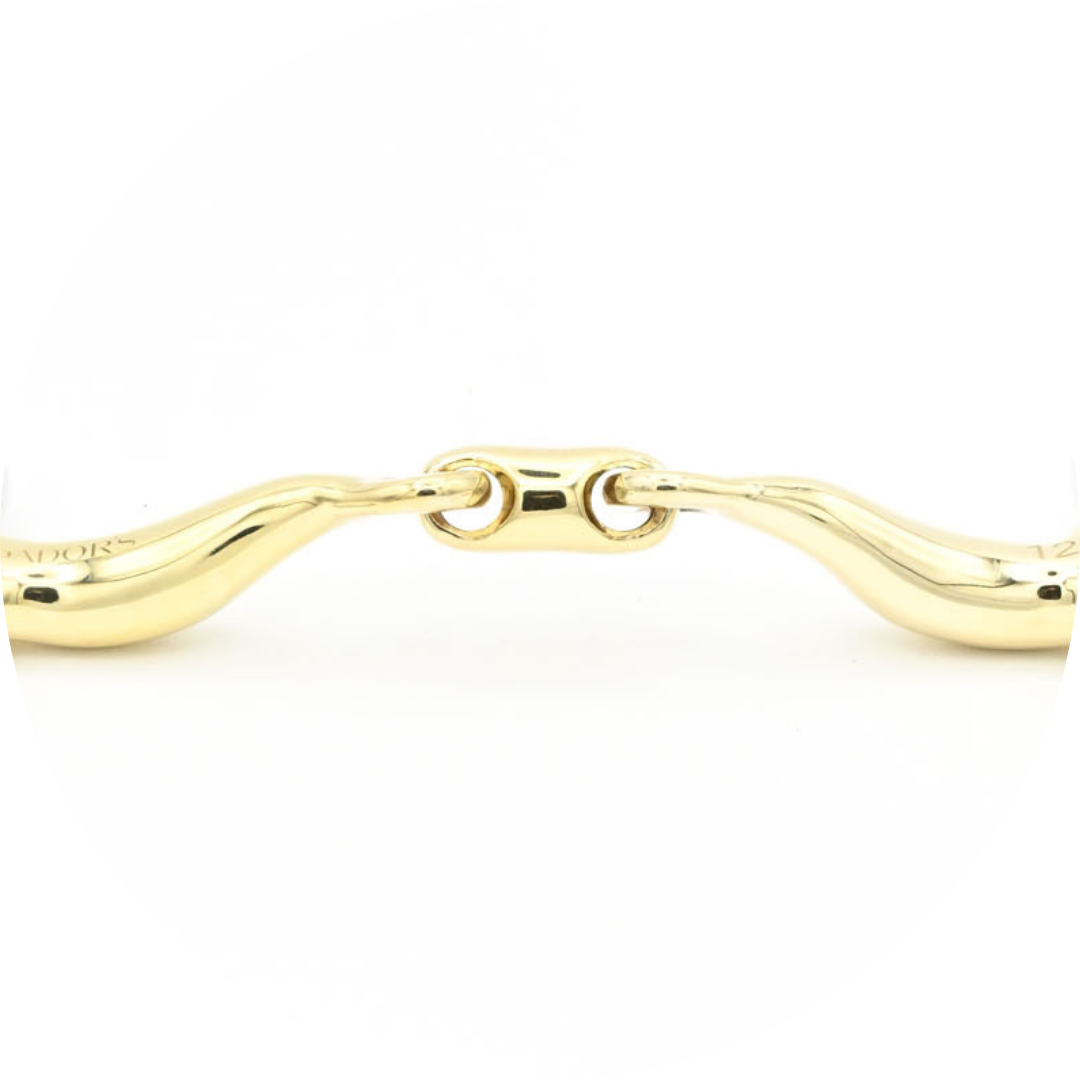
BarRelief
German Silver · 14mm · 55mm rings
Designed to distribute bar pressure differently from a conventional bit. For horses showing bar sensitivity.
Shop BarRelief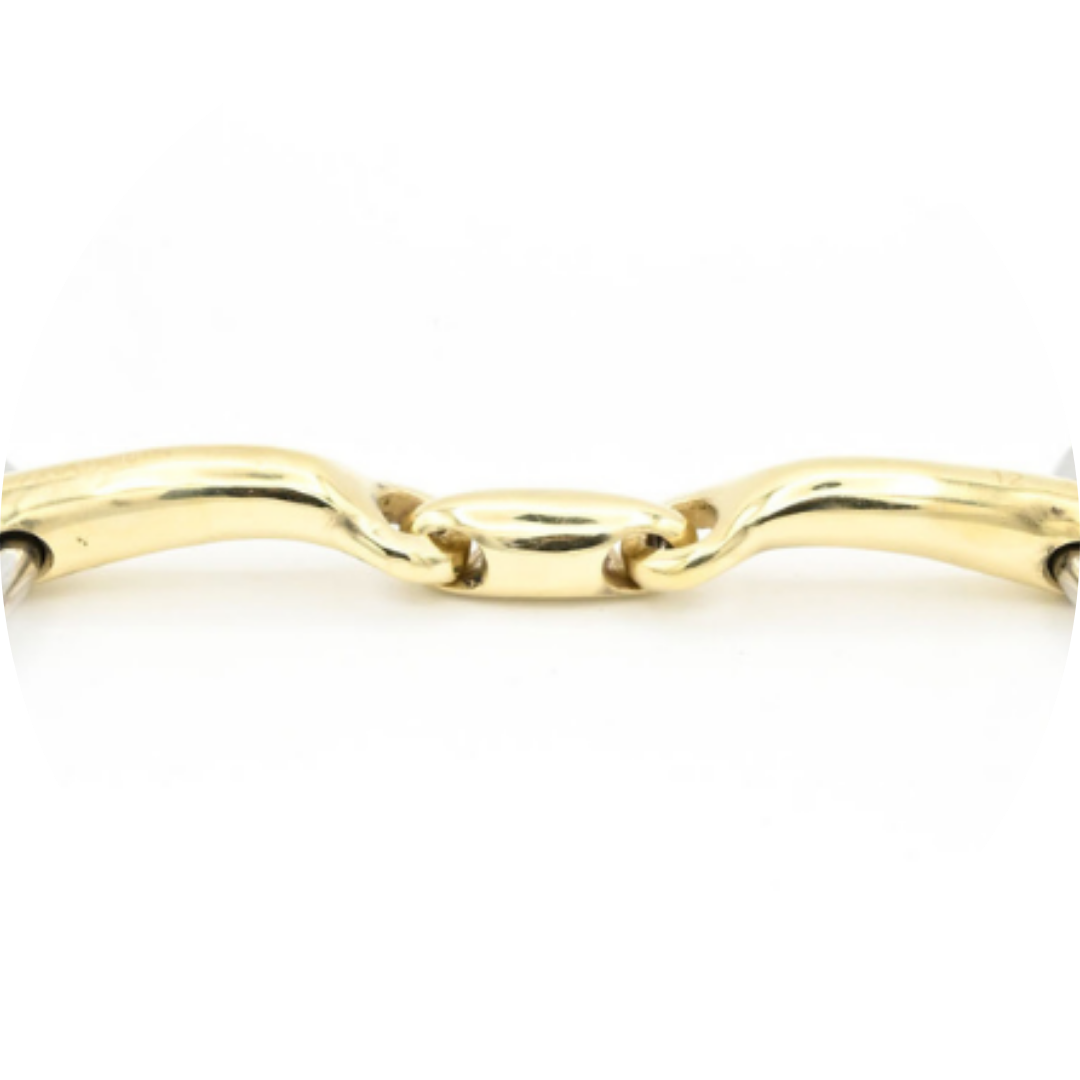
ComfortGlide
German Silver · 12mm · Loose ring
Slim mouthpiece for horses needing a narrower profile. A good pairing for crowded mouths.
Shop ComfortGlideAll measurements for 5.25" mouthpiece. Dimensions vary slightly across sizes.
Weymouths
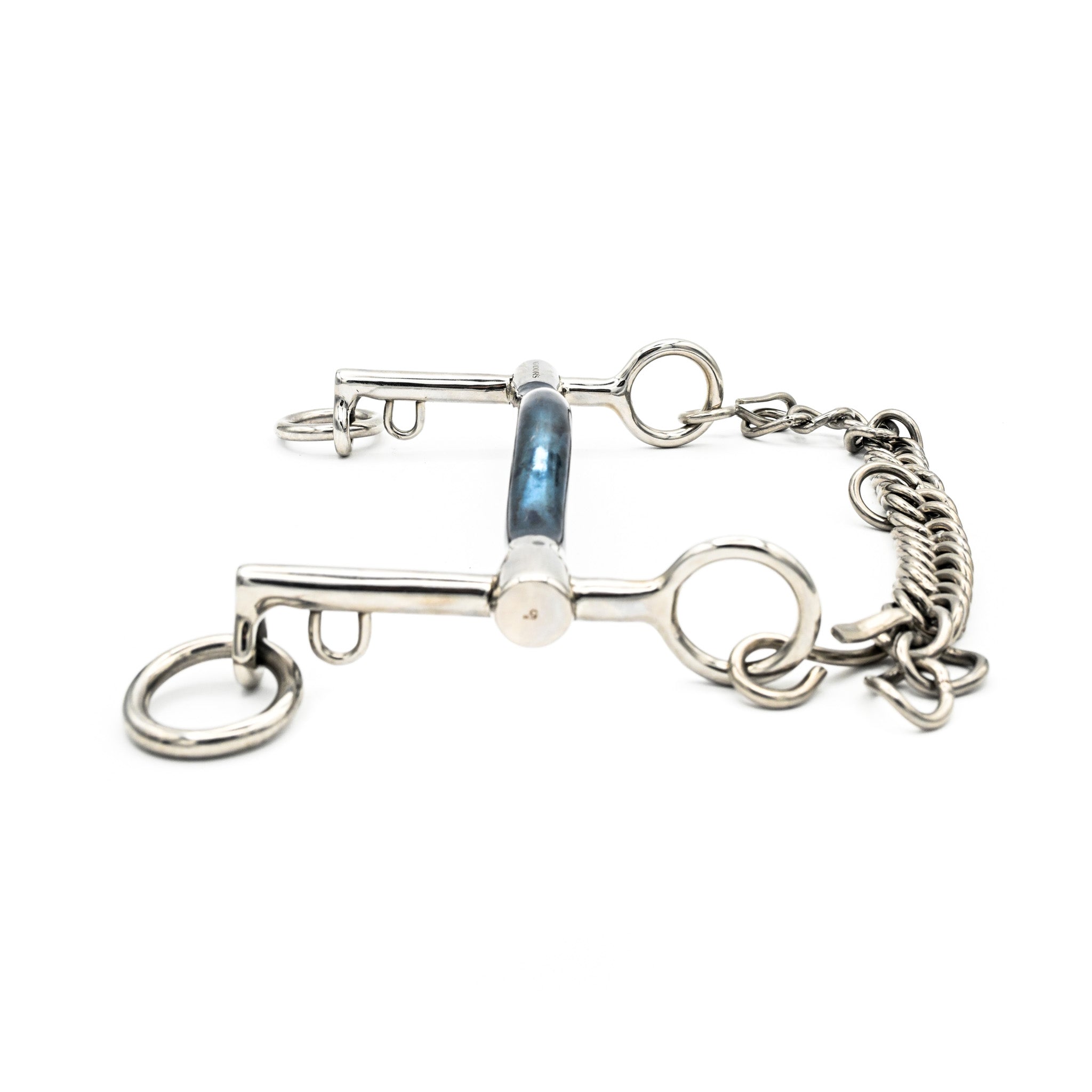
Baby Blue
Sweet Iron · 14mm · 50mm shank
Mouthpiece with a gentle 10mm curve. No port. The shorter 50mm shanks create less leverage than a standard Weymouth, making this an excellent introductory option.
Shop Baby Blue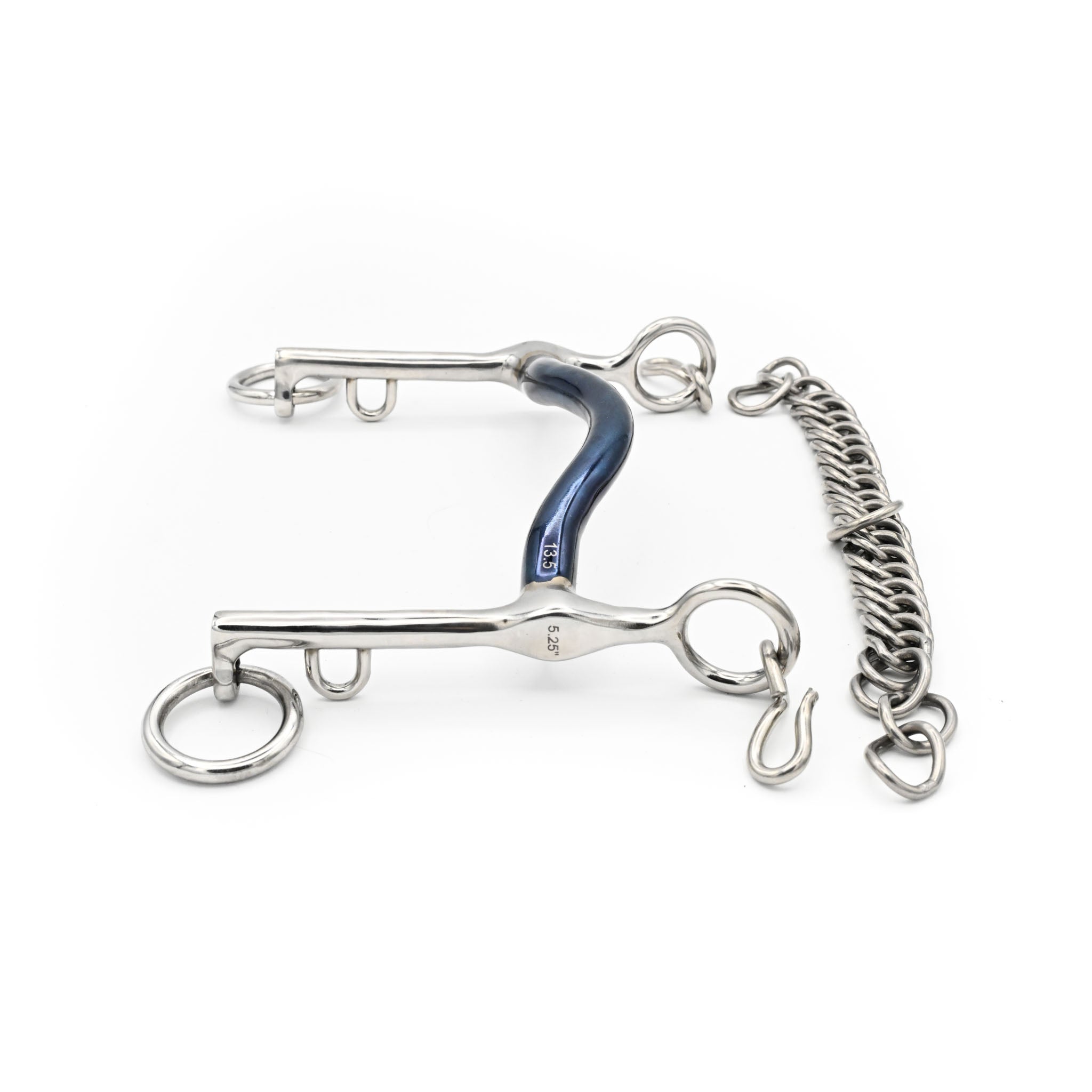
BlueWave
Sweet Iron · 13mm · 70mm shank
The widest port (95mm) with 20mm port height and a 20mm curve. Designed for sensitive horses and those taking a stronger contact. Gives the tongue substantial room.
Shop BlueWave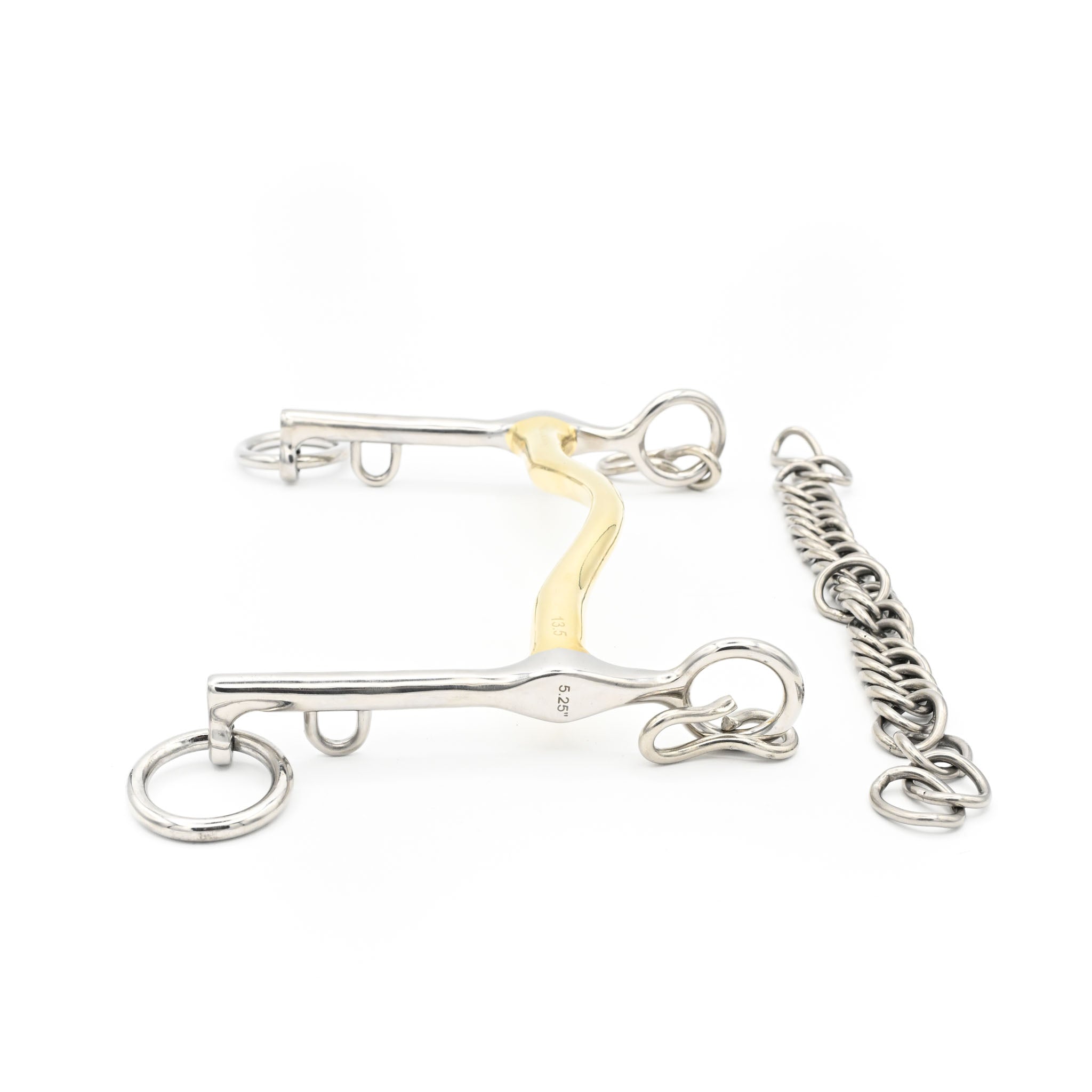
ComfortFlow
German Silver · 12mm · 70mm shank
The slimmest option. A moderate port (15mm height, 80mm width) with an anatomically correct curve. Designed for horses with larger tongues and limited interdental space. Leaves room for the bradoon alongside it.
Shop ComfortFlow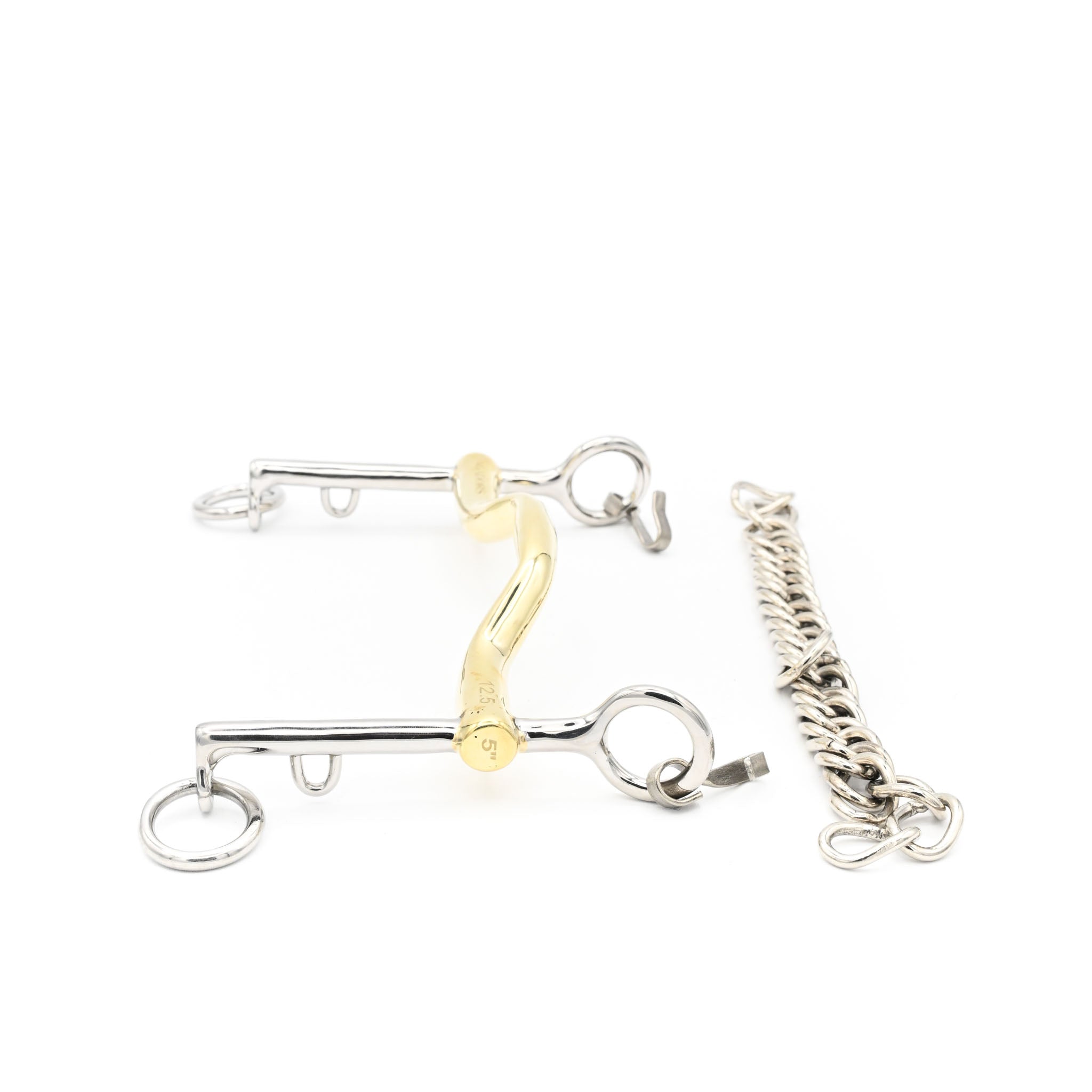
ComfortArch
German Silver · 13mm · 50mm shank
An arched mouthpiece with 20mm port height within a narrower 65mm port width. Targeted tongue clearance with a good amount of presignal before pressure transfers on the bars.
Shop ComfortArchMatched Combinations
Pairing Guidance
Narrow or Crowded Mouths
Short smile, canines, fleshy tongue. Keep total diameter low. A CalmBlue Dressage or ComfortGlide (12mm) with a ComfortFlow Weymouth (12mm) is a slim combination.
Bar-Sensitive Horses
A BarRelief Bradoon distributes bar pressure differently, and pairs with any Weymouth. Add a ComfortArch Weymouth for more of a pre-signal on the tongue before it presses on the bars.
First Double Bridle
Start with whatever mouthpiece the horse already knows as a snaffle. The Baby Blue Weymouth, with its shorter 50mm shanks, provides a gentle introduction to curb action without a port.
Dressage Competition
Our bradoons and Weymouths are designed to be dressage legal with Equestrian Canada, USEF and FEI. One exception: as of April 2026, the Baby Blue Weymouth is no longer USEF dressage legal under the new curb rule, so if you show under USEF, choose another of our Weymouths. However, rules change so whenever starting a new season it is best practice to verify that all your tack is compliant.
The Rule Book
Competition Legality
Not all dressage-legal snaffles are legal as bradoons. Rules vary between FEI, national federations, disciplines, and levels, and can change at any point during the year without notice.
- FEI dressage requires a double bridle at Prix St. Georges and above.
- EC dressage permits the double from Medium level upward.
- Mouthpiece thickness rules apply: bradoons typically must be at least 10mm. Check the current rule books for up to date requirements.
- Designs with three or more links are generally not permitted.
Verify the legality of both bits with the relevant governing body every single time before competing.
Looking After the Patina
Sweet Iron Care
Sweet iron bits develop a rust patina. This is normal and desirable.
- After every ride: wipe dry with a clean cloth.
- If wet: wipe dry completely, then apply a thin layer of food-safe oil (canola or flax).
- Do not soak, air dry, or try to remove all rust.
- Store dry with good air circulation.
In Summary
Key Principles
- Find the snaffle the horse works best in first, then add the Weymouth.
- Only change one bit at a time to evaluate the response.
- The curb chain must be fitted to the 45-degree benchmark.
- A universal cheek or pelham with two reins is a sound way to introduce curb and poll pressure before adding a second bit.
- Check that both bits work independently and are not trapping or pressing against each other.
- Use the double in conjunction with snaffle setups through training. Keep the mouth fresh.
- Verify competition legality every time.
- Let the horse tell you the answer.
Need help choosing?
Browse our double bridle collection, or explore Weymouths and bradoons separately. If you're not sure which pairing suits your horse, our Find a Fitter page can connect you with a professional who can assess in person, or get in touch and we'll help you work through it.