
A Guide to
Is It the Bit?
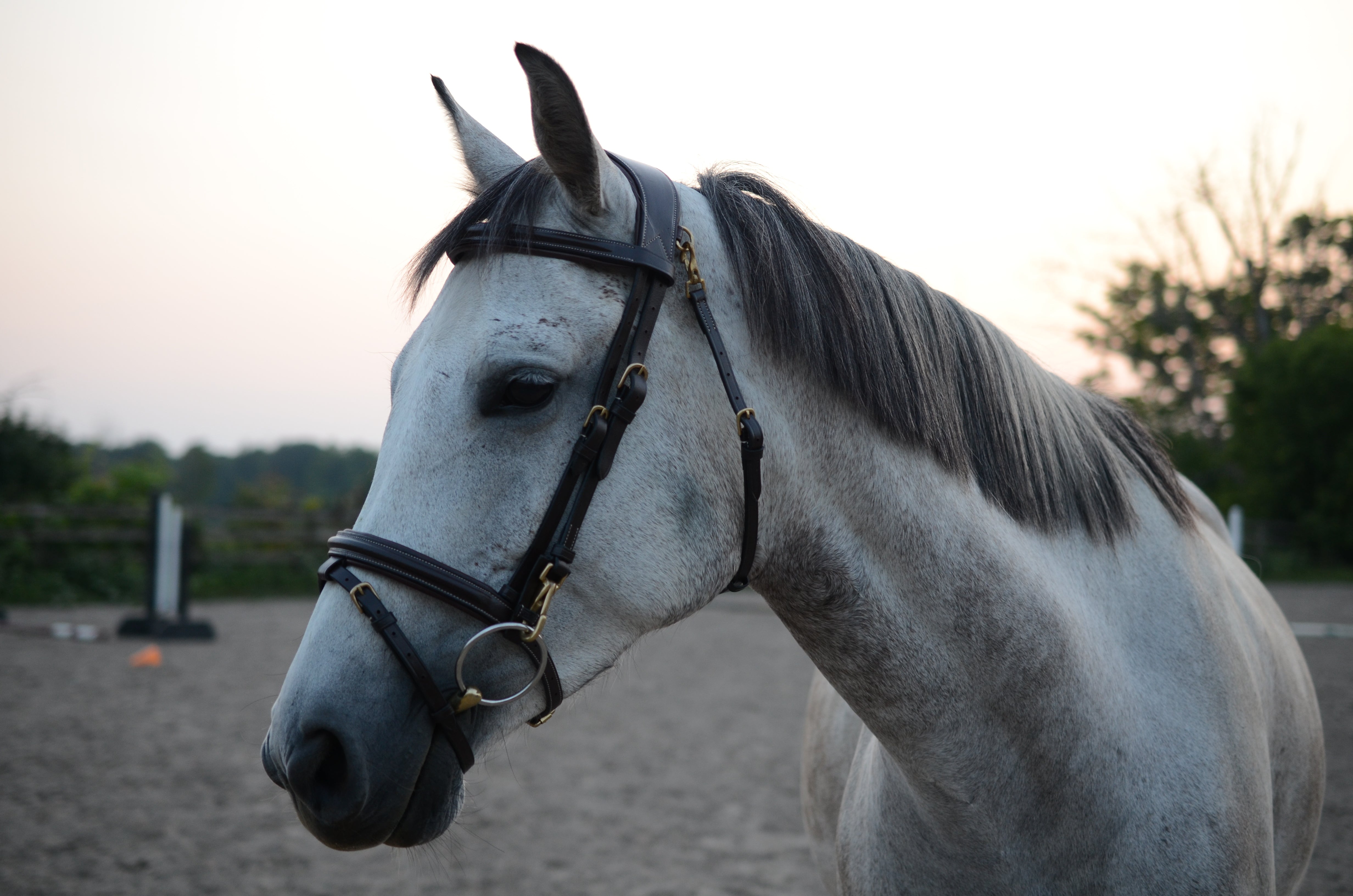
Before you change anything, ask what your horse is actually telling you.
Your horse is doing something new. Tossing the head. Leaning. Chewing the bit. Opening the mouth. Pulling the tongue back. Resisting contact.
You know something is off, and the bit is the obvious thing to blame. It's the most visible piece of equipment in the horse's mouth.
But the bit is one variable in a system of six, and it's rarely the one to change first. This guide walks through the other five, in the order most bit fitters check them, so you can investigate the way a professional would before spending money on a new bit that may not fix anything.
The Framework
Six Things to Check Before You Change the Bit

1. Dental
Sharp edges, hooks, wolf teeth. The most common cause of sudden bit problems has nothing to do with the bit.

2. Saddle Fit
A horse in back pain will brace, hollow, and resist the contact. Looks like a bit issue. Isn't.

3. Body Soreness
Hind end, neck, poll, TMJ. Tension cascades forward and ends up in the mouth.

4. Rider Contact
Heavy, inconsistent, or unbalanced hands create every bit symptom in the book.

5. Training and Fitness
A horse that isn't fit enough to carry itself will lean. A horse that doesn't understand the aids will evade.

6. The Bit Itself
Size, shape, material, cheekpiece, placement. After everything else is ruled out, now the bit matters.
Why the Bit Gets Blamed First
When a horse acts up, the rider's eye goes to the mouth. The bit is in plain view. It's the thing the rider holds at the other end of the rein. It's also the cheapest and most visible thing you can change, which is why the equestrian internet is full of "try this bit" recommendations for every problem.
But most bit problems are not bit problems. They are pain signals, training gaps, or equipment issues showing up at the nearest available exit, which happens to be the mouth.
A professional bit fitter will almost never recommend a new bit on the first visit. The first visit is an investigation. What's the history? What changed before the symptom started? When was the last dental? When was the saddle last checked? How does the horse carry itself on the lunge?
Only after those questions get answered does the bit come into the picture.
Part 1
What to Check Before You Change the Bit
Five checks, in the order most bit fitters work through them. Each one rules out a whole category of problem that can look exactly like a bit issue.
1. Dental
Start here. Always.
A horse's teeth grow continuously and wear unevenly. Sharp enamel points form on the outside edges of the upper molars and the inside edges of the lower molars, and they cut the cheek or tongue when the jaw moves under rein tension. Hooks form at the front of the first premolar, which is exactly where the bit sits. Wolf teeth emerge around 5 to 12 months, right in the bit's path, and can cause head tossing the moment contact is picked up. Blind wolf teeth are worse, because they never fully erupt and sit hidden under the gum, so nothing is visible to explain the horse's reaction.
A dental is due at least once a year for most horses, more often for young horses in work or horses over fifteen. If the last dental was more than twelve months ago, or if the symptom started suddenly, this is the first call to make.
Red flags that almost always trace to teeth:
- Dropping feed or quidding
- Head tossing that started suddenly
- Worse on one rein than the other
- Resisting the bit going on, not just under saddle
- Smell from the mouth
Deeper Reading
Dental Checks in Detail
Frequency, who to call, and what you can rule out yourself before the appointment.
Most adult horses in work need an annual dental. Horses under five and over fifteen often need every six months, because their teeth change faster. Young horses are shedding caps and growing permanent teeth on a predictable schedule, and old horses wear unevenly as some teeth wear out faster than others.
Usually yes, but not always. A horse can develop a hook or a cracked tooth in weeks. If the symptom started suddenly after a dental was already done, a quick oral exam is still worth it. Hooks regrow, wolf teeth can be missed, and the occasional fracture happens between visits.
You can do a visual check of the front of the mouth, the incisors, and the interdental space where the bit sits, especially if you wear gloves and go slowly. You cannot reliably see or feel the molars at the back, and that's where most sharp edges form. A proper exam requires a speculum and light. Use a qualified equine dentist or vet.
Equine dentists specialize in teeth and tend to spend more time on each exam. Equine vets can sedate, extract, and prescribe, which matters for anything beyond routine floating. Many riders use a dentist for regular care and a vet for anything that requires sedation or surgery.
2. Saddle Fit
A horse in back pain will hollow the back, brace the neck, and resist the bit. From the saddle, it feels like the horse is pulling, ignoring the aids, or evading the contact. From the ground, it looks like girthiness, cold-backed behavior, or fussing at the mounting block. From a professional eye, it looks like saddle pain.
A saddle that bridges, rocks, pinches the shoulder, or sits off to one side puts pressure where the horse's body can't absorb it. The horse braces to protect the painful area. That bracing travels up the neck and into the mouth. What you feel at the reins is not a bit problem, it's the far end of a saddle problem.
Warning signs of saddle trouble:
- Asymmetric sweat patterns after work
- White hairs appearing under the saddle
- Girthiness, ear-pinning, or shifting at tack-up
- Hollow back, short stride, or reluctance to bend one way
- Improvement as work goes on, then deterioration again
- Behavior that changes after a saddle change or a weight change
A saddle fit should be checked at least once a year, more often for a horse changing shape. Growing horses, horses coming back from time off, and horses who have lost or gained condition can all outgrow a saddle within weeks.
3. Body Soreness
The mouth is connected to the rest of the horse through the hyoid bone at the back of the jaw. The hyoid links by muscle and fascia to the shoulders, sternum, back, and hindquarters. When tension shows up anywhere in that chain, it reaches the mouth.
A sore hock cascades into hollow back, blocked shoulder, and eventually a tense jaw. A stiff poll presents as head tilting or one-sided contact. A sacroiliac issue shows up as uneven weight in the hand. None of these are bit problems, and none of them get better by changing the bit.
A good bodyworker, a physio, or a vet trained in musculoskeletal assessment will find problems that the rider feels from the saddle without being able to name. Horses in regular work benefit from bodywork every two to three months, more if they're in high-level competition or heavy training.
Poll and TMJ are worth special mention. A tight browband, a high flash, or a noseband buckle sitting over the TMJ all press on structures that should be moving freely. Small adjustments to bridle fit can resolve what looked like a major bit problem.
"Most bit problems are not bit problems. They are pain signals, training gaps, or equipment issues showing up at the nearest available exit."
4. Rider Contact
This is the most honest conversation, because the rider is usually the last one to know.
Every bit symptom in the book can be created by hands alone. Heavy hands create a heavy horse. Inconsistent hands create head tossing. Hands that hold instead of elasticize create mouth opening. Hands that pull back create tongue evasions and bit chewing. A horse who is losing trust in the contact will do almost anything the rider then labels as a bit problem.
Signs that contact is the real issue:
- The horse is softer on a different rider
- The horse is softer on the lunge or loose
- The symptom gets worse when the rider tenses
- The symptom is worse late in the ride as the rider fatigues
- The horse's head goes up just as the rider's hands go up
The answer is not guilt. It's feedback. Video a ride. Ride without stirrups. Take a lesson specifically focused on contact. Try the horse in a side pull or a bitless bridle for one ride, and note what changes. If the symptom goes away without a bit, that's information.
If the rider is not the issue, moving on to the next check costs nothing.
5. Training and Fitness
A horse that isn't strong enough to carry itself will lean on the bit. A horse that doesn't understand the half halt will run through the aids. A horse that hasn't been taught to bend will resist contact on one rein. These are training gaps, not bit problems, and a new bit will mask them at best and make them worse at worst.
Fitness is often underestimated. A young horse or a horse returning from time off does not have the core strength or topline to work on the bit for forty-five minutes. The back tires, the hollow starts, and the contact gets heavy. The fix is conditioning, not a new mouthpiece.
Training gaps look similar. If the horse doesn't respond to the leg forward, or doesn't understand giving to pressure, the contact becomes the battleground. The problem is not in the mouth. It's in the communication system the mouth is at the end of.
A good trainer will spot this in five minutes. If there is any doubt, get eyes on the ground.
Part 2
When It Actually Is the Bit
After the other five have been ruled out, the bit is now on the table. Here's what to look at.
6. The Bit
Bit problems usually trace to one of four things: size, shape, material, or cheekpiece action.
Size. A bit that is too wide slides across the mouth and creates a pinching action at the lip corners. A bit that is too narrow pinches constantly. Most horses fit inside a 1 cm range, and a bit outside that range causes problems no matter how well-designed it is.
Shape. The mouthpiece shape decides where pressure lands. A single joint puts all the pressure at one point. A double joint spreads it across two points. A mullen mouth spreads it across the whole tongue. A ported mouthpiece lifts pressure off the tongue and puts it on the bars. The right shape depends on the individual horse's tongue size, palate height, and bar sensitivity, which is why mouth anatomy matters.
Material. Some horses accept sweet iron and salivate softly. Others do better on stainless steel. A small number prefer copper or rubber. Material is low on the priority list, but for a horse who dislikes the bit specifically, a material change sometimes solves what shape changes cannot.
Cheekpiece. The cheekpiece decides how the bit moves and whether the horse gets warning before the rein tension arrives. A loose ring lets the bit move freely. An eggbutt stabilizes it. A full cheek adds lateral guidance. A Pelham or gag adds leverage. A horse that leans may benefit from a different cheekpiece more than a different mouthpiece.
If the first five checks have been done and the symptoms persist, a bit change is now a reasonable next step. The mouth anatomy guide covers how the mouth is built. The bit severity guide explains how different designs apply pressure. Start there.
Deeper Reading
Common Questions
The scenarios that come up most often when riders are trying to figure out if it's actually the bit.
Trainers see bit problems every day, and their instinct is often right. But trainers are not dentists, saddle fitters, or vets. The most productive conversation is the one where the rider says "I'm going to rule out dental and saddle first, and if the problem persists, I'll try the bit you recommended." A good trainer will respect that.
Not necessarily. A dental problem can develop in days. A saddle that was marginal a month ago may now be pinching. A hock can become sore after a bad landing. Sudden symptoms almost always mean something physical changed, and the bit is rarely the thing that changed.
This is the most common scenario, and it's also the trickiest. The mouth is where many different problems surface, because the mouth is where the rider's hand meets the horse. The fact that the symptom shows up there does not mean the cause is there.
Yes. This is one of the strongest signals in bit fitting. A horse that gets worse across multiple bits is telling you it's not a bit problem. Stop changing bits and start the investigation over from the top of this list.
Rule of thumb. Dental: checked within the last six months by a qualified professional, no red flags. Saddle: checked within the last six months by a qualified fitter, with the horse's current body condition. Body: bodyworker or vet assessment within the last three months. Rider: lesson feedback within the last three months, or video review. Training and fitness: honest assessment with trainer. Only after all five are ruled out does the bit change.
In Summary
What to Take Away
1. The bit is one of six variables
It's rarely the first one to change. Check dental, saddle, body, rider contact, and training first.
2. Sudden symptoms mean something physical changed
Dental, saddle, or body. Not the bit.
3. Worse across multiple bits? Not a bit problem
The horse is telling you to stop changing bits and restart the investigation.
4. Trainers are not dentists or saddle fitters
Their instinct matters, but not as the only input.
5. The goal isn't to find the perfect bit
It's to understand what the horse is telling you. The bit is how the message arrives, not always what the message is about.
Where to Next
Still need help?
If you've worked through the checklist and the problem points back to the bit, we can help with that part. Browse the Bit Guide to narrow down what might suit your horse, or start with the Mouth Anatomy Guide to understand the space a bit has to work with.