

Is It the Bit?
Mouth Gaping: Is It the Bit or the Noseband?
When a horse opens its mouth against the bit, the instinct is to tighten the noseband. Here is why that approach misses the point.
A horse that opens its mouth while being ridden is trying to move away from pressure. That is communication. It is telling you something about how the bit feels, how the bridle fits, or how the contact is being managed. The most common response to mouth gaping is to tighten the noseband, add a flash, or switch to a grackle. These approaches close the mouth without addressing the reason it opened in the first place.
That is a problem, because a closed mouth is not the same as a comfortable mouth. The goal should never be silence. The goal should be understanding what the horse is saying and then fixing the actual cause.
The Bigger Picture
Why Nosebands Are Not the Answer
The horse's jaw is not an isolated hinge. It connects to the hyoid apparatus, a series of small bones that support the tongue, stabilize the pharynx and larynx, and serve as the central anchor for three myofascial chains that extend through the entire body. One chain runs down through the chest and abdominals to the pelvis. Another connects through the shoulders and down the limbs. The third runs from the poll along the topline to the hindquarters.
When a noseband restricts jaw movement, it restricts the hyoid. When the hyoid is restricted, tension can cascade through the neck, shoulders, back, and hind end. A horse that looks "quiet in the mouth" but is tense through the body is not quiet at all. It is bracing.
Research supports this. Studies at national and international dressage competitions found that 44% of horses had nosebands so tight that a standardized taper gauge could not be inserted. Only 7% met the two-finger standard. Horses ridden in over-tightened nosebands showed elevated eye temperature and increased cortisol, both markers of physiological stress.
A tight noseband is a bandage over a bullet wound. It makes the symptom invisible without treating the cause.
Working Through the List
What Actually Causes Mouth Gaping
Mouth gaping rarely has a single cause, and chasing the wrong one wastes time. Here are the most common culprits, roughly in the order worth investigating.
The bit is too thick for the mouth. This is the one most riders overlook. The average distance between the upper and lower jaw where the bit sits is only 25 to 44mm, and the tongue occupies most of that space. A thick mouthpiece compresses the tongue into the hard palate, and the horse opens its mouth to relieve the pressure. A thicker bit is not always a kinder bit. In many cases, going thinner (10 to 12mm) gives the tongue room to sit comfortably and the palate room to breathe.
The mouthpiece design creates focused pressure points. Some mouthpiece joints or links concentrate pressure on a small area of the tongue or bars rather than distributing it evenly. If the horse is fussing specifically when rein contact increases, the mouthpiece shape is worth examining.
Bar sensitivity. The bars are thin bones of the lower jaw covered by only 2 to 3mm of mucous membrane. When the tongue retracts or thins out under pressure, the bit can contact the bars directly. Some horses, particularly Thoroughbreds and Arabians with sharper bar profiles, are especially sensitive to this. The horse opens its mouth to shift the bit away from the bone.
Dental issues. Wolf teeth (vestigial premolars that erupt between 5 and 12 months) can sit right where the bit rests. Blind wolf teeth, hidden beneath the gum, are particularly problematic because there is no visible cause for the reactivity. Sharp molar edges can also cause the inside of the cheek to be pinched against the bit ring. A dental check is worth doing before any bit change.
TMJ pain. The temporomandibular joint sits just behind the horse's eye and allows the complex 3D jaw movement needed for chewing. Bridle cheekpiece buckles that sit over the TMJ, or a browband that is too tight, can create pressure on this joint. TMJ pain often shows up as head tilting, uneven muscle development, or low-grade lameness that gets blamed on other things.
Rider hands. Inconsistent, heavy, or backward-pulling contact gives the horse nothing stable to trust. The mouth opens as a brace against unpredictable pressure. This is a riding conversation, not a bit fitting one, but it is part of the picture.
When It Is the Bit
What to Consider in a Bit Change
If you have ruled out dental issues, TMJ problems, and saddle fit, and the mouth gaping persists, the bit itself is worth examining. The right change depends on what the horse is doing with its mouth.
If the horse is chewing, fidgeting, or playing with the bit, it may be responding to too many moving parts. Stable mullen designs with minimal articulation give the mouth less to fixate on. Pair with a Baucher or eggbutt cheekpiece for a quieter ring.
If the horse is biting down on the bit, the mouthpiece may be sitting too close to the teeth. A Baucher cheekpiece rotates the bit toward the tip of the tongue, moving it away from the teeth. A swivel cheekpiece eliminates rotation entirely, keeping the bit in place. Also check the sizing: a bit that is slightly too wide can shift and contact the premolars.
If the horse shows bar sensitivity, a BarRelief mouthpiece redirects pressure to the sides of the bars rather than the tops. A Baucher cheekpiece lifts the bit slightly, reducing direct bar contact. Wider mouthpieces also spread pressure over a larger surface area.
Stable mouthpieces with minimal moving parts
Quiet Bit Options
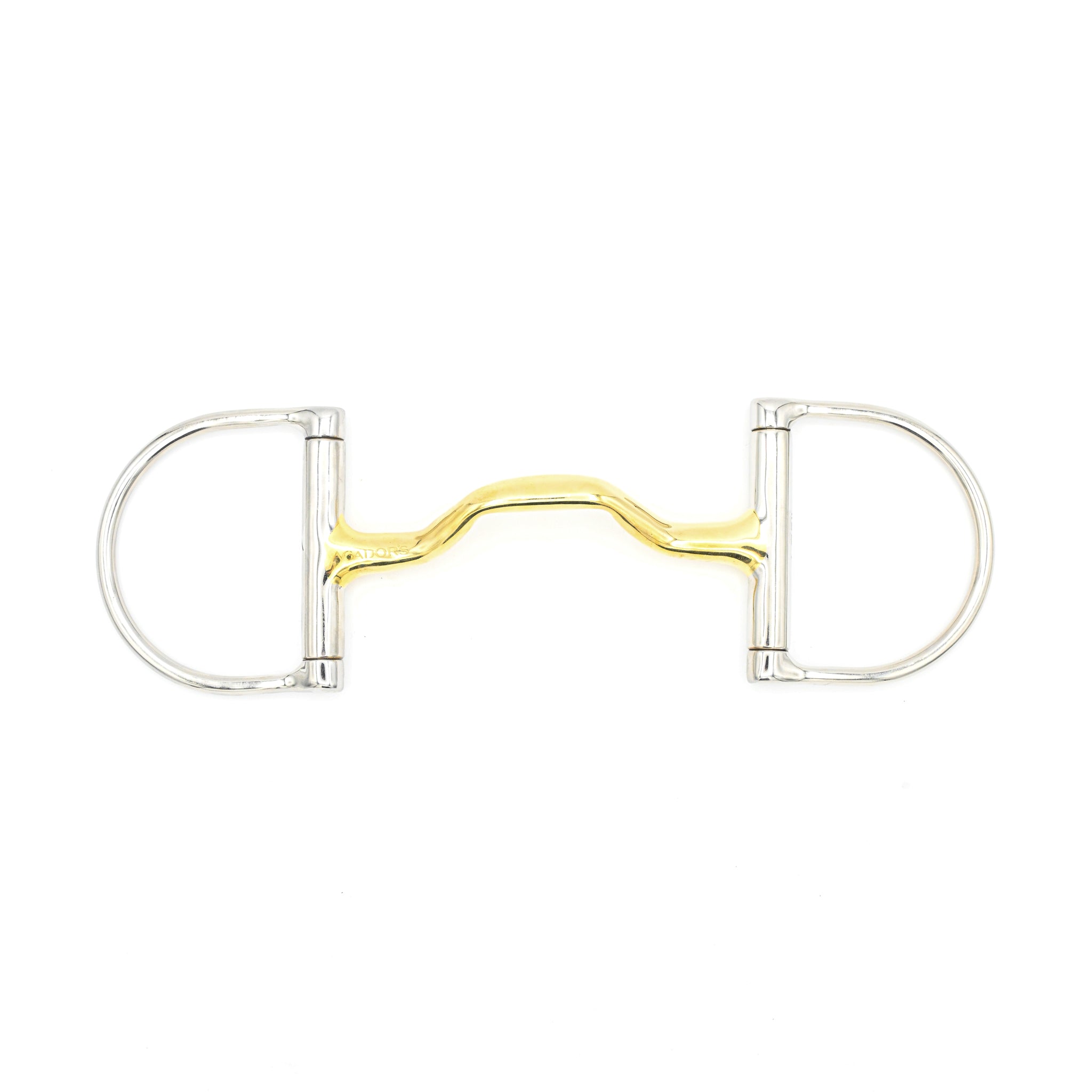
ComfortArch
Curved mullen with integrated port. No moving parts, no joints. A stable, quiet mouthpiece for horses that fidget with articulated designs.
Shop ComfortArch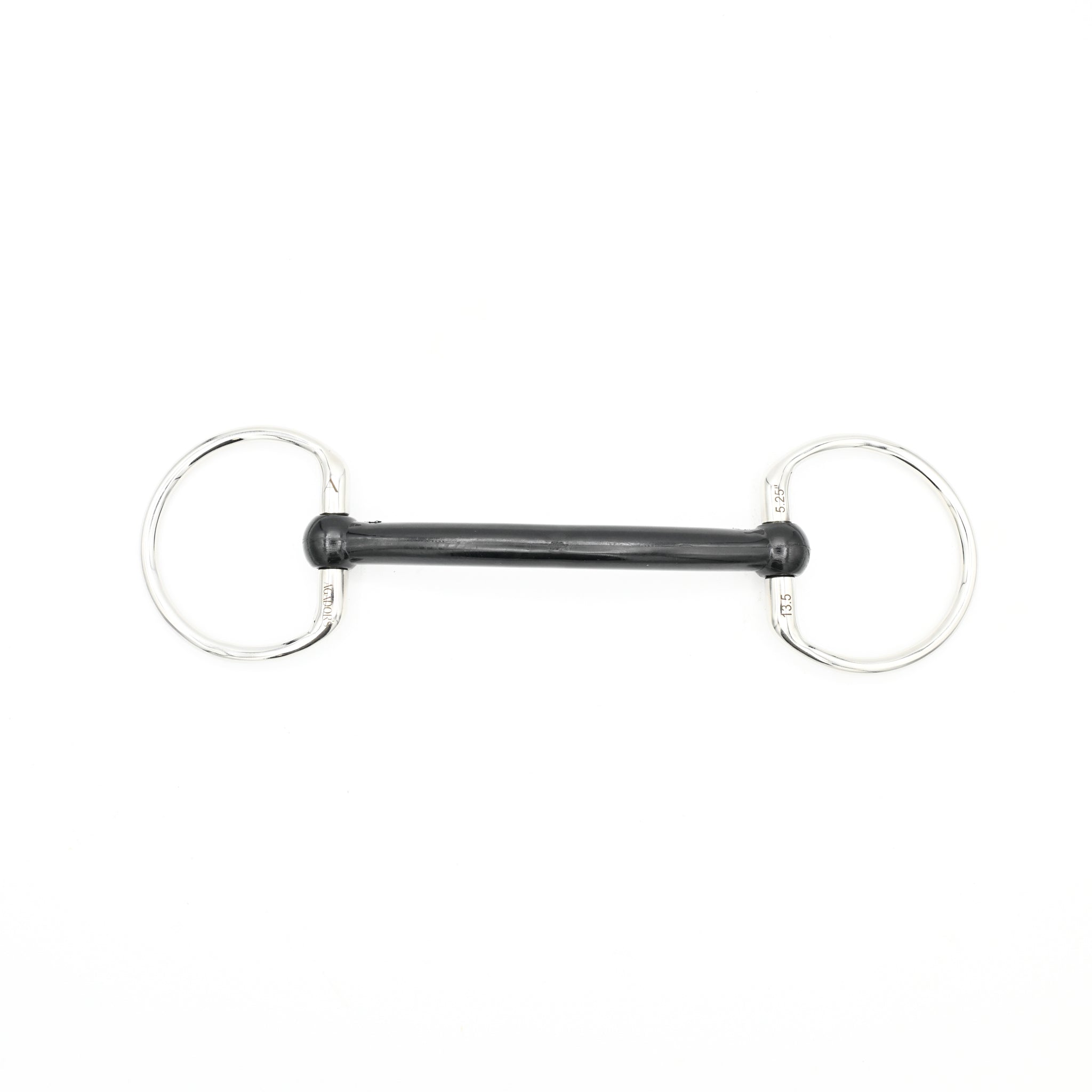
SteadyFlex
Curved mullen, semi-flexible rubber. Gives slightly under pressure while staying still. For horses that want softness without articulation.
Shop SteadyFlex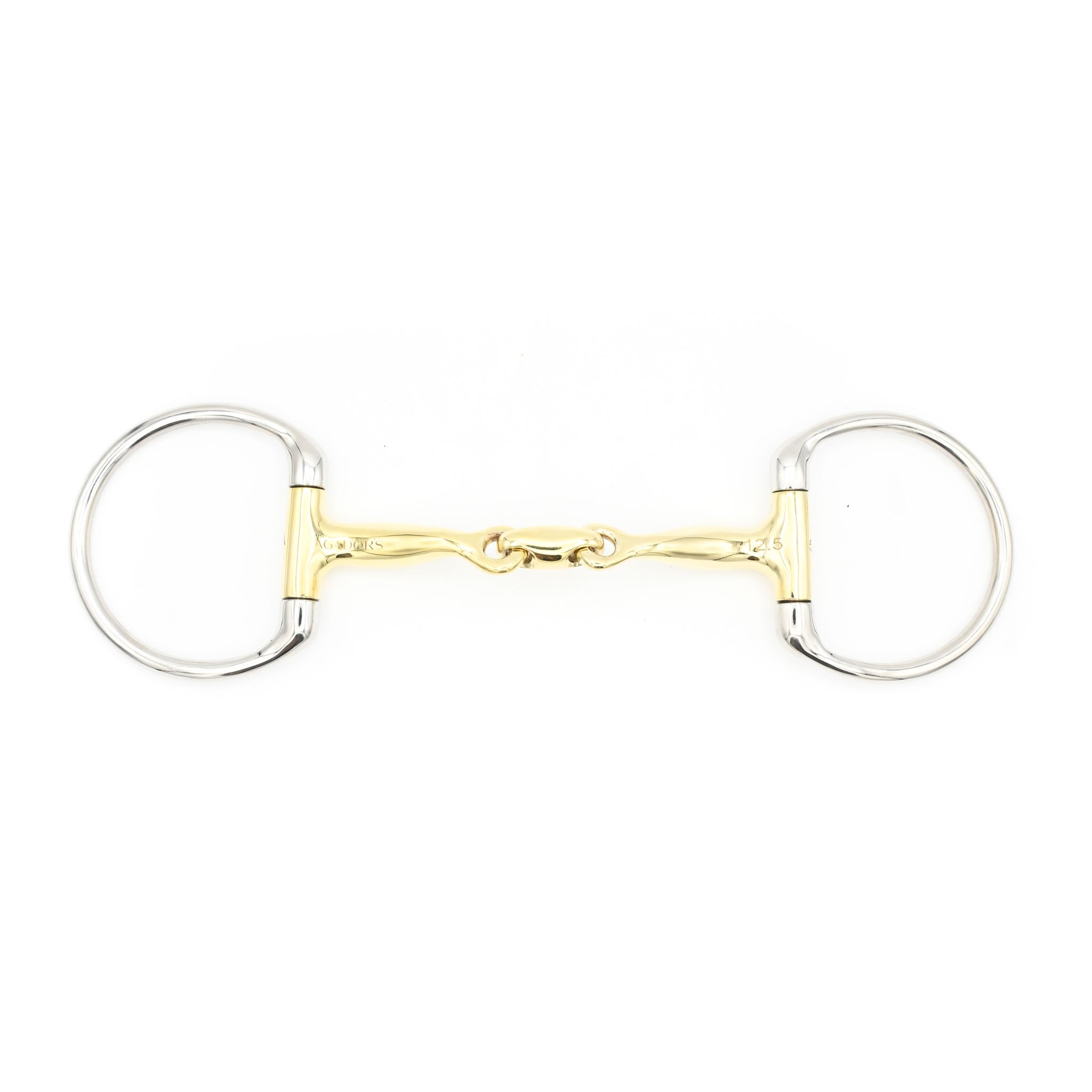
BarRelief
Redirects pressure to the sides of the bars rather than the tops. For horses with sharp or sensitive bar profiles.
Shop BarReliefFinding the Balance
The Noseband Conversation
Nosebands are not inherently bad. A cavesson stabilizes cheekpieces and provides a neat appearance. A flash can discourage specific tongue evasions once other causes have been ruled out. A grackle prevents jaw crossing in horses that genuinely need it. Each type has a legitimate purpose.
The issue is when nosebands are used as the first response to mouth gaping rather than the last. The checklist matters: dental check first, then rule out bit discomfort, then investigate pain elsewhere (saddle, back, hind limb lameness). Only after those three are cleared does a noseband belong in the conversation as management, not a fix.
A properly fitted noseband should allow the horse to open its mouth slightly, move its jaw, and swallow comfortably. The traditional guide is two fingers between the noseband and the nose. The FEI now requires a standardized taper gauge at competitions because finger width varies too much. If you cannot fit two fingers under the noseband, it is too tight.
Crank nosebands deserve special mention. They use a 2:1 pulley action that makes it dangerously easy to overtighten. Pressures of 200 to 400mmHg have been recorded, pressures associated with nerve damage in humans. They are not inherently harmful, but they require more care and awareness than most other noseband types.
Common Questions
FAQ
Cavesson (plain): Stabilizes cheekpieces. Does not prevent mouth opening. The standard noseband.
Flash: Prevents wide mouth opening and discourages tongue evasions. Risk: the flash strap can ride up and press cannon bones into lip commissures if poorly fitted.
Drop: Stabilizes the bit and prevents mouth opening. Must not be fitted too low or it compromises breathing and can damage nasal cartilage.
Crank: Has a 2:1 pulley action. Very easy to overtighten. Requires careful, educated fitting.
Grackle (figure-8): For horses that cross the jaw. English grackle sits lower (no rings), Mexican grackle sits higher (keep rings away from the facial crest).
The traditional guide is two fingers between the noseband and the nose. The FEI now uses a standardized taper gauge because finger widths vary. At a minimum, you should be able to slide two fingers underneath the noseband when it is fastened. If you cannot, it is too tight. The horse should be able to open its mouth slightly, move its jaw laterally, and swallow without restriction.
Yes. A small amount of jaw movement and a quiet, relaxed mouth are signs of acceptance. The horse should be able to chew softly and swallow (horses produce 35 to 40 litres of saliva per day and need to swallow during exercise). Constant wide gaping, tongue evasions, or teeth grinding are different. Those are signs of discomfort, not normal relaxation.
Ask: when did this start? What changed around that time? Has the horse seen a dentist recently? Is it worse on one rein? Then try, in this order: a dental check, a trial in a bitless bridle or hackamore (to confirm or rule out mouth pain), and then a bit change. A noseband adjustment should come after those three steps, not before.
The Baucher cheekpiece is fixed (no ring movement), applies zero poll pressure, and lifts the bit slightly off the bars. For horses dealing with bar sensitivity, mouth fussiness, or bit instability, it addresses multiple causes at once. It also rotates the mouthpiece toward the tip of the tongue rather than the throat, which moves the bit away from the teeth. It is not the right cheekpiece for every horse, but it solves a lot of common problems.
Keep Reading
Related Guides
Mouth gaping is one piece of a larger conversation about bit comfort and communication. These guides cover the related topics in depth.