
Skip to content

Cart

Your cart is empty

Liverpool Bits

Sort by

1 product

Filters

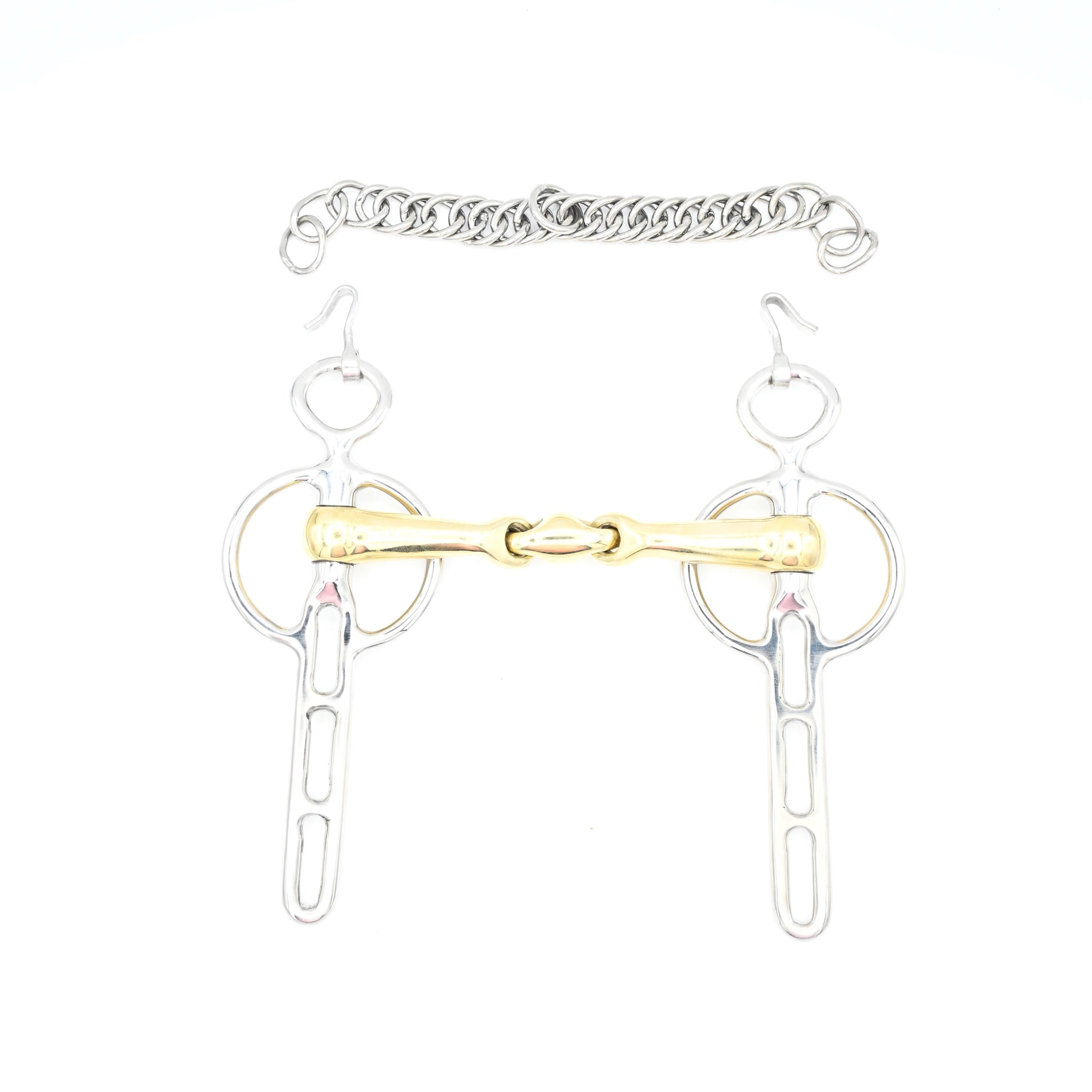
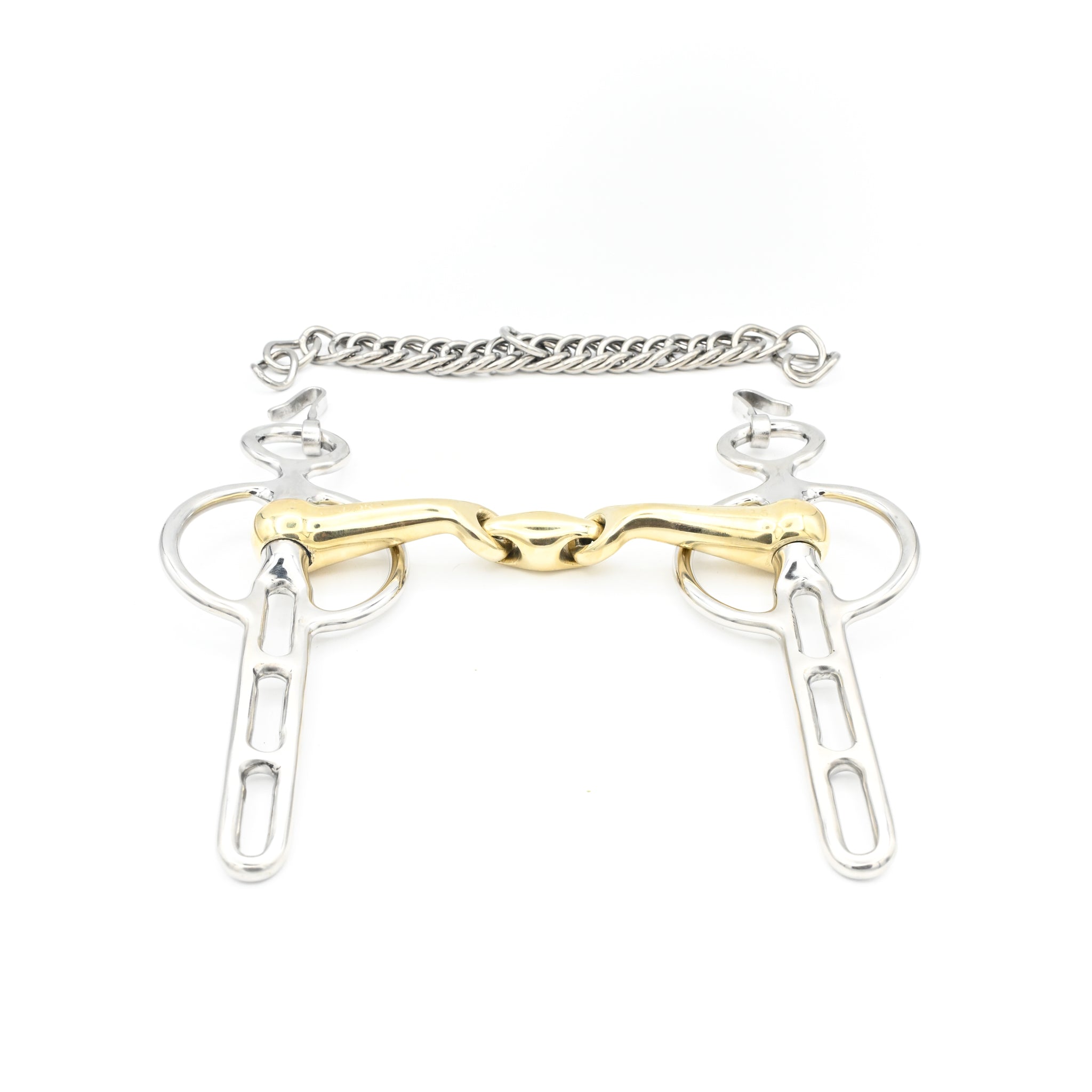
ComfortWave Liverpool BitComfortWave Liverpool Bit
ComfortWave Liverpool Bit Sale price$94.90 CAD

even pressure across tongue and bars

for driving at any level

How To Wear It

Correct fitting of the Liverpool bit is essential for effective driving communication and horse comfort. As a leverage bit, both the bit position and curb chain fitting must be precise.

Mouthpiece Position

The bit height should be set for the horse's comfort. Some horses prefer the mouthpiece to sit slightly higher, others slightly lower. Ideally the height is guided by the palate groove placement, ensuring the mouthpiece does not press against the palate.

The shanks should hang roughly perpendicular to the ground in the neutral position. Ensure there is no pinching at the lips and the mouthpiece lies flat and even. For a fixed-cheek design like the Liverpool, allow a gap of 3-5mm between the cheekpiece and the horse's face on both sides. If too much mouthpiece protrudes on one side, the bit will shift and any movement of links or joins will become uncomfortable for the horse.

Curb Chain Placement

Attach the curb chain to both sides of the bit and lay it flat in the chin groove. Adjust so it engages when the shanks rotate to approximately 45 degrees, not before. Check this by gently pulling one rein to observe at what point the chain comes into contact with the jaw. A correctly fitted chain should not create any pressure when the horse is relaxed.

Rein Slot Selection

Always begin with the rein in the cheek (top) slot for young or sensitive horses, or when working with a horse in Liverpool for the first time. Progress to middle or lower slots gradually as the horse's training develops and as the driver's assessment of the horse's needs evolves. Never begin in the lowest slot.

Need help?

Frequently Asked Questions About Liverpool Bits

Who should consider using Liverpool Bits?

The Liverpool is the backbone of driving work and offers the versatility and adjustability required across the full range of driving disciplines, from training young horses to competing at the highest level.

Driving Horses in Training

Younger or less established driving horses benefit from the cheek (direct) position, which provides minimal leverage while the horse develops balance, obedience, and strength. Starting in the lightest slot allows the horse to become familiar with rein contact without the amplified pressure of the lower slots.

Experienced Competition Drivers

As horses progress in training, drivers can move to middle or lower rein slots to find the ideal balance of precision and control. The ability to fine-tune leverage within a single bit design is invaluable for competition, where different classes, obstacles, and movements may require adjustments.

Heavy Draft Horses

For larger, stronger breeds that require more control, the lower rein placements provide the additional leverage needed without requiring excessive hand strength from the driver. The distribution of pressure across the chin groove, lips, and poll makes the stronger placements effective without concentrating force on a single sensitive area.