

Is It the Bit?
Tongue Problems
Tongue evasions are among the hardest bitting challenges. Here is how to understand what is happening and what might help.
A horse that puts its tongue over the bit, sticks its tongue out the side, pulls it back behind the contact, rolls it constantly, or flips it upward is almost always trying to escape pressure. These behaviours look different from each other, but the motivation is the same: something in the mouth is uncomfortable, and the tongue is searching for relief.
Tongue evasions are among the most frustrating bitting problems because they can be difficult to fully resolve. Some horses manage with the right setup. Others improve significantly but never stop entirely. Honesty about that reality is more useful than promising a silver bullet.
Recognising the Pattern
Types of Tongue Evasion
Tongue over the bit. The horse lifts its tongue and places it over the mouthpiece. Once the tongue is on top, the sensitive bars of the lower jaw receive direct bit contact with no cushioning. This often leads to further problems: bruising, rubs, and even bone spurs on the bars over time.
Tongue out the side. The tongue pokes out from one or both sides of the mouth. Sometimes occasional, sometimes constant. It looks minor but it signals the horse is not comfortable carrying the bit on its tongue.
Tongue pulled back. The horse retracts its tongue behind the bit entirely. Like tongue-over, this exposes the bars to direct pressure. It is also linked to tension through the hyoid apparatus, the bone structure connecting the tongue to the poll, neck, shoulders, and back.
Constant movement or rolling. The tongue churns, rolls, or moves restlessly around the bit. The horse is not settled and is inwardly fixating on the bit rather than listening to the aids.
Tongue flipping. The tongue flips upward against the palate, often visible as a bulge or flash of pink. Less common, but deeply ingrained once established.
Before Changing the Bit
Rule Out Dental Issues First
A surprising number of tongue evasions trace back to the teeth, not the bit. Wolf teeth, particularly blind wolf teeth (unerupted and hidden beneath the gum), sit right where the bit makes contact. The bit presses the gum tissue over a hidden tooth, causing pain with no visible cause. Many horses labelled as having "tongue problems" are actually reacting to dental pain.
Sharp enamel edges on the premolars can also irritate the cheeks and tongue. In geldings and some mares, canine teeth can interfere with bit placement. If a tongue evasion appeared suddenly or worsened over time, dental work is worth investigating before swapping bits. It is not always the answer, but ruling it out avoids chasing a solution in the wrong direction.
The Muscle Most People Miss
The Genioglossus
Toward the back of the tongue sits the genioglossus, sometimes called the grass muscle. It moves grass and feed back toward the molars for grinding, and it helps the horse swallow both food and saliva. Most riders have never heard of it, yet it is one of the most important structures in bit fitting.
It is not the same size, or in the same place, on every horse. On some it sits high and thin. On others it is low and full. It is usually left out of the conversation when a bit is chosen, and that is a mistake, because any pressure on this muscle from the bit causes real discomfort.
Some bits, when a contact is taken, move up and dig into this muscle. Bits with tongue plates interfere with it directly and restrict the horse's ability to swallow. You can feel why: rest a finger on your own tongue, up to the knuckle, and try to swallow. It is uncomfortable and restrictive. Now picture an ill-fitting bit doing that to a horse while it is being asked to work. It will not be anywhere near its best.
Finding the mouthpiece and cheekpiece that suit an individual horse's mouth conformation, so the bit never loads this muscle, is a large part of what bit fitting is. It is only one piece of the jigsaw, but it is a piece most people never check. See the full mouth anatomy guide for how the tongue, hyoid, and jaw fit together.
Two Different Problems
Thick Tongue vs Sensitive Tongue
These sound like variations of the same thing, but they are opposite problems requiring opposite approaches.
A thick or fleshy tongue physically fills the mouth. There is less room between the tongue and the hard palate, so the bit gets squeezed into a space that is already tight. This horse needs more space: a thinner mouthpiece, tongue relief, or both. Here is the counterintuitive part: a fleshy tongue needs a thinner bit, not a thicker one. A 16mm mouthpiece takes up more room and compresses the tongue harder against the palate. Research from Engelke and Gasse found that the distance between upper and lower jaw where the bit sits is only 25 to 44mm, and the tongue already fills most of that space. A thick bit in a full mouth is not kinder. It is tighter.
A sensitive tongue reacts to the type of contact, not the lack of space. This horse may have plenty of room in its mouth but dislikes direct, concentrated pressure on the centre of the tongue. It needs less direct tongue contact: a ported mullen, a barrel link that distributes pressure differently, or a mouthpiece that shifts the pressure points away from the tongue centre.
Both problems produce tongue evasions. But a thinner bit that helps a thick-tongued horse could feel sharper to a sensitive-tongued horse. Knowing which problem the horse actually has changes the entire approach.
The Sequence
What to Consider
Fix mouthpiece discomfort first. Then fine-tune cheekpiece and thickness. That order matters, because the mouthpiece determines what the tongue actually feels. Changing a cheekpiece on an uncomfortable mouthpiece will not address the root cause.
Tongue relief mouthpieces are the starting point for most tongue evasions. These designs create space for the tongue by arching over it (ports), distributing pressure across a wider area (barrel links), or curving away from the centre of the tongue (arched mullens). CalmPort, CalmBlue, FlexArch, ComfortArch, and BlueWave all offer tongue relief, each in a different way.
Barrel link designs eliminate the pinch point that exists in traditional double-jointed bits. The barrel sits lower in the mouth than a standard lozenge, which means less contact with the palate and a smoother feel across the tongue. CalmBlue, CalmRide, CalmPort, and CalmGreen all use barrel links.
Mullen and curved mullen designs keep the mouthpiece in one piece rather than folding on the tongue. A wide rounded port (BlueWave) creates tongue space without any joint action. Mullens are the most stable design in the mouth, but they transmit more to the bars, so they suit horses that tolerate bar contact reasonably well.
Rubber mullens (SteadyFlex and FlexFlow) offer a warmer, softer feel than metal. The semi-flexible material absorbs some of the load that a rigid mullen would transmit to the bars, which makes them a useful option for horses that need a stable mouthpiece but are also sensitive to hard metal contact.
The Baucher cheekpiece keeps the bit stable in the mouth. It does not rotate or slide the way a loose ring does. For horses that get their tongue over the bit, that stability makes it physically harder for the tongue to get on top. Baucher also lifts the bit slightly off the bars, which can reduce the overall discomfort that triggers the evasion in the first place.
For sensitive tongues specifically: avoid Waterfords and multi-link designs that compress and squeeze the tongue. These work well for horses that lean or brace, but for a tongue-sensitive horse they tend to make things worse.
A surprising option: the ComfortLink, an anatomic single-jointed bit, directs pressure to the sides of the tongue rather than the centre and tip. Some horses with tongue sensitivity genuinely prefer this distribution. It is not the obvious first choice, but it is worth knowing about when other approaches have not worked.
Mouthpiece Options
Tongue Relief Options
For horses that need more space on the tongue, whether due to a thick tongue, tongue-over-the-bit, or general tongue discomfort.
Maximum tongue space through ports, barrel links, mullens, and arched designs

CalmPort
Sweet Iron · 10mm · Barrel + Port
Combines a barrel link with a small port for maximum tongue relief. The port arches over the tongue while the barrel link eliminates pinching. A strong first choice for tongue-over-the-bit.
Shop CalmPort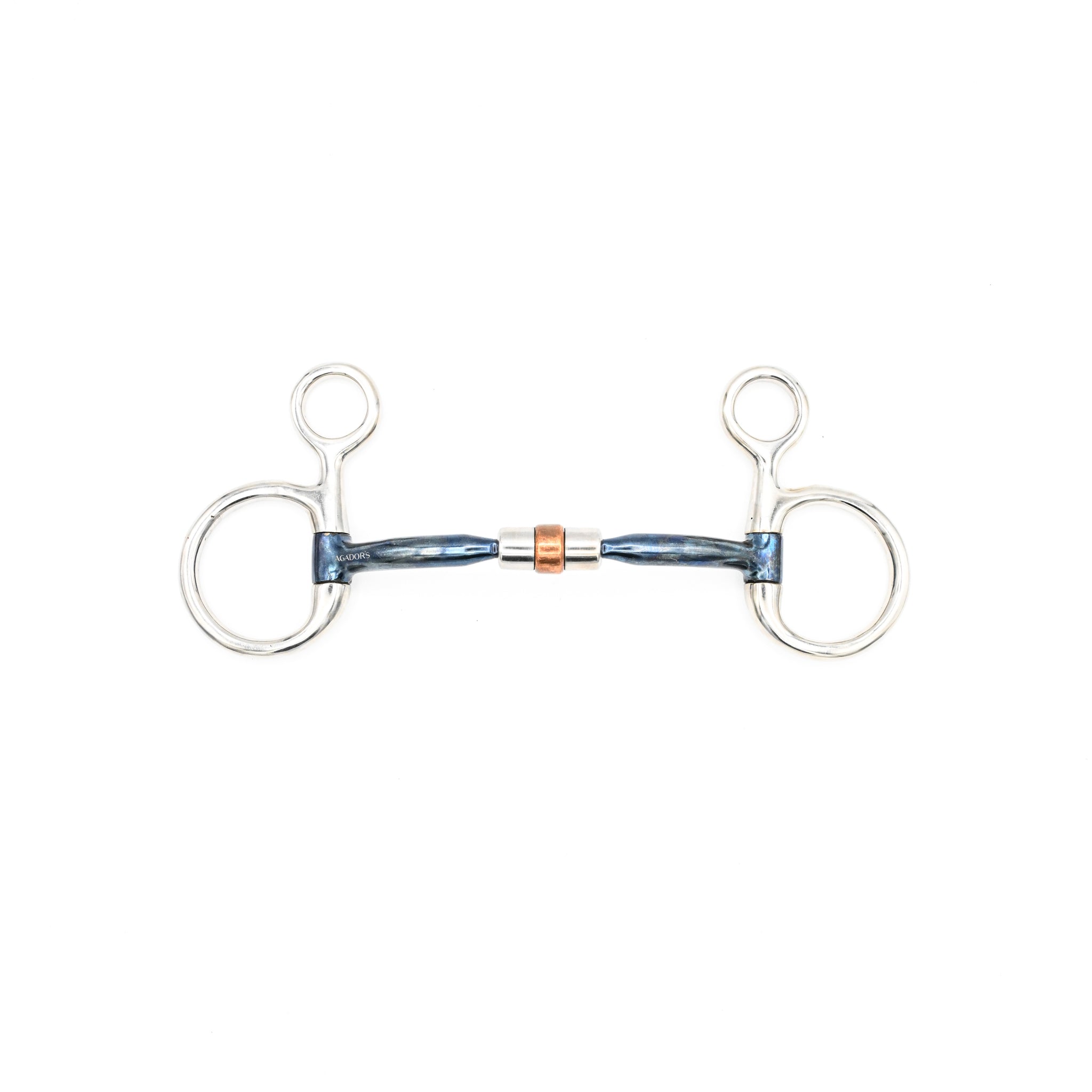
CalmBlue
Sweet Iron + Copper · 10mm · Barrel Link
Thin profile sits well below the 14mm comfort ceiling. The barrel link creates tongue space and the copper roller encourages a relaxed jaw. A versatile starting point across many tongue issues.
Shop CalmBlue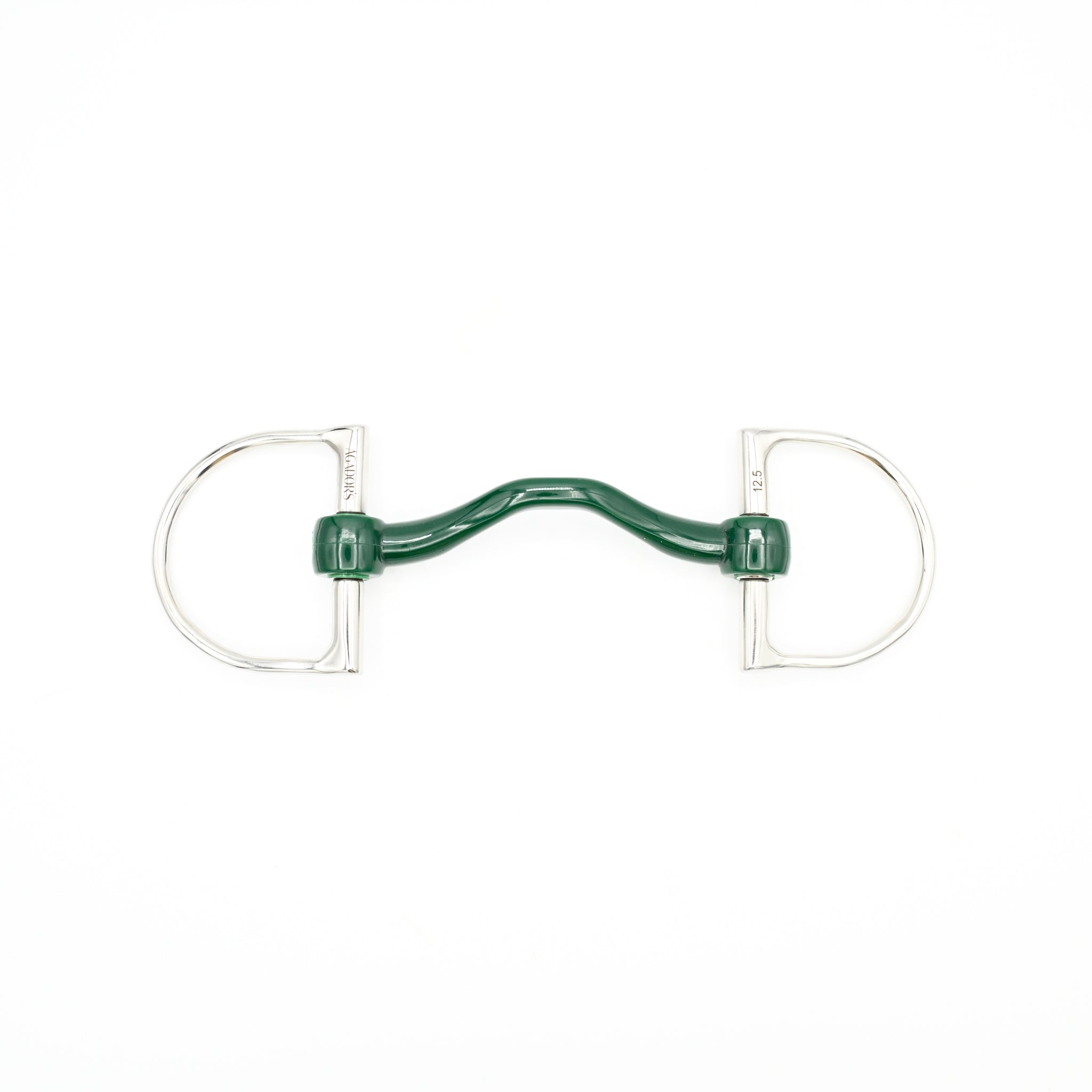
FlexArch
Tongue Relief · Forward Tilt
Provides tongue relief with a forward tilt. Addresses the complex fitting challenge of a small mouth combined with a fleshy tongue. Baucher cheekpiece option available.
Shop FlexArch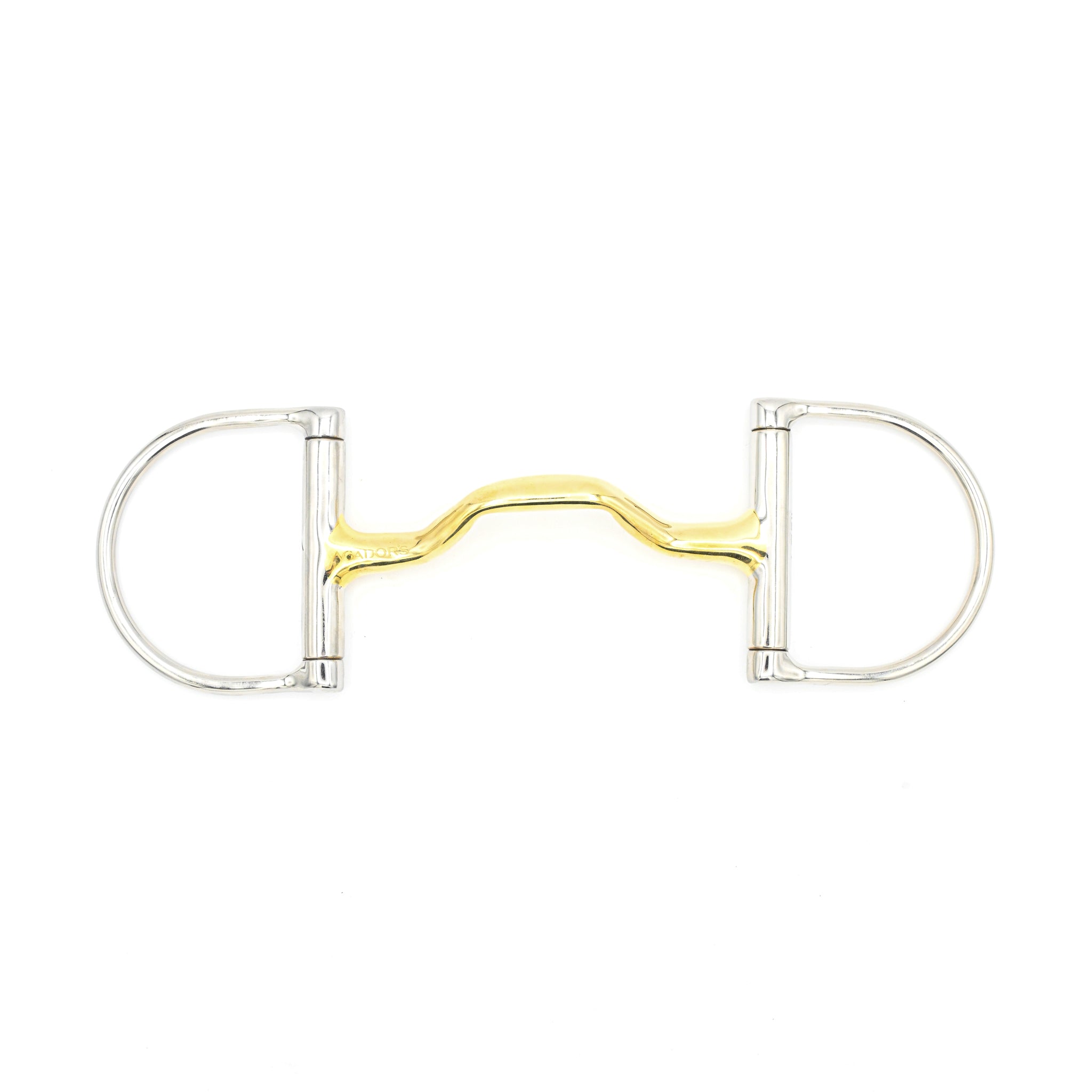
ComfortArch
Curved Mullen · Integrated Port
A curved mullen with an angular port that wraps around the bars. No moving parts means a quiet mouth feel. More defined contact than other tongue relief options, with a pre-signal effect before bar pressure engages.
Shop ComfortArch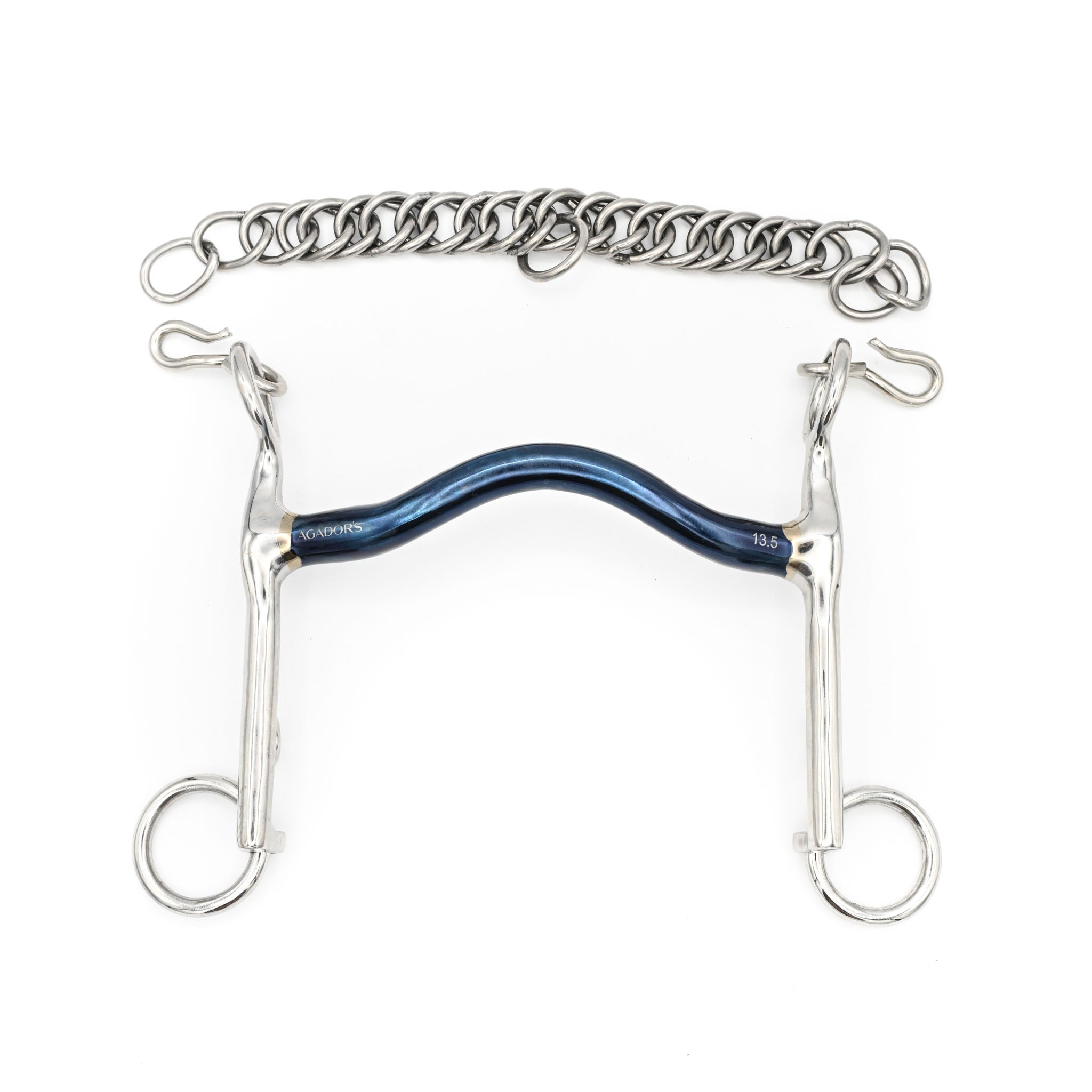
BlueWave
Sweet Iron · Mullen · 95mm Wide Port
The widest port in the collection. A rounded, extra-wide arch lifts off the tongue across the full width of the mouth, giving fleshy-tongued and low-palate horses the most room any mullen can offer. Mullen stability with generous tongue relief from the rounded port.
Shop BlueWaveSensitivity Options
For Sensitive Tongues
For horses that react to the type of contact rather than the amount of space. These options redirect pressure, soften the material, or change how the mouthpiece sits across the tongue.
Redirecting pressure, softer materials, and alternative pressure distribution
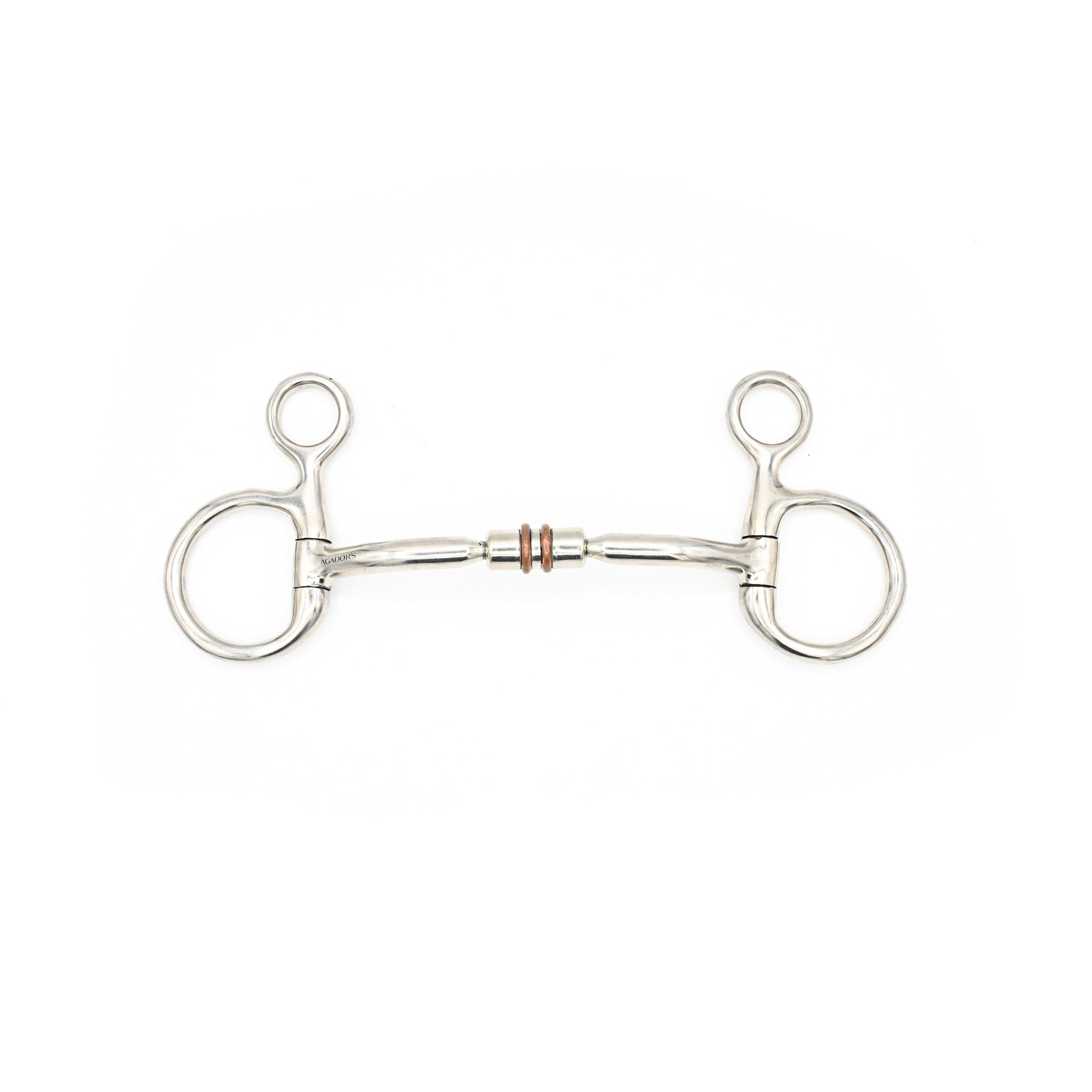
CalmRide
Sweet Iron · 10mm · Barrel + Double Rollers
Barrel link with double copper rollers. The rollers give the tongue something to do without compressing it. Creates tongue space while adding gentle stimulation that keeps the mouth busy.
Shop CalmRide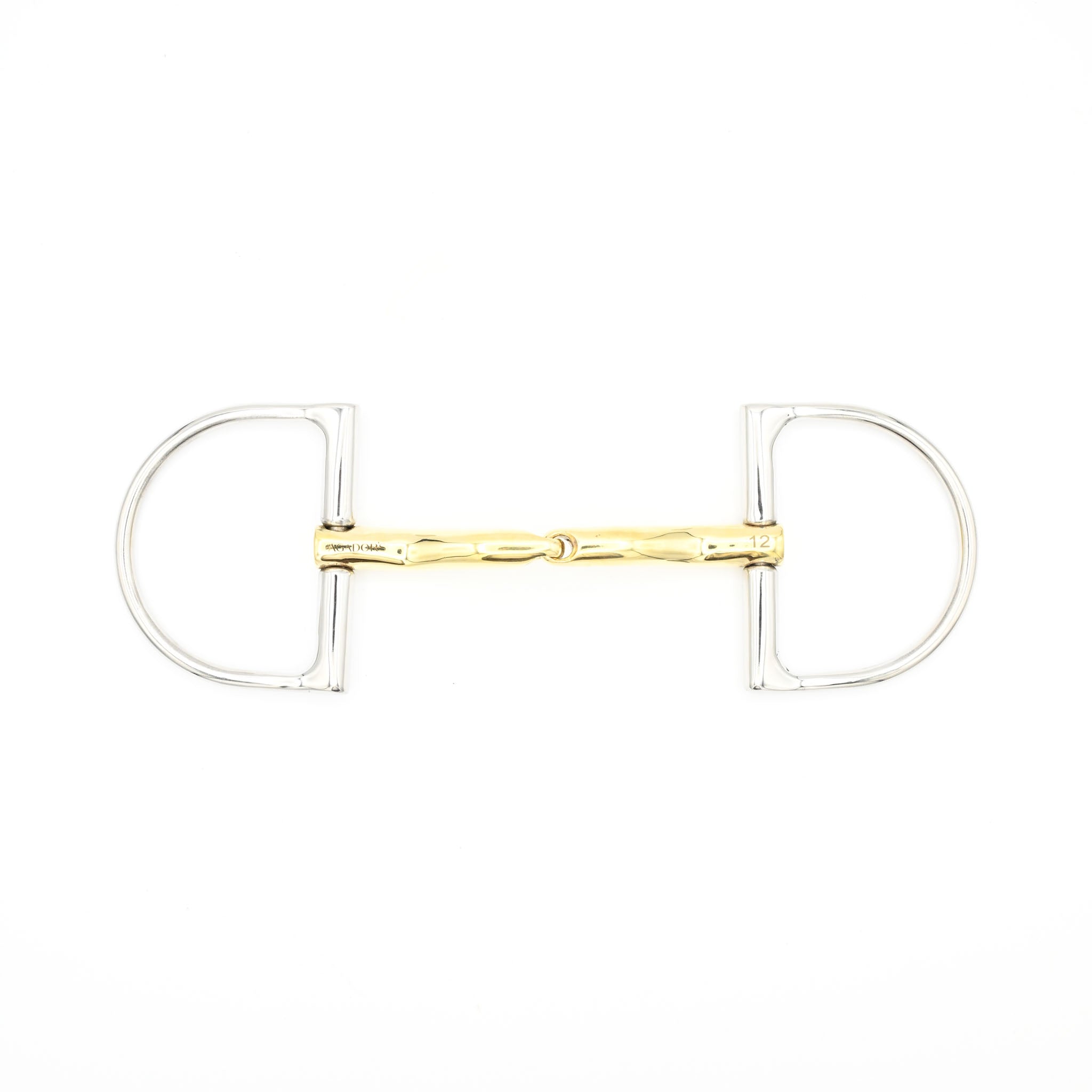
ComfortLink
Anatomic Single Joint
Directs pressure to the sides of the tongue rather than the centre and tip. A different pressure distribution that some tongue-sensitive horses genuinely prefer. Worth trying when standard tongue relief has not resolved the problem.
Shop ComfortLink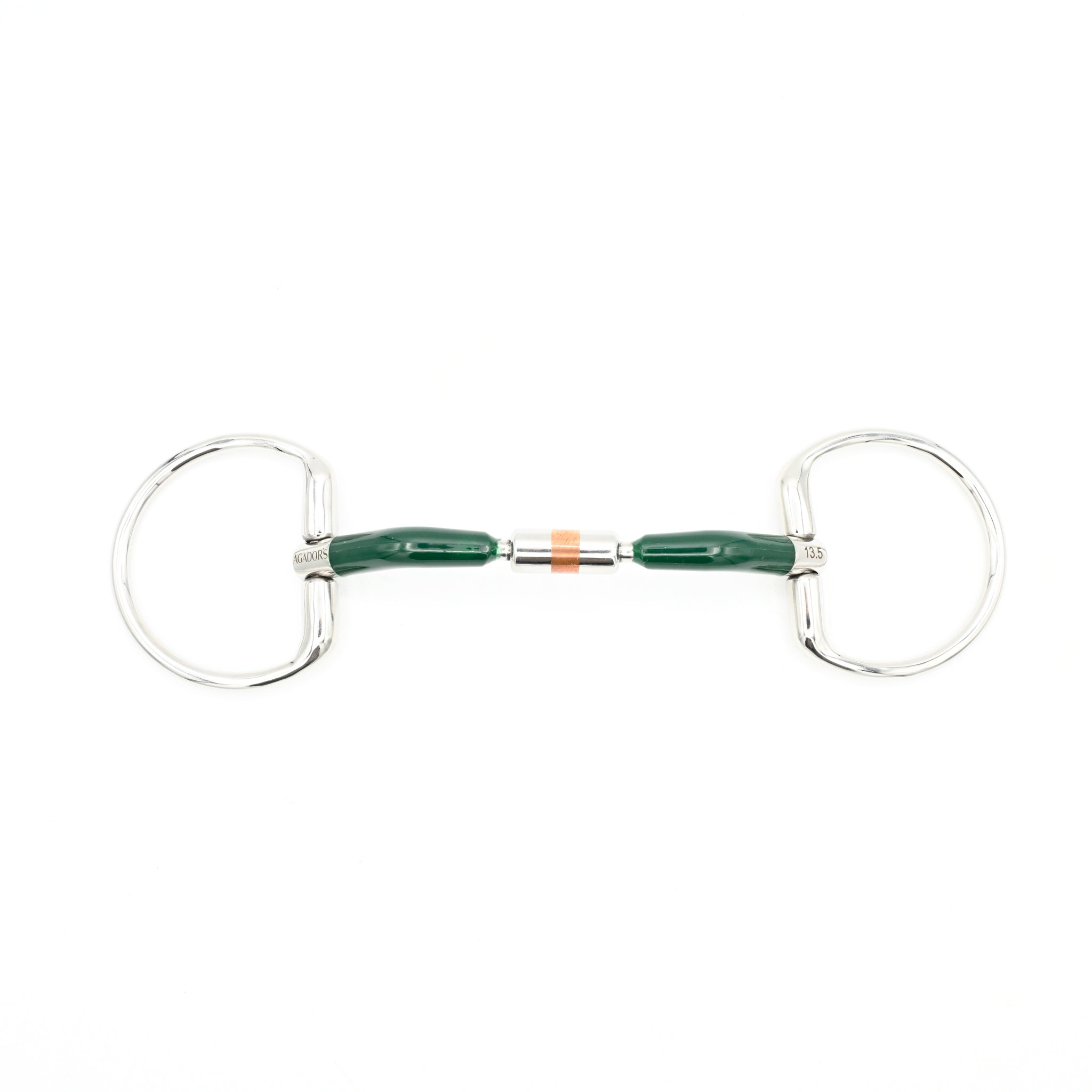
CalmGreen
Rubber Cannons · Barrel Link
Same barrel-link design as CalmBlue but with rubber cannons. Closer to a mullen feel with less inward movement. For horses that want tongue space combined with a softer, more stable contact.
Shop CalmGreen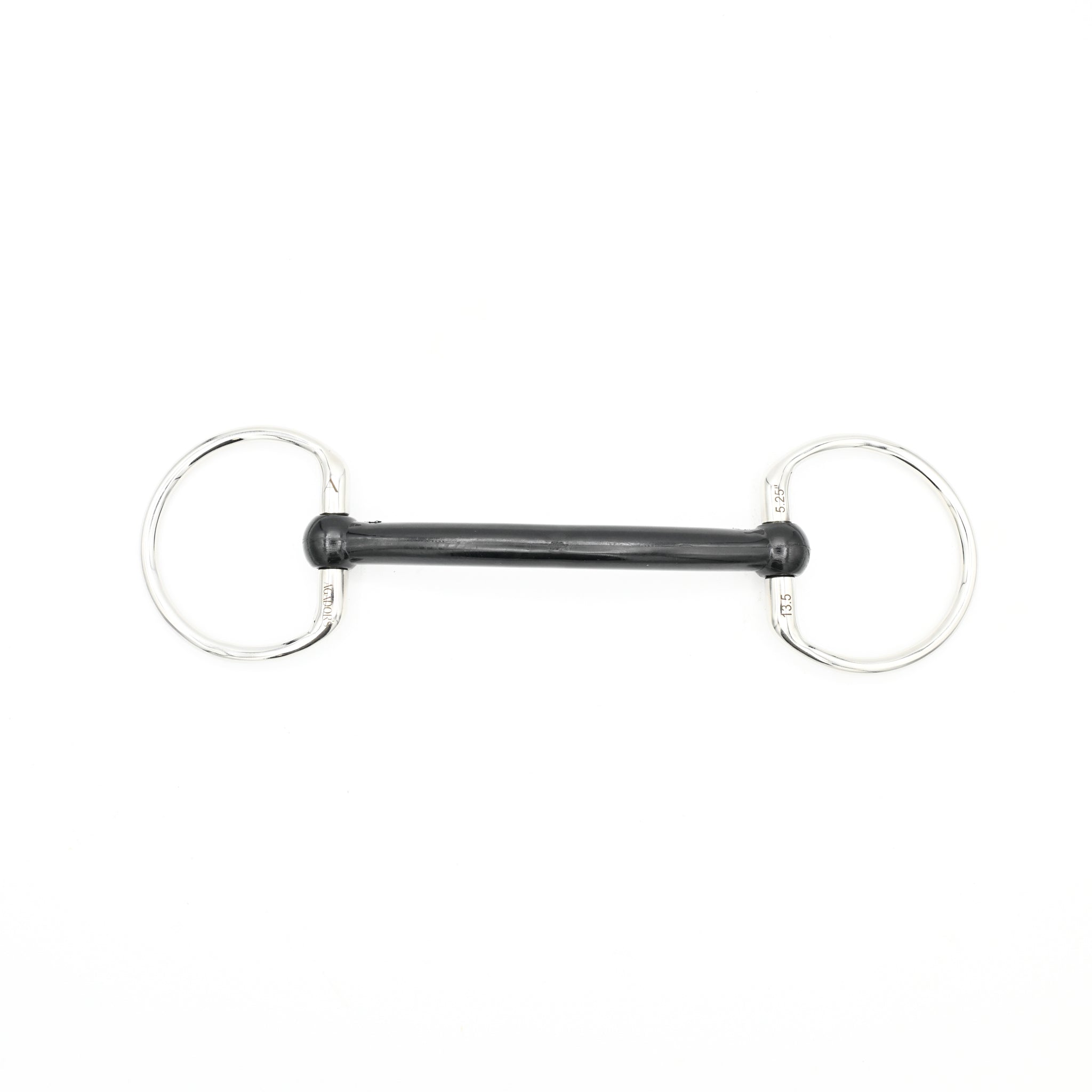
SteadyFlex
Semi-Flexible Rubber · Mullen
A rubber mullen that combines mullen stability with controlled flex. Warmer and softer in the mouth than metal, and absorbs some of the load a rigid mullen would pass to the bars. A good option for horses that want a simple, quiet mouthpiece but find hard metal mullens too firm.
Shop SteadyFlex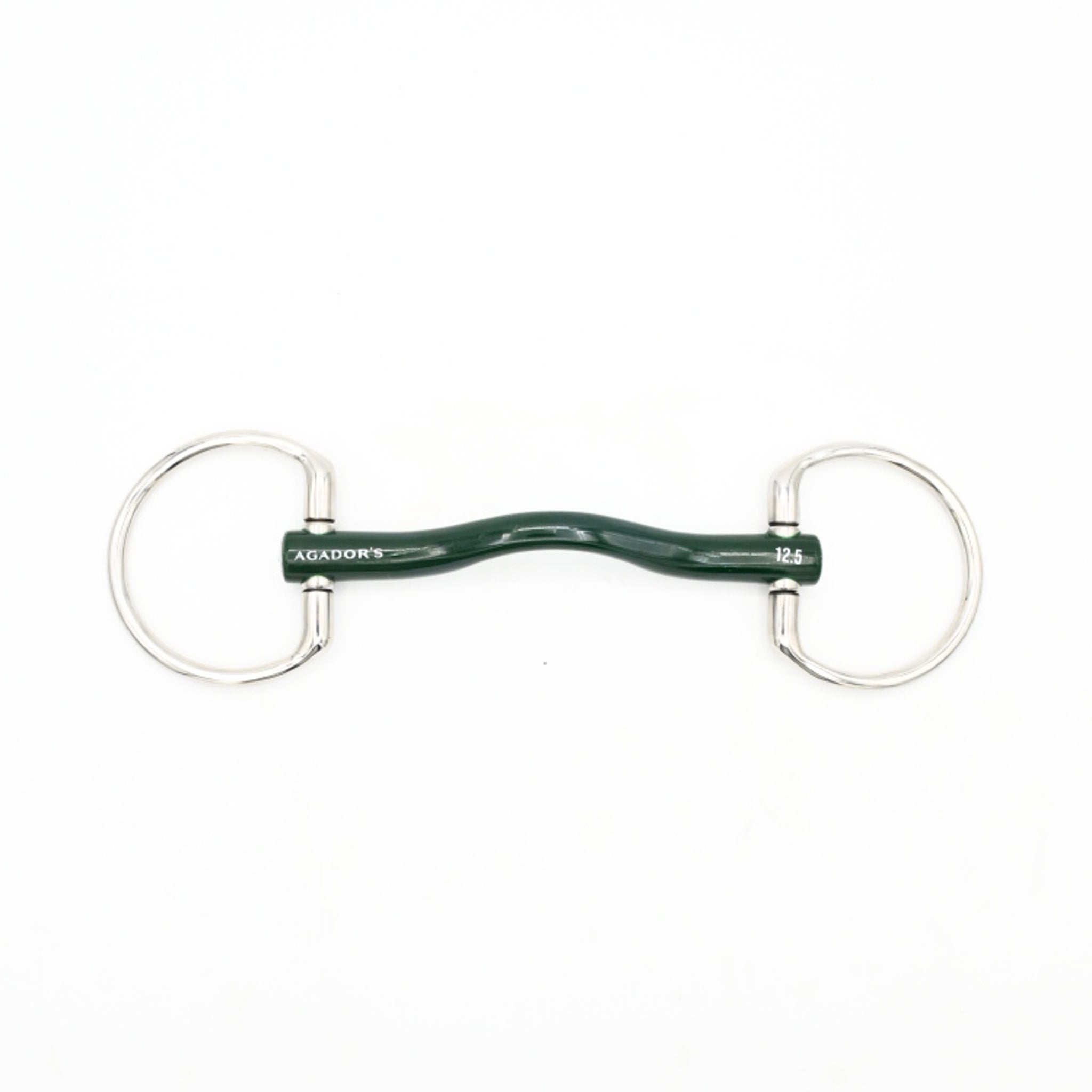
FlexFlow
Rubber · Mullen with Small Port
A rubber mullen with a small integrated port gives you soft material plus a touch of tongue clearance. Well suited to horses that want rubber-level comfort but still need a little room for the tongue to sit. Available in Baby Pelham, Eggbutt, and Hunter D.
Shop FlexFlowSetting Expectations
Managing vs Solving
Tongue evasions are similar to cribbing in one important way: sometimes the goal is management, not elimination. A horse that has been putting its tongue over the bit for years has a deeply practised motor pattern. The right bit can make it happen less often, or make the horse more comfortable so the urge is reduced, but it may not disappear entirely.
That is not a failure. A horse that goes from tongue-over on every ride to once a week in a bit that is otherwise comfortable and well-accepted is a genuine improvement. Progress is not always a complete fix, and that is fine.
The body is also part of the picture. The tongue connects to the hyoid apparatus, which links to the poll, the neck, the shoulders, and the back through three myofascial chains. Tension in the mouth can travel through this system, and tension elsewhere in the body can show up as tongue problems. Saddle fit, bodywork, and riding approach all play into whether a tongue evasion improves or persists. The mouth anatomy guide covers the hyoid and its connections in more detail.
Need help?
Common Questions
No. This is one of the most common misconceptions in bitting. A thicker mouthpiece takes up more of the limited space between the tongue and the hard palate (only 25 to 44mm in most horses). With a fleshy tongue already filling that space, a thick bit compresses the tongue harder. A thinner mouthpiece (10 to 12mm) actually gives the tongue more room to sit comfortably. The trade-off is that thinner bits concentrate pressure on a smaller surface area, so rider hand quality becomes more important.
It is usually not an injury. Toward the back of the tongue sits the genioglossus, the grass muscle, which moves feed back toward the molars and helps the horse swallow food and saliva. Its size and position vary from horse to horse: high and thin on some, low and full on others. A raised muscle that is symmetrical on both sides, with no heat, no bleeding, and no change in how the horse eats, is normal muscle rather than damage. It matters a great deal for bit choice, because any pressure on it causes real discomfort. A bit that clears the front of the tongue can still rise into it when a contact is taken, and a tongue plate will press on it directly and restrict swallowing. A mouthpiece and cheekpiece matched to the horse's mouth conformation, so weight stays off this muscle, is what resolves it. See the mouth anatomy guide.
Waterfords and multi-link designs work by distributing pressure in a way that discourages horses from bracing and leaning. They are excellent for horses that get heavy in the hand. However, they achieve this by compressing and squeezing the tongue through multiple small links. For a horse that already has tongue sensitivity, this tends to increase the discomfort that is causing the evasion in the first place.
The Baucher keeps the bit stable in the mouth. It does not slide through the rings like a loose ring or rotate freely. This stability makes it physically more difficult for the horse to manoeuvre its tongue over the mouthpiece. The Baucher also lifts the bit slightly off the bars, reducing overall oral pressure. It provides no leverage and no poll pressure, making it a stability tool rather than a control tool.
It depends on the specific problem. The ComfortLink, an anatomic single joint, directs pressure to the sides of the tongue rather than the centre. For horses whose tongue sensitivity is concentrated at the centre or tip, this different distribution can be more comfortable. It is not the default recommendation, but it is a genuine option when barrel-link and mullen designs have not resolved the issue.
Rubber is warmer and softer than metal and absorbs some of the load that a rigid bit would transmit to the bars and tongue. That makes it genuinely more forgiving for horses with sensitive mouths. The trade-offs are that rubber is bulkier for the same effective thickness, so very fleshy-tongued horses may still feel crowded, and the material wears faster than metal so the mouthpiece needs regular inspection for bite damage. Used thoughtfully, rubber mullens are a strong option for horses that want mullen stability without the firmness of steel or sweet iron.
Yes. The tongue attaches to the hyoid bone, which connects through myofascial chains to the poll, neck, shoulders, and back. A horse with back pain, saddle fit issues, or restricted movement elsewhere in its body can develop tongue tension as a downstream symptom. Dental issues (wolf teeth, sharp edges, canine interference) are another common non-bit cause. And training or riding factors matter too: heavy or inconsistent hands, tight nosebands, and forced outlines all create tongue tension that has nothing to do with bit design.
Keep Reading
Related Guides
Understanding Your Horse's Mouth Anatomy covers the tongue, bars, hyoid, and palate in detail.
Bit Strength and Severity Guide explains how different bits apply pressure.
Is It the Bit? takes you through the full behaviour-vs-bit decision tree.