
Bit Guide
Understanding Bit Severity
Why severity charts get it wrong, and the three dimensions that actually determine how a bit feels to your horse.
The typical severity chart ranks bits on a single line from mild to harsh: snaffle at 1, pelham at 5, Western curb at 8. But a bit isn't mild or harsh on its own. It depends on how it interacts with your horse's mouth, and that changes depending on the horse.
A 16mm lozenge might be the gentlest thing in the world for a horse with a small tongue and a high palate. For a horse with a fleshy tongue and limited mouth space, the same bit creates more pressure than a thinner one would.
Instead of a chart, here's what actually determines how strong a bit feels. There are three dimensions, and they're independent of each other. Understanding them puts you in a position to evaluate any bit you pick up.
Dimension 1
Leverage (The Cheekpiece)
Leverage is the one dimension that does work like a scale. It's determined by the cheekpiece, and it amplifies the conversation between your hands and your horse's mouth.
A snaffle has no leverage at all. The force that reaches the horse's mouth is roughly equal to the force you put on the rein. One unit in, one unit out. When you add a shank below the mouthpiece, you create a lever. The longer the shank, the more your rein aid gets amplified.
Leverage bits also bring poll pressure and chin groove pressure through the curb chain. Worth noting: the poll pressure is matched by upward pressure on the lips, which for many horses is actually the more sensitive part. These aren't inherently harsh. They're additional channels of communication.
Direct action with 1:1 force transmission
No Leverage (Snaffles)

Loose Ring
Leverage: None
Most mobile. Ring movement discourages leaning and bracing. A great option for horses that need to soften and relax into the contact.
Shop Loose Ring
Eggbutt
Leverage: None
Stable and quiet. The reliable default. A great choice for young, green or sensitive horses and riders with less experienced hands.
Shop Eggbutt
D-Ring
Leverage: None
Stable with some lateral guidance against the face. A hybrid between the eggbutt and full cheek. Popular in the Western and Hunter rings.
Shop D-Ring
Full Cheek / Fulmer
Leverage: None
Strong lateral guidance. Useful for steering with green horses. The extended cheeks prevent the bit from sliding through the mouth.
Shop Full Cheek
Baucher
Leverage: None
Suspends from the bridle. Counterintuitively, it actually reduces poll pressure. The quietest, most stable option. Often preferred by nervous horses.
Shop Baucher
Wilson
Leverage: None
Double-ring design creates lateral face pressure when the rein is taken. No leverage or poll pressure. The two-ring squeeze encourages lateral responsiveness.
Shop WilsonBits that amplify the rein aid through shanks or pulley action
With Leverage

Kimberwick
Leverage: Mild
D-ring with curb chain. Single rein, adjustable slot position. Less leverage than a baby pelham. A versatile step up from a snaffle.

Kimblehook
Leverage: Mild to Moderate
Multi-ring design with high, middle, and low rein slots. Generally taller than kimberwick- therefore more adjustable action depending on where you clip the rein. Change leverage on the fly.
Shop Kimblehook
Polo Gag
Leverage: Moderate to Strong
Pulley action on the cheekpiece by passing through a rope attachment through the holes for second rein. Easily adjustable but can exert significant poll pressure and upward lip pressure.
Shop Polo Gags
Baby Pelham
Leverage: Moderate
Short shanks (5cm). A gentler introduction to pelham-style leverage with curb chain. Works with double rein or a converter.
Shop Pelhams
Weymouth
Leverage: Variable by shank length
5cm shanks = milder. 7cm = standard. 9cm = strong. Always paired with a bradoon in a double bridle.
Shop Weymouth
Universal
Leverage: Strong
Pulley action on the cheekpiece if reins left on the bottom ring. Significant poll pressure and upward lip pressure. Sold with a curb strap. Best suited for jumping and cross-country at speed.
Shop UniversalIf someone tells you to "step up" to something stronger, they usually mean moving from the first group to the second. And if you want to go softer, you move the other way. But leverage is only one piece of the picture.
Dimension 2
Pressure Points (The Mouthpiece)
The mouthpiece determines how pressure is concentrated or distributed across the horse's mouth. This is where most of the real harshness in a bit comes from, and it has nothing to do with leverage.
The principle is simple: a lot of pressure on a small area is harsh. The same amount of pressure spread over a larger area is not. What makes a mouthpiece harsh or kind is how its link design and geometry behave when the bit is actually in motion under rein contact.
A French link is a good example. On a table, it looks mild. But when the bit rotates under rein engagement, the angle of that center plate changes. It tilts and digs into the tongue rather than laying flat. That's why French links are harsher than they appear.
Harshness isn't about category. It's about how well the design distributes pressure.
Where Each Mouthpiece Directs Pressure

Mullen (Straight)
Pressure: Bars, tongue trapped
Most stable feel. No moving parts, the quietest option. The bars bear the load (think of a straight bar across your shin). The tongue sits underneath, trapped but not pinched.
Shop Mullen Mouth
Mullen (Ported)
Pressure: Bars, with tongue relief
The port creates space for the tongue. Wider port = more relief. Pressure shifts to the bars and corners as the tongue is freed. A good choice for horses with large or fleshy tongues.
Shop Mullen Mouth
Double Joint (Lozenge)
Pressure: Tongue, distributed
The most versatile design. Pressure spreads across the tongue evenly. The lozenge prevents the "folding" that a single joint creates. Design quality matters enormously here.
Shop Double Joint
Single Joint
Pressure: Sides of tongue, corners
Pressure concentrates on the sides of the tongue rather than the center. Some horses genuinely prefer this. Often dismissed unfairly because of the "nutcracker" myth.
Shop Single Joint
Barrel Link
Pressure: Bars, with tongue relief
The barrel sits on the tongue without rotating up into the palate. Strong tongue relief with stable bar contact. A well-designed barrel link at 10mm can be far kinder than a poorly designed 16mm double joint.
Shop Barrel Link
Multi-Link (Waterford)
Pressure: Tongue + bars, constantly shifting
Multiple small links prevent the horse from fixing on a single pressure point. Makes leaning and bracing unrewarding. Effective for horses that are strong in the contact.
Shop WaterfordIt's About Design, Not Category
As bit designers, our goal is more harmonious communication between you and your horse. That means transmitting the clearest possible conversation with the least amount of concentrated pressure. Every link, every joint, every surface has to lay flat and distribute evenly when the bit is engaged. Not just when it's sitting on a table.
The question isn't "which mouthpiece type is mildest?" It's "does this design concentrate pressure or distribute it, and does it direct that pressure where my horse can handle it?"
If you're trying to go easy on your horse's mouth, watch for these
What to Avoid If You're Looking for Gentle

Small Protruding Parts
Small protruding parts or edges with limited surface area, unless they are properly angled to lay flat. Small contact area means concentrated pressure.
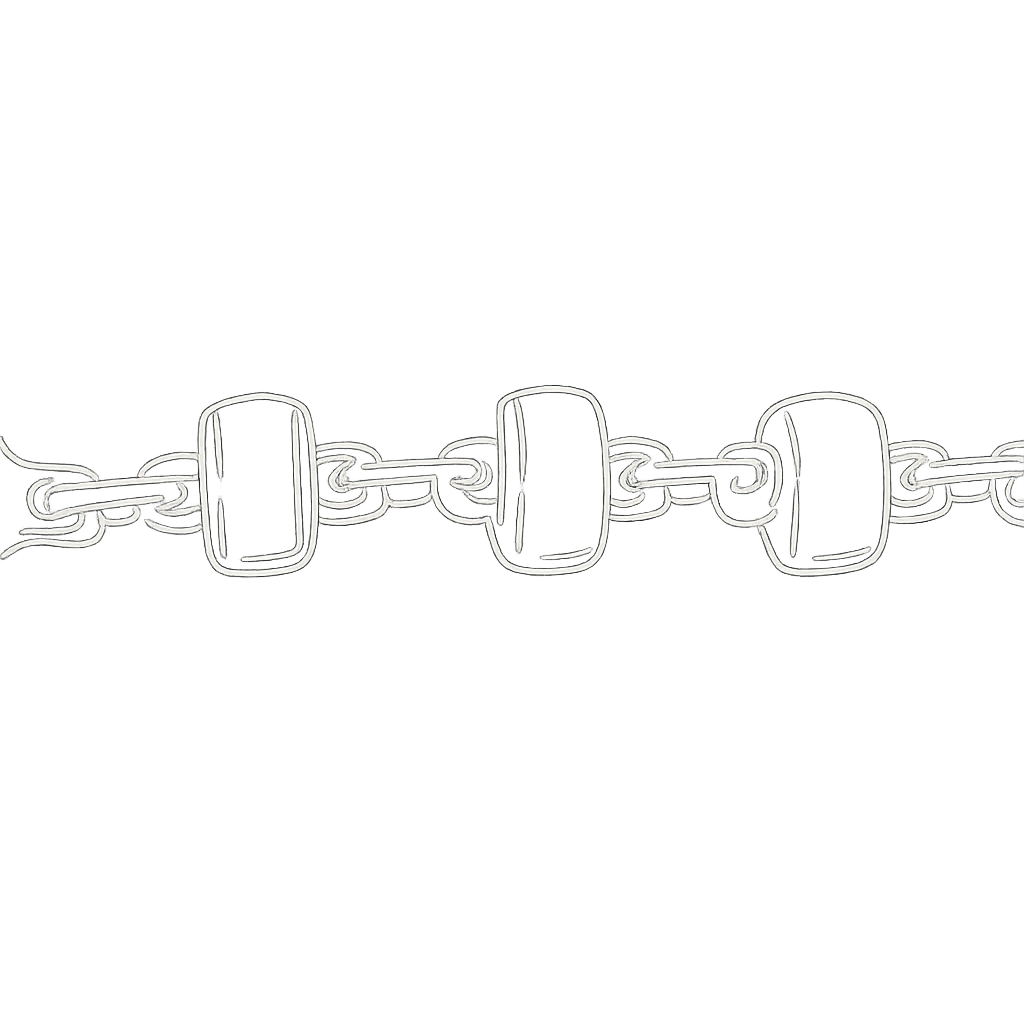
Very Exposed Joints
These are often a hidden pressure point that's easy to miss when you're looking at the bit on a table.
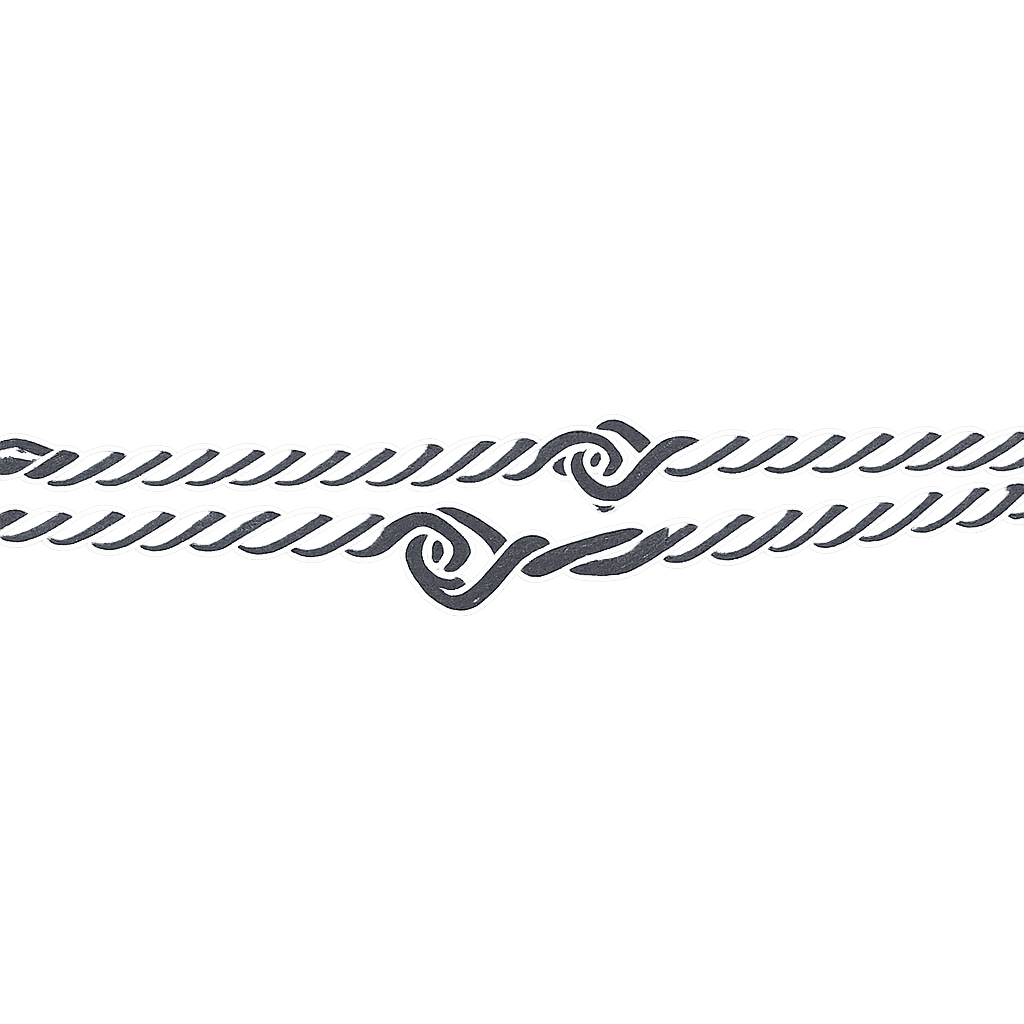
Rough Surfaces or Twists
Twisted wire, serrated mouthpieces, and similar designs create deliberate pressure concentration. We don't create those designs at Agadors.
Single-jointed bits get a bad reputation. The popular claim is that the joint pushes up into the horse's hard palate like a nutcracker. This gets repeated constantly online and in clinics.
It's a myth.
Engineering analysis shows it's physically impossible. All rein forces are directed toward the rider, pulling the bit away from the palate. What actually happens is the bit closes around the mouth like a pair of tweezers, squeezing the commissures of the lips and the outer edges of the tongue. That's the real effect, and it applies equally to single-jointed AND double-jointed bits.
What IS true is that link design matters enormously. A traditional straight single joint creates a sharper fold that concentrates pressure on a narrow area. A curved or anatomically shaped single joint distributes that same pressure more evenly. We wrote about how we approached single joint design using skeletal models to create a joint geometry that sits flatter against the tongue under rein engagement.
Don't dismiss single joints because of a myth. Evaluate them by how well the link geometry distributes pressure when the bit is actually working in the mouth.
Dimension 3
Fit (Thickness Relative to Mouth Space)
This is the one that surprises people. Conventional wisdom says a thicker bit is kinder because it spreads pressure over a larger surface area. That's true in theory and completely wrong in practice for a lot of horses.
A thicker bit takes up more room. If your horse has a fleshy tongue, a low palate, or a smaller mouth, a thick bit compresses everything together. The tongue gets squeezed. The palate might get contacted during movement. The horse ends up under MORE pressure, not less.
A thinner bit takes up less space. The tongue can settle around it. There's clearance for the palate. The net result is often a more comfortable experience. Two horses can wear the exact same bit and have completely different experiences based purely on their mouth anatomy.
A groundbreaking study* examining 72 horse cadavers revealed some fascinating insights about equine mouth anatomy that challenge common assumptions about bit fitting.
The study found that most adult horses have between 25-44mm of space between their upper and lower jaws (averaging 34mm), with ponies ranging from 26-43mm (averaging 32mm). Remember that the tongue occupies much of this space, leaving limited room for a bit.
Most surprisingly, ponies and full-sized horses have remarkably similar internal mouth measurements. While a pony's head might be significantly smaller externally, they typically have only 2-3mm less space between their upper and lower jaws compared to larger horses.
Another key finding was that individual horses can have up to 6mm difference between the left and right sides of their mouths. This asymmetry might explain why some horses seem more comfortable with contact on one side versus the other.
Perhaps most importantly for bit fitting, the researchers found no reliable correlation between external head size and internal mouth space. This means you cannot determine appropriate bit thickness simply by looking at your horse's head shape or size.
These findings explain why thick bits (often recommended for sensitive horses) can actually cause more problems than they solve. There simply isn't enough space in many horses' mouths to accommodate them comfortably.
*Engelke, E. and Gasse, H. (2003). An anatomical study of the rostral part of the equine oral cavity with respect to position and size of a snaffle bit. Equine Veterinary Education, 15(3), 158-163.
How to Assess Your Horse's Mouth Space
One easy way to assess the available space in your horse's mouth is by gently placing a finger between the horse's tongue and palate (where the bit rests). This gives you a general sense of how much room the horse has to accommodate a bit. If you want to be precise or your fingers are not average sized, use a calliper tool to determine thickness or a soft tape (measure your circumference at the middle of the finger and divide by 3).
Watch this video on how to use the finger test. Try to check both sides to figure out if you feel any asymmetries. If there are asymmetries always use the smaller side for your measurement reference. Be careful when doing this to avoid getting bitten, and ensure the horse is calm and relaxed.
Use the finger test to determine which category your horse falls into
Choosing the Right Thickness
Tight Fit (10-12mm ideal)
- One finger feels tight.
- Appears to have low palate and/or fleshy tongue.
- Often shows resistance to traditional bits.
- May chomp or pull against contact.
Average Fit (12-15mm ideal)
- One finger feels like a well fitting shoe, not too loose but also not too tight.
- Most common mouth type.
- Generally accepts standard bits well.
- Flexible sizing options.
Generous Fit (15mm+ ideal)
- Good amount of wiggle room, think, a shoe that's a size too big or more.
- Can accommodate thicker bits.
- Thin-tongued horses often prefer thicker bits for bar cushioning.
- May hide behind contact if bit is too thin.
The Fourth Factor
Your Hands
Every bit is only as strong or as gentle as the hands on the other end of the reins. A snaffle with no leverage can be harsh with rigid, heavy, or unsteady hands. A pelham with moderate leverage can be perfectly comfortable with quiet, following hands that release promptly.
This isn't meant as judgment. It's the single most important variable in the entire equation, and it's the one that no bit chart accounts for.
Making Adjustments
How to Go Softer or Stronger
If you want to reduce severity, here's the order that usually makes the most difference:
1. Check fit first. Is your current bit too thick for the horse's mouth? Sometimes "going softer" is actually going thinner, which seems counterintuitive but gives the horse more room.
2. Reduce leverage. If you're in a pelham, try a baby pelham. If you're in a baby pelham, try a snaffle. Moving up the leverage table is the most straightforward way to quiet the conversation.
3. Adjust pressure distribution. If your horse is sensitive in a specific area, switch to a mouthpiece that directs pressure elsewhere. This isn't "softer" in absolute terms, but it's softer for that horse.
4. Consider material. Rubber and semi-flexible materials have a softer physical feel than metal. Some horses respond noticeably to this change alone.
5. Add stability. A Baucher cheekpiece keeps the bit still in the mouth. For sensitive or nervous horses, less random movement can feel dramatically gentler.
Going "stronger" should ideally be about refinement, not volume. A more precise conversation, not a louder one.
A horse that leans through a snaffle often won't stop leaning through a pelham. It just leans through more. The answer is often a different kind of conversation: a multi-link mouthpiece that prevents bracing, a loose ring that adds mobility, or a mouthpiece with copper that wakes up a dull horse.
1. Add leverage gradually. Try a kimberwick before a baby pelham. Try a baby pelham before a full pelham. One step at a time.
2. Consider a different mouthpiece action before adding leverage. Multi-link designs make sustained leaning unrewarding. Copper rollers add tongue stimulation without amplifying force.
3. Use leverage with a release plan. A stronger bit should help establish a clearer conversation, not become a permanent escalation.
The exceptions are situations where safety demands it. Cross-country, hunting, and high-level show jumping involve fast turns where a clear, strong aid sometimes needs to be delivered in a split second. Certain trail riding scenarios, police work, and working with livestock are similar.
If you're using a leverage bit in English disciplines, two reins is always the recommendation: one on the snaffle ring, one on the curb. The leverage is the punctuation, not the whole sentence.
Putting It Together
When you pick up any bit, ask three questions:
How much leverage? Look at the cheekpiece. Is it a snaffle? Does it have a shank? How long?
Where does it put pressure? Look at the mouthpiece. Is it a mullen? Double joint? Barrel link? Where will the horse feel it?
Does it fit this mouth? How thick is it? How much room does your horse have?
A "severe" bit and a "gentle" bit aren't fixed categories. They're the result of how these three things interact with the specific horse wearing it. Understanding that puts you ahead of any chart.
Need Help Choosing?
Browse our full collection with filters for cheekpiece, mouthpiece, and thickness. Or get in touch and we'll help you work through the three dimensions for your horse.